Uganda is rarely approached through its heritage, yet the Uganda UNESCO World Heritage Sites provide a precise framework for understanding the country beyond wildlife. Each site corresponds to a different layer of Ugandan identity, pre-colonial political systems, biodiversity under pressure, and high-altitude environments that shaped regional geography and exploration narratives.
Table of Contents
Kasubi Tombs, Structure, Power, and Continuity
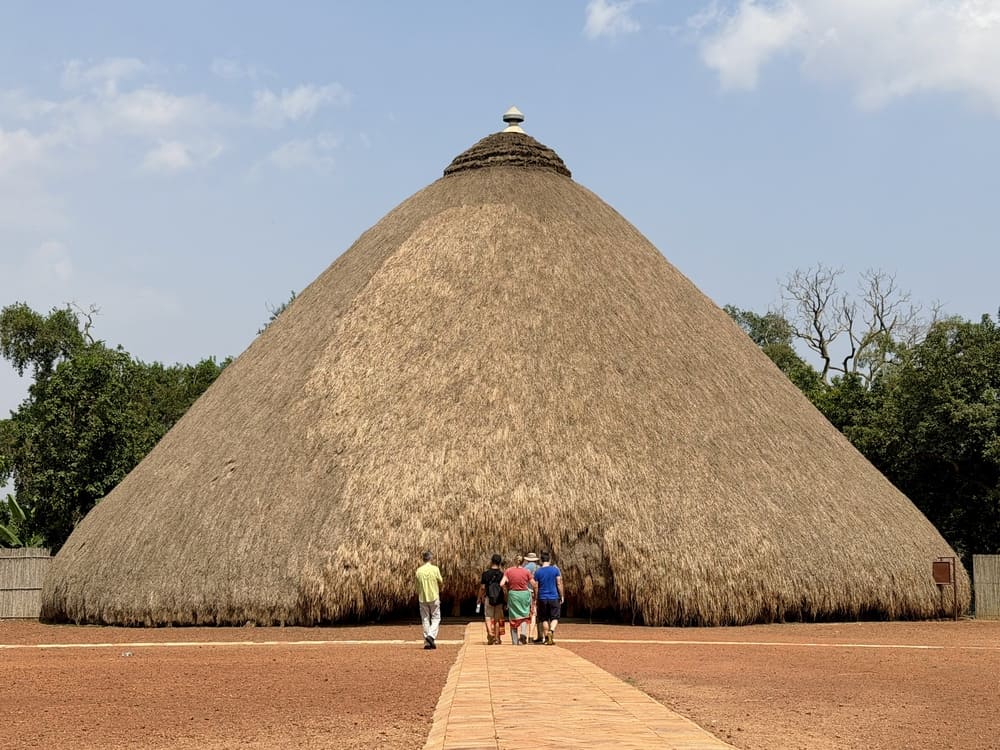
The Tombs of Buganda Kings at Kasubi are inseparable from the history of the Buganda Kingdom, which remains culturally influential in modern Uganda. Located in Kampala, the site functions as both a royal burial ground and an active spiritual centre.
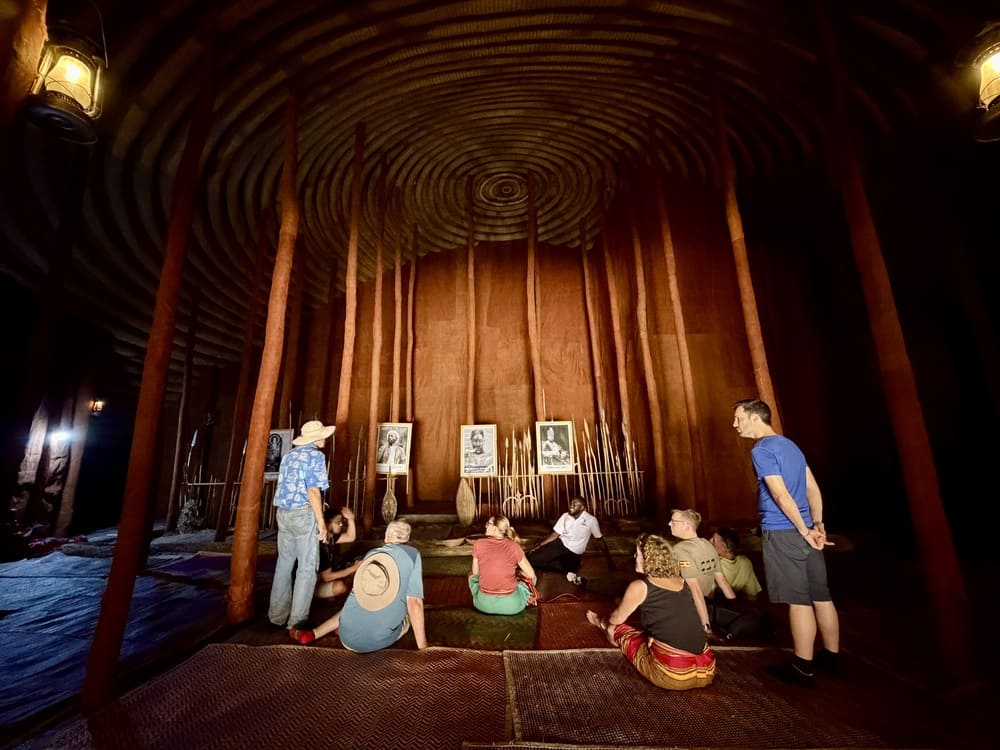
The main structure, Muzibu Azaala Mpanga, is one of the largest surviving examples of traditional Ganda architecture. Its scale is not decorative, it reflects the centralisation of power under the Kabakas during the 19th century, when Buganda expanded through military organisation and political alliances. The kings buried here, including Mutesa I and Mwanga II, ruled during a period marked by increasing contact with Arab traders, Christian missionaries, and eventually British colonial forces.
The 2010 fire that destroyed much of the structure exposed a key issue in heritage preservation, how to maintain authenticity when rebuilding. The ongoing reconstruction has deliberately avoided modern materials, relying instead on traditional techniques and labour systems. This is not simply conservation, it is the continuation of a knowledge system tied to identity and legitimacy within Buganda society.
Bwindi, Conservation Under Constraint
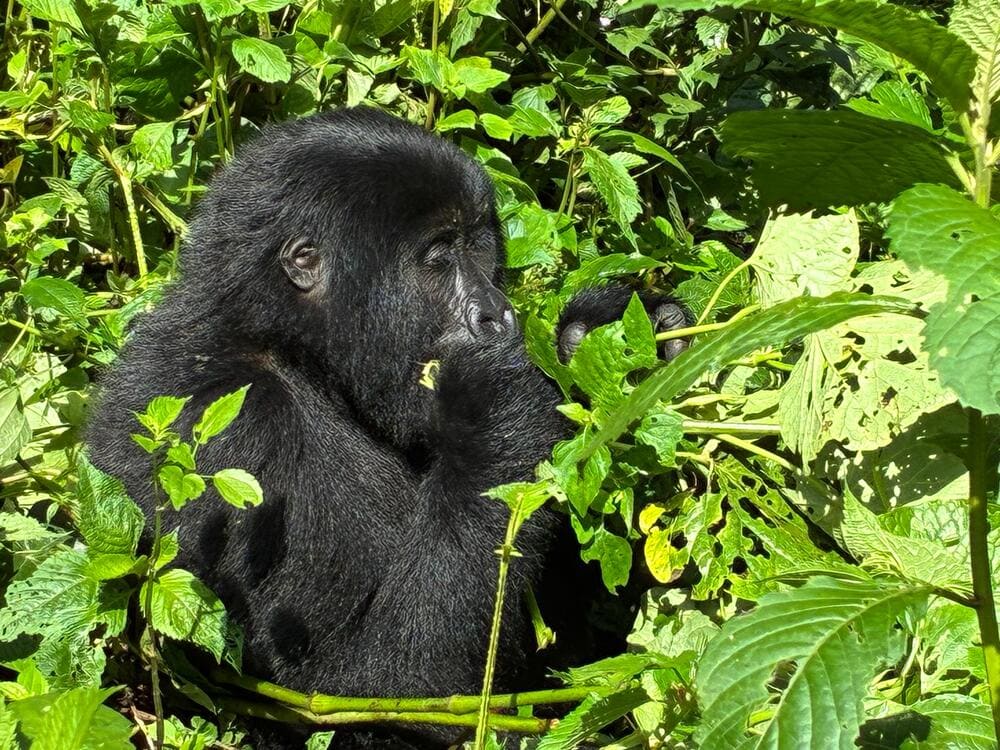
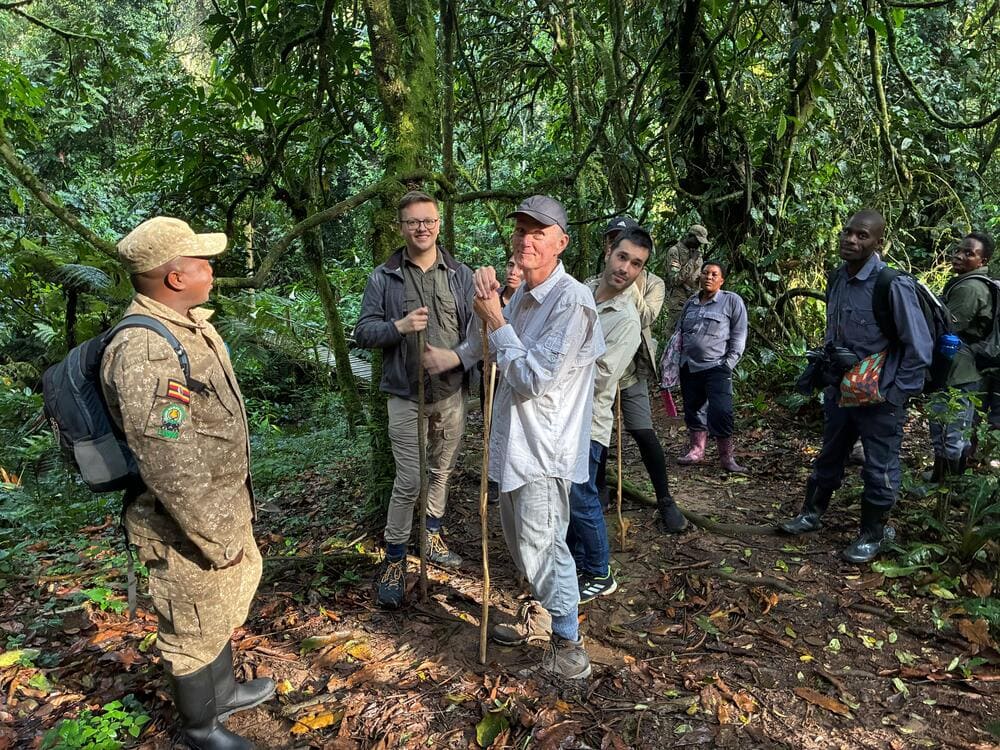
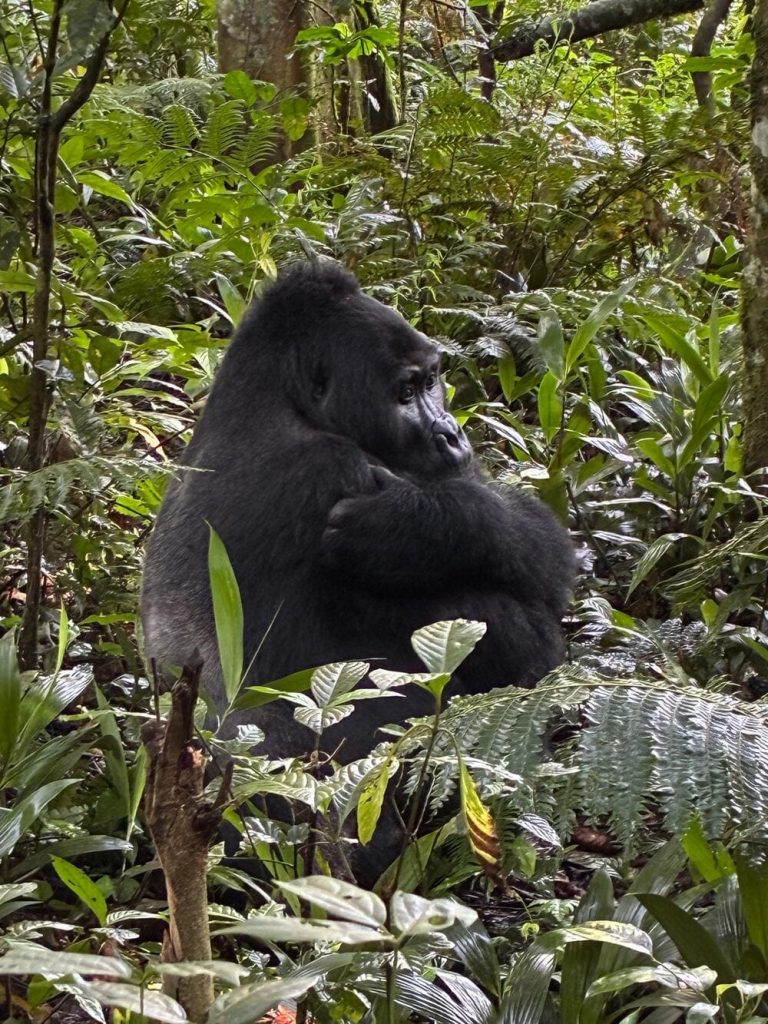
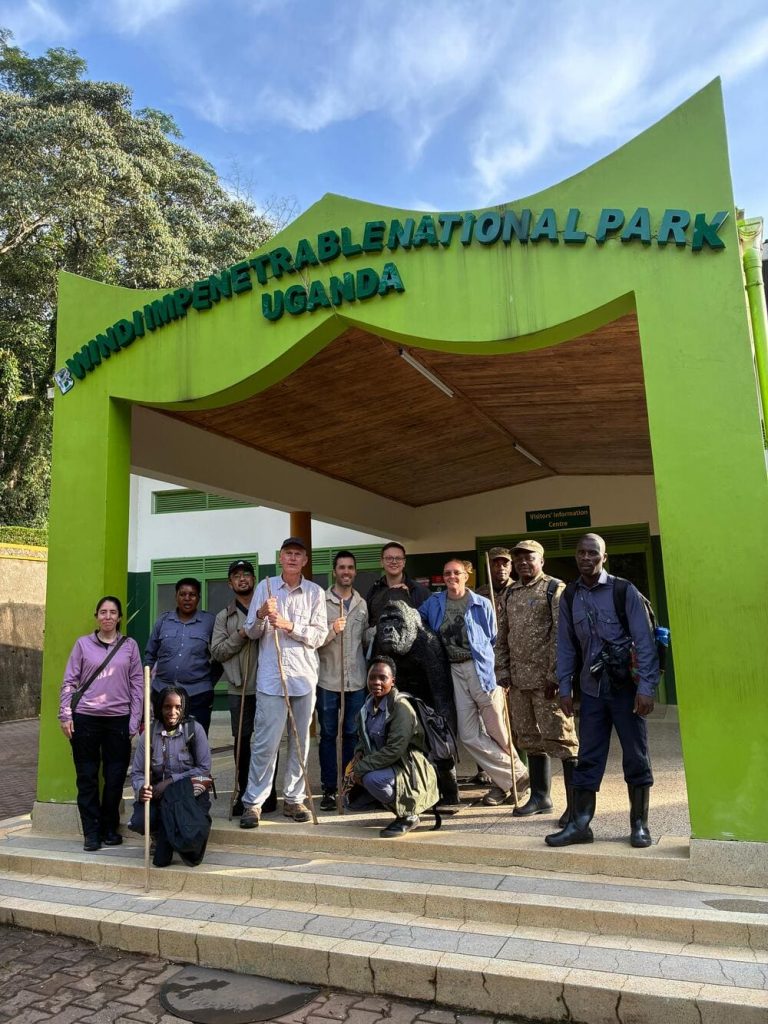
Bwindi Impenetrable National Park, the most famous of the Uganda UNESCO World Heritage Sites, is often reduced to gorilla trekking, but its UNESCO designation is based on ecological complexity rather than a single species. The forest is a remnant of one of Africa’s oldest ecosystems, dating back to the Pleistocene, which explains its unusually high levels of endemism.
The presence of the Mountain Gorilla is central, but also politically sensitive. Conservation success here is tied to strict regulation, limited permits, controlled trekking routes, and high fees. These are not arbitrary, they are designed to reduce human impact while generating revenue for both the state and surrounding communities.
Bwindi sits within a densely populated region. This creates ongoing tension between conservation and land use. Community-based tourism programmes, revenue sharing, and employment as guides or trackers are mechanisms intended to offset this pressure. They do not eliminate conflict, but they make conservation economically viable in a way that purely protectionist models rarely achieve.
For travellers, this means access is structured and restricted. The experience is curated by necessity, not by design preference.
Rwenzori, Geography That Resists Simplification
The Rwenzori Mountains National Park challenges the standard narrative of East African landscapes. Unlike the volcanic systems that define much of the region, the Rwenzori are a fault-block mountain range, formed through tectonic uplift rather than eruption.
Historically referred to as the “Mountains of the Moon” by Claudius Ptolemy, the range fed early speculation about the source of the Nile. European expeditions in the late 19th century, particularly those linked to Henry Morton Stanley, reframed the mountains within colonial geography, but their physical difficulty limited sustained external presence.
The range remains logistically complex. Treks involve persistent rainfall, unstable ground, and altitude gain that is comparable to major alpine climbs. Mount Stanley exceeds 5,000 metres, with glacial features that are now rapidly retreating due to climate change.
The Rwenzori are not widely visited because they do not fit into standard safari circuits. Infrastructure is minimal, and access requires time, planning, and tolerance for unpredictable conditions. That lack of accessibility is precisely what has preserved much of the ecosystem.
Visiting all Uganda UNESCO World Heritage Sites
Uganda UNESCO World Heritage Sites are rarely combined into a single narrative, yet they form a coherent structure for understanding the country.
The Kasubi Tombs illustrate how pre-colonial political systems continue to shape identity and authority. Bwindi Impenetrable National Park demonstrates how conservation operates within real economic and demographic constraints. Rwenzori Mountains National Park shows a physical landscape that influenced both local livelihoods and external exploration narratives.
For a destination often marketed through wildlife alone, this framework offers something more structured. It allows Uganda to be read not just as a place to see, but as a place to understand. This is why both the Bwindi Impenetrable National Park and the Tombs of Buganda Kings at Kasubi are included in our group tour to Uganda.
About Post Author