Angolan cuisine may not be world-famous, but it has its own unique value. The flavours are simple, hearty, and largely untouched by industrialised food culture. Once you understand a bit of the country’s past, you begin to see the roots of its food, some of which trace back to the Portuguese colonial era.
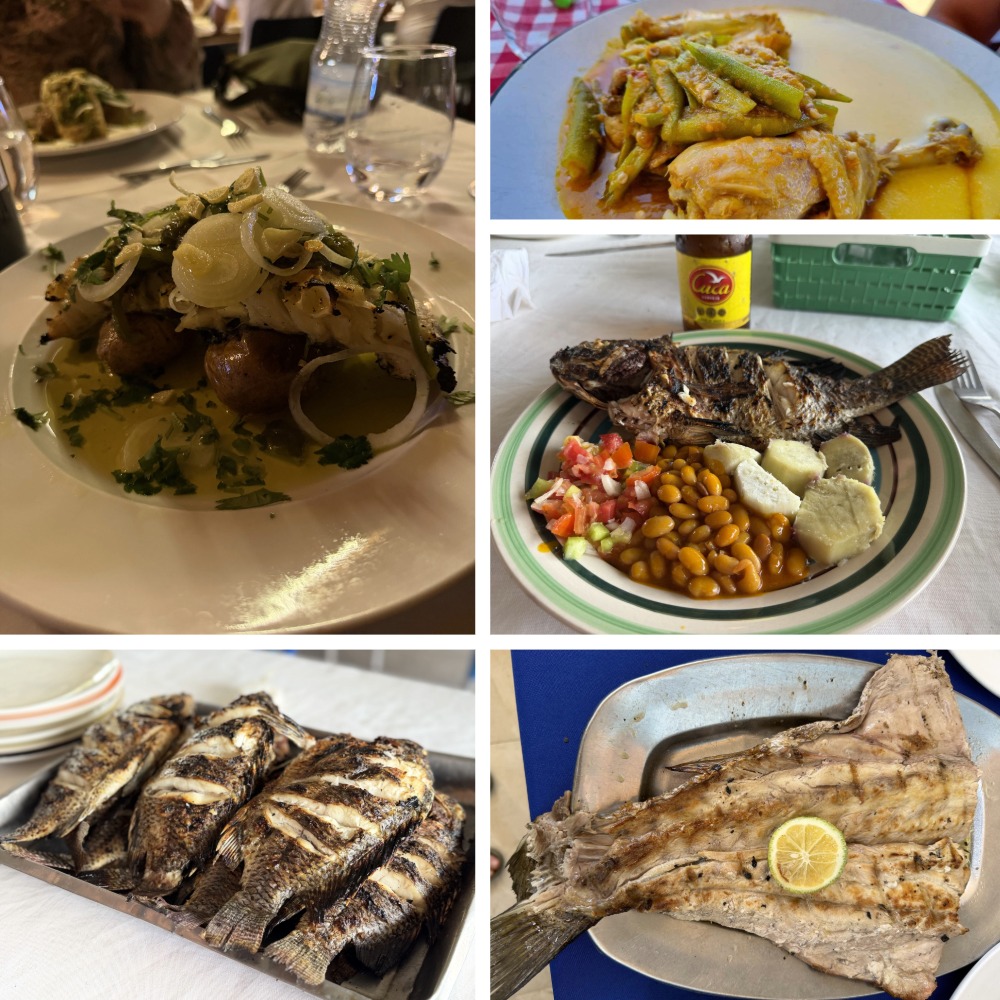
Food in Angola reflects the country’s landscape and daily life. From coastal seafood to farm-grown staples in rural villages, meals are built around what people can catch, grow, or raise locally. In this guide, we’ll explore Angola’s culinary history, its influences, the dishes every traveller should try, local beers, and some of the best restaurants in Luanda.
Table of Contents
History and Influences
Angolan cuisine has been shaped over centuries by the people, the land, and outside influences. Rural communities relied on what the land offered: cassava, maize, beans, peanuts, and leafy greens. Coastal communities turned to the Atlantic for fish and seafood, while inland villages depended more on livestock like chickens, goats, and cattle.
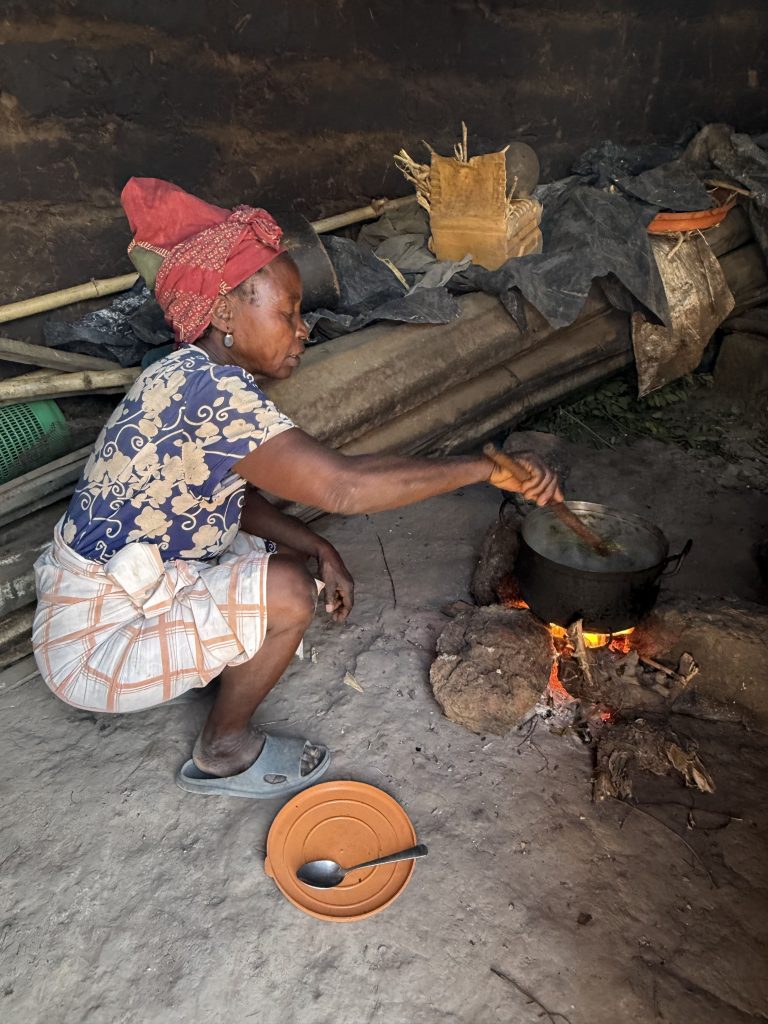
Portuguese colonisation introduced new cooking techniques and ingredients such as garlic, onions, tomatoes, citrus, and okra. Trade and historical connections with Brazil also brought beans, palm oil stews, and richer spice combinations.
Over time, these influences blended with local traditions, creating a cuisine that is simple but full of taste. Many dishes combine basic staples with oils, herbs, and spices that enhance the ingredients rather than overpowering them.
Regional Differences
Because Angola is geographically diverse, its cuisine changes depending on where you travel. The regional differences reflect the land itself: the ocean, the farms, and the climate.
Along the coast, especially around Luanda, seafood dominates daily meals. Fish, prawns, and shellfish are often grilled or cooked with tomatoes, onions, and chilli. The proximity to the Atlantic means seafood is usually very fresh.
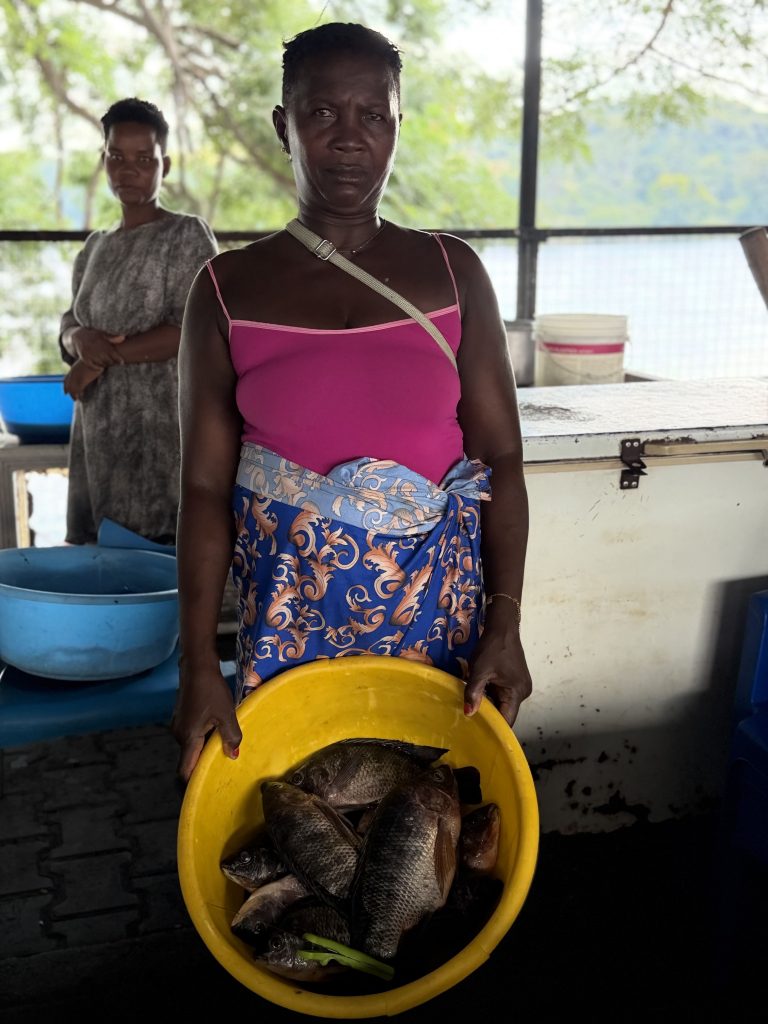
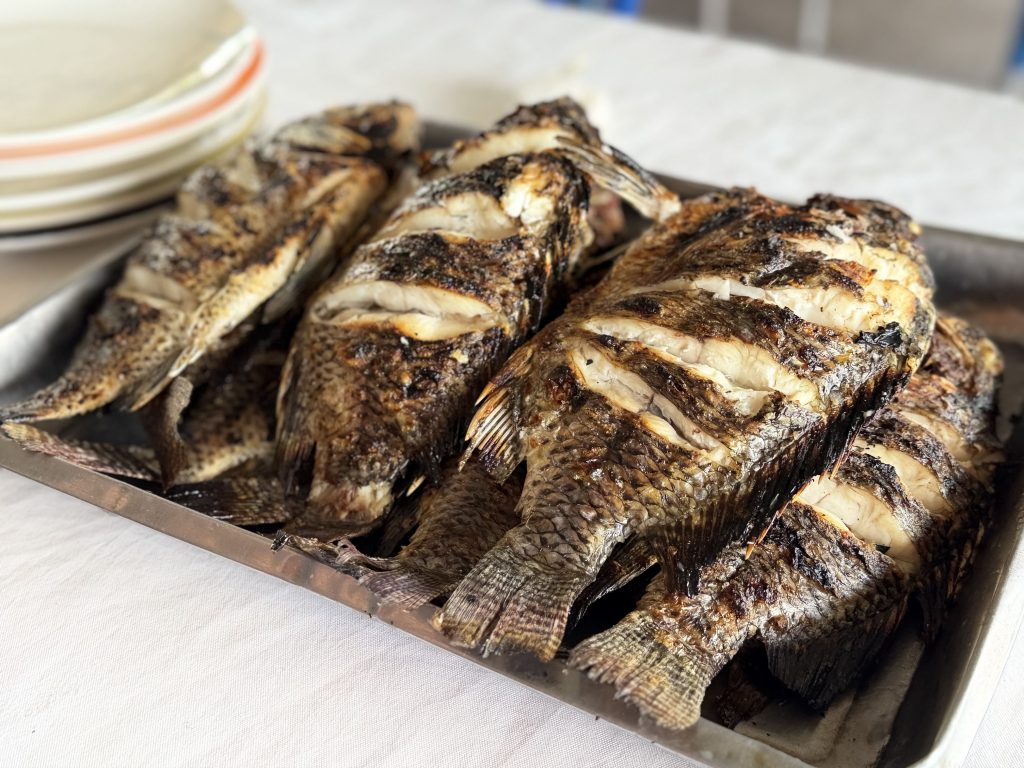
In rural communities, food depends on what families can grow or raise. Cassava, maize, beans, peanuts, and sweet potatoes are common staples. Meals are practical and filling, often cooked slowly in stews.
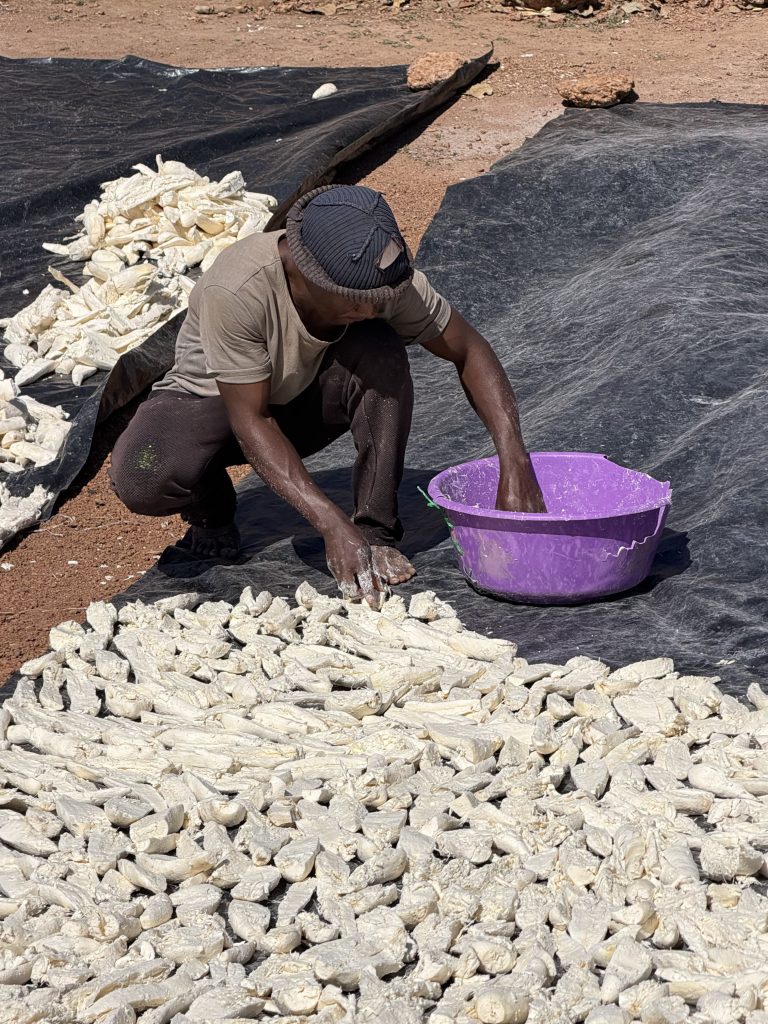
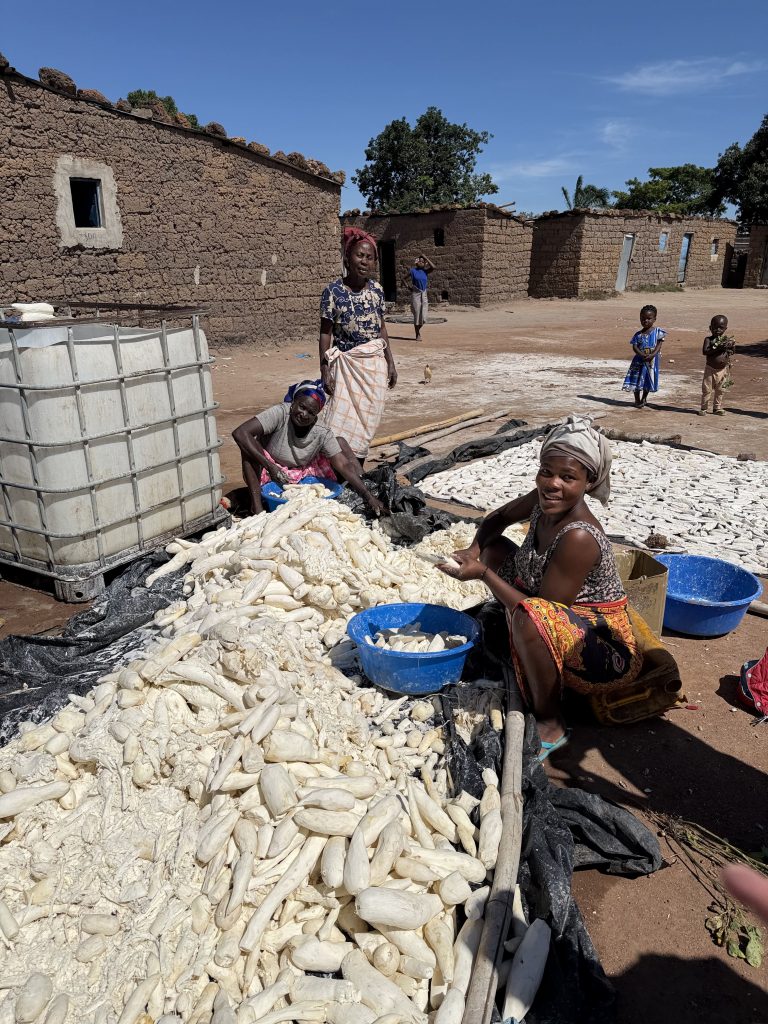
Further inland, meat becomes more common. Goat, chicken, and beef appear more frequently, usually roasted or cooked in sauces and served with funge.
Must-try Dishes in Angola
Many Angolan meals are served with funge, a thick porridge made from cassava or corn flour. It has a soft, slightly stretchy texture and a mild flavour. Instead of utensils, small portions of funge are often used to scoop up sauces and stews, making it an essential part of the Angolan dining experience.
Here are some traditional dishes you should try when visiting Angola:
Muamba de Galinha
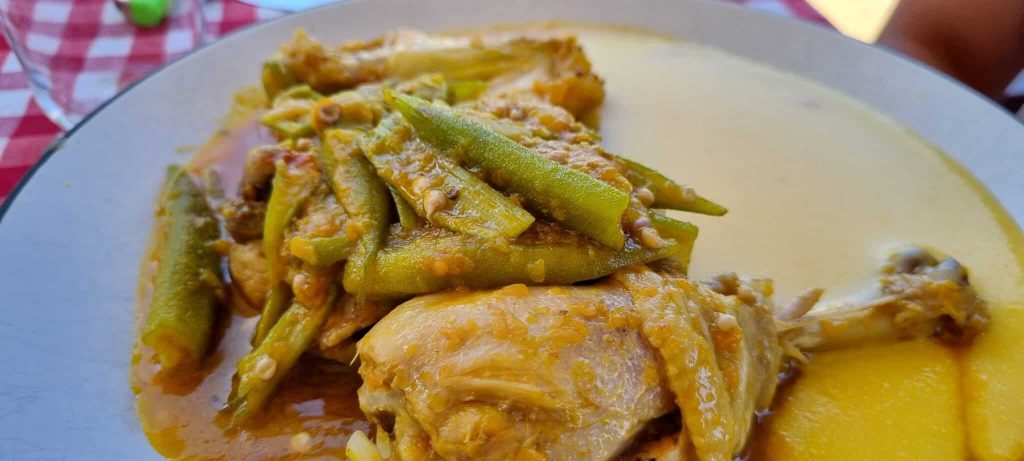
A chicken stew cooked with palm oil, okra, garlic, onions, and seasonal vegetables. The palm oil gives it a deep colour and earthy flavour. Served with funge, it’s filling and comforting.
Calulu
A stew made with dried fish or meat, combined with leafy greens, tomatoes, onions, and chilli peppers. Thick and savoury, and a good example of how simple ingredients can create deep flavour.
Mufete
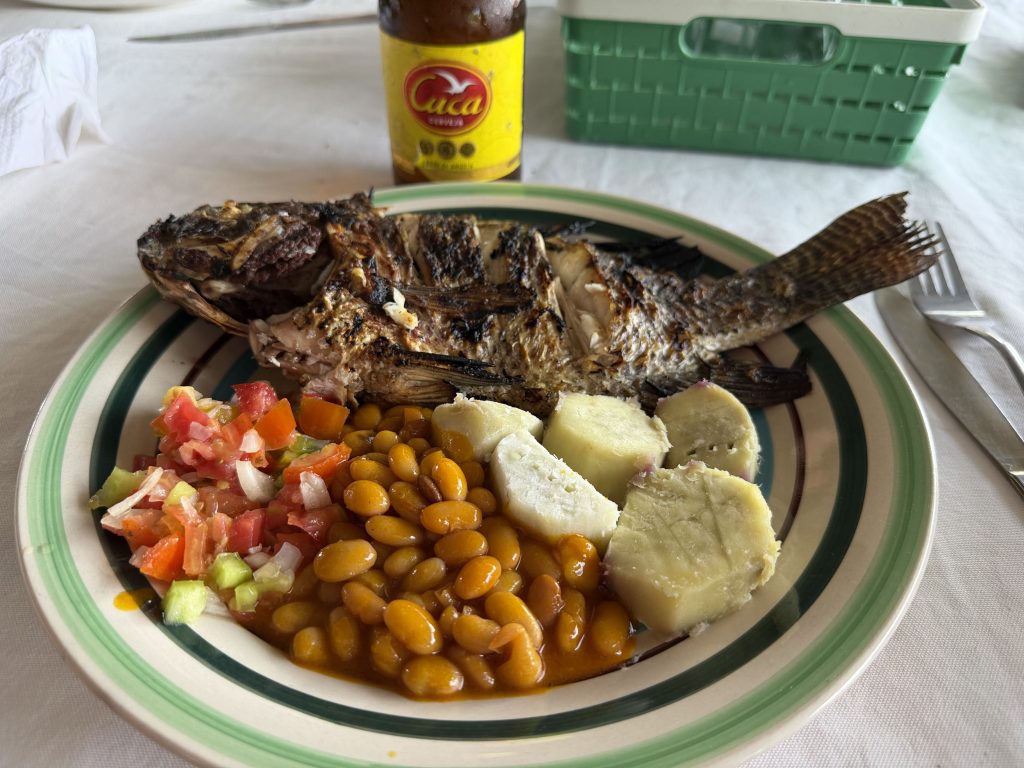
A coastal favourite made with freshly grilled fish served alongside roasted plantains, beans, and cassava. It reflects the strong seafood culture along Angola’s Atlantic coast.
Kissuto Rombo
Roasted goat or beef seasoned with garlic, citrus, and spices. Slow-cooked to bring out smoky flavours, it is especially common in inland areas.
Feijão de Óleo de Palma
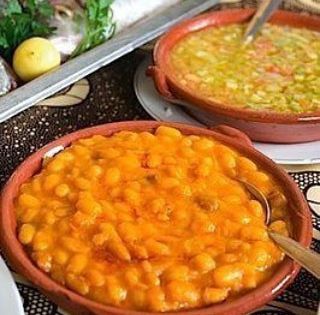
Beans cooked slowly with palm oil, onions, and garlic, often served with vegetables or funge.
Local Beer
Beer is one of the most common alcoholic drinks in Angola. It’s often enjoyed with meals or shared with friends after work, especially in warm coastal cities like Luanda, where a cold bottle is always refreshing.
Cuca – ~4.5% ABV
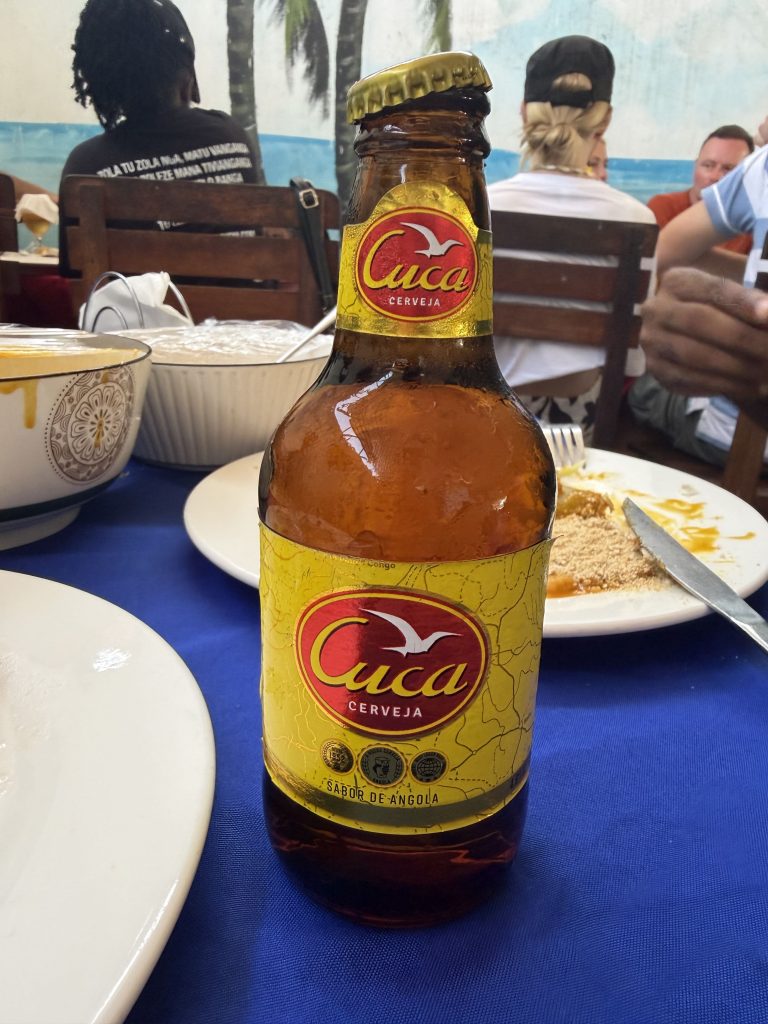
The most popular Angolan beer is known for its light, crisp taste. It’s refreshing in the tropical heat and pairs well with grilled seafood and stews.
Eka – ~5.0% ABV

A smooth, easy-drinking lager with a slightly richer taste. It’s widely available in both cities and smaller towns.
N’gola – ~5.0% ABV
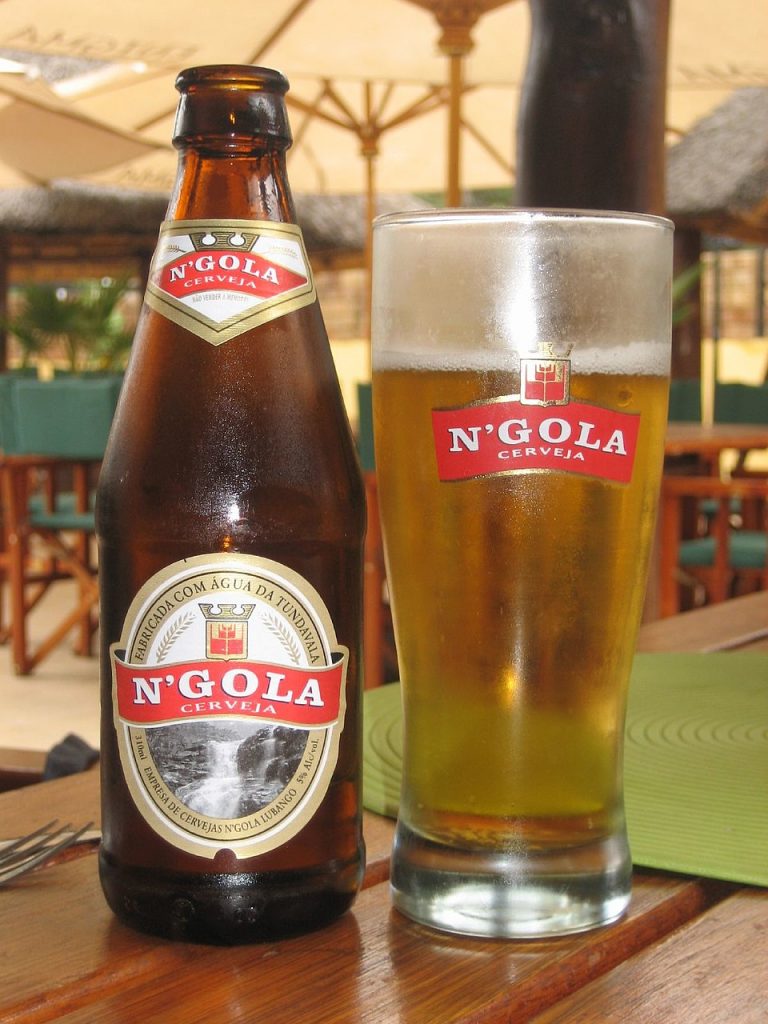
A fuller-bodied lager with mild bitterness and a slightly stronger alcohol content, giving it a richer flavour.
Luandina – ~5.0% ABV
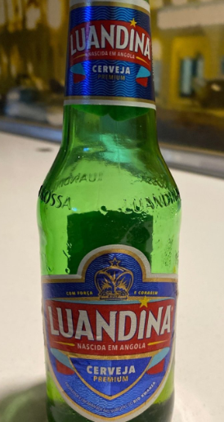
Luandina is a 100% Angolan, award-winning pilsner-style lager launched in 2017, known for its light, crisp, and refreshing profile suitable for the local climate.
Where to Eat in Luanda
If you’re visiting Luanda, the capital of Angola, there are several restaurants where you can experience both traditional Angolan cuisine and Portuguese-inspired dishes.
Restaurante Café del Mar
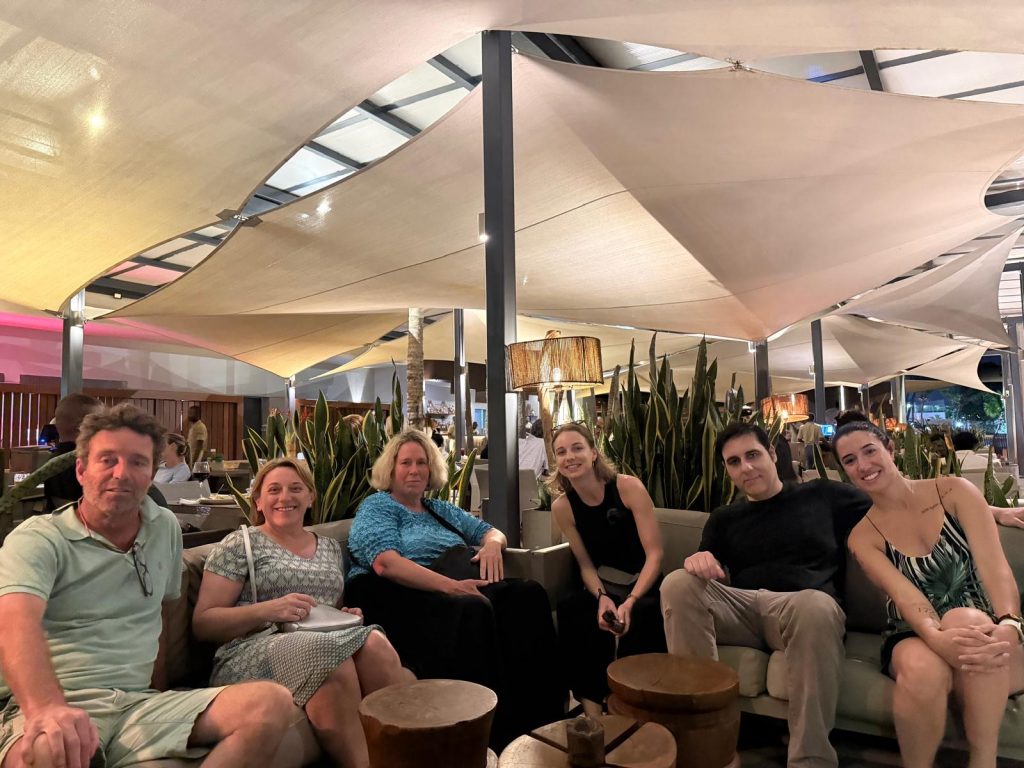
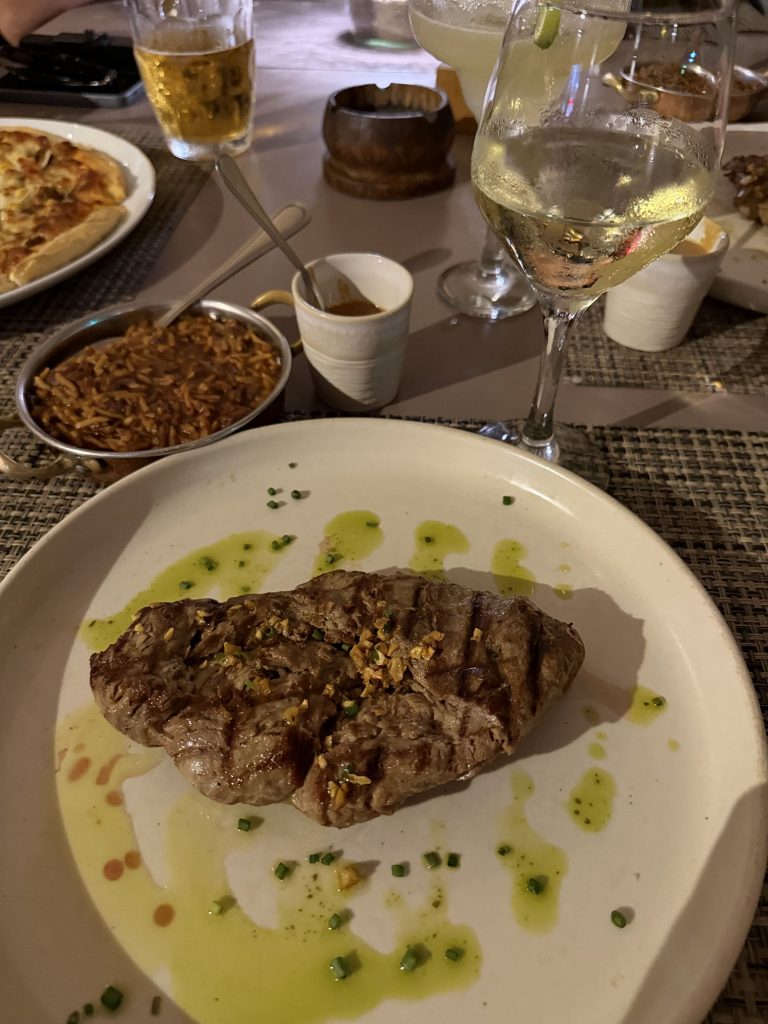
One of the most well-known spots in the city, often considered among the best restaurants in Luanda. Located on the seafront, it offers beautiful ocean views and a relaxed but elegant atmosphere. The menu is varied, featuring seafood, international dishes, and local favourites. It’s also known for its cocktails and is a great place for dinner while watching the sunset over the Atlantic.
Clube Náutico da Ilha de Luanda
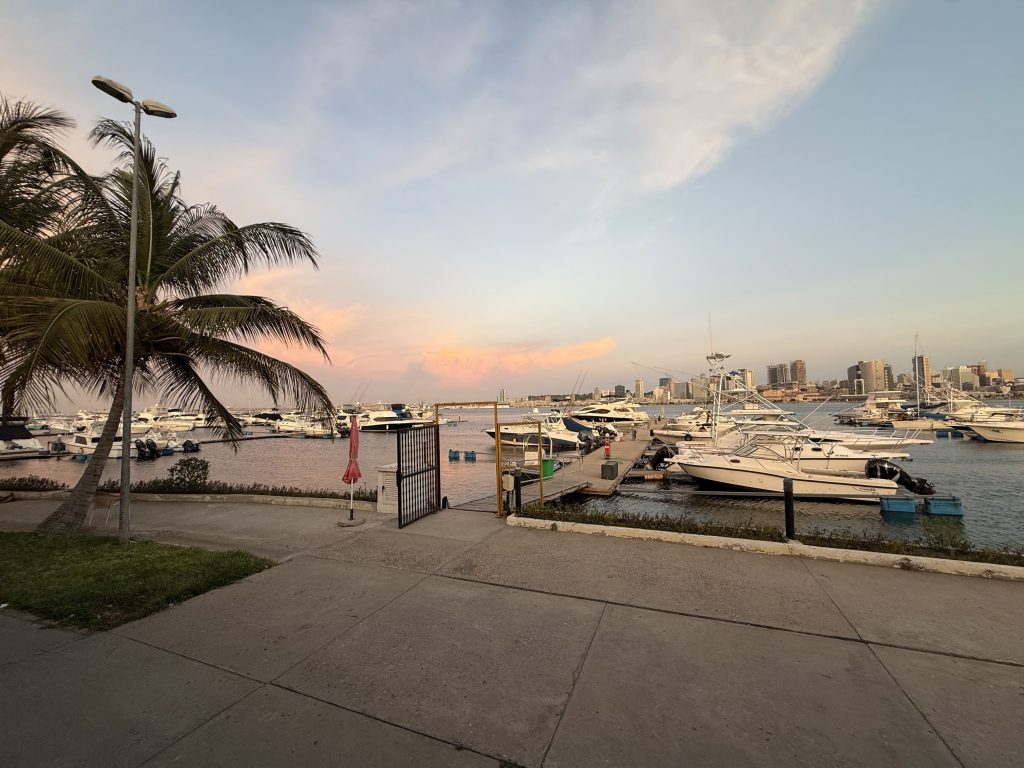

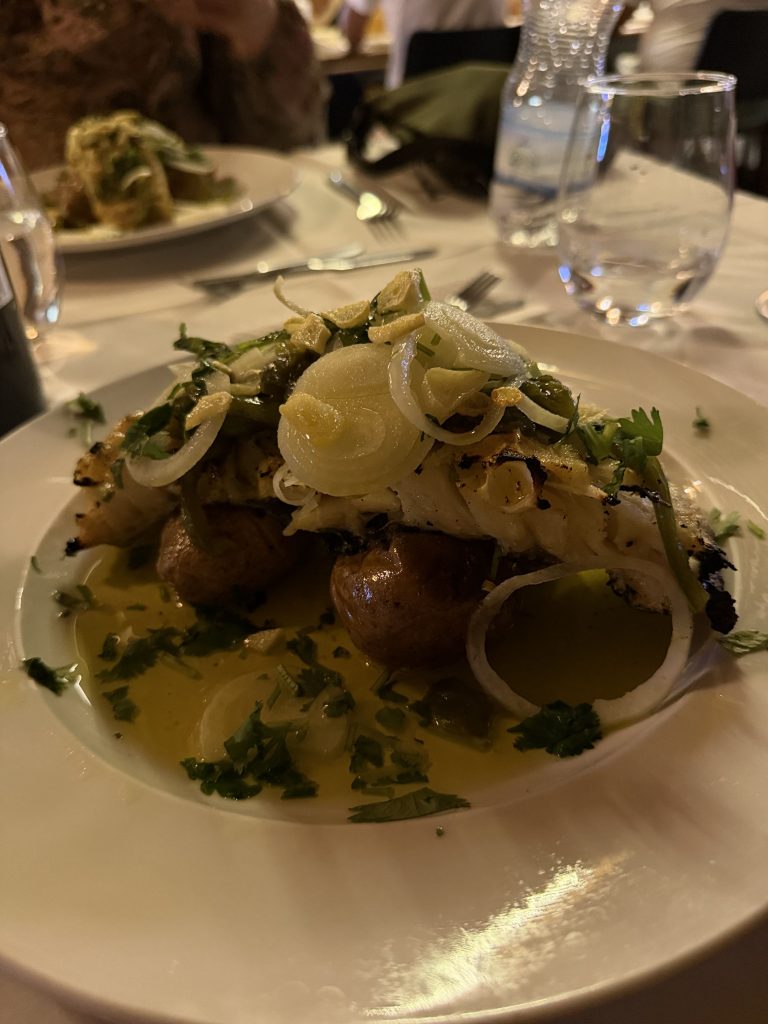
Another popular option overlooking Luanda Bay. The restaurant has great views and a laid-back atmosphere. The food is consistently good, especially the seafood and grilled dishes.
Bela Mar Casa do Peixe
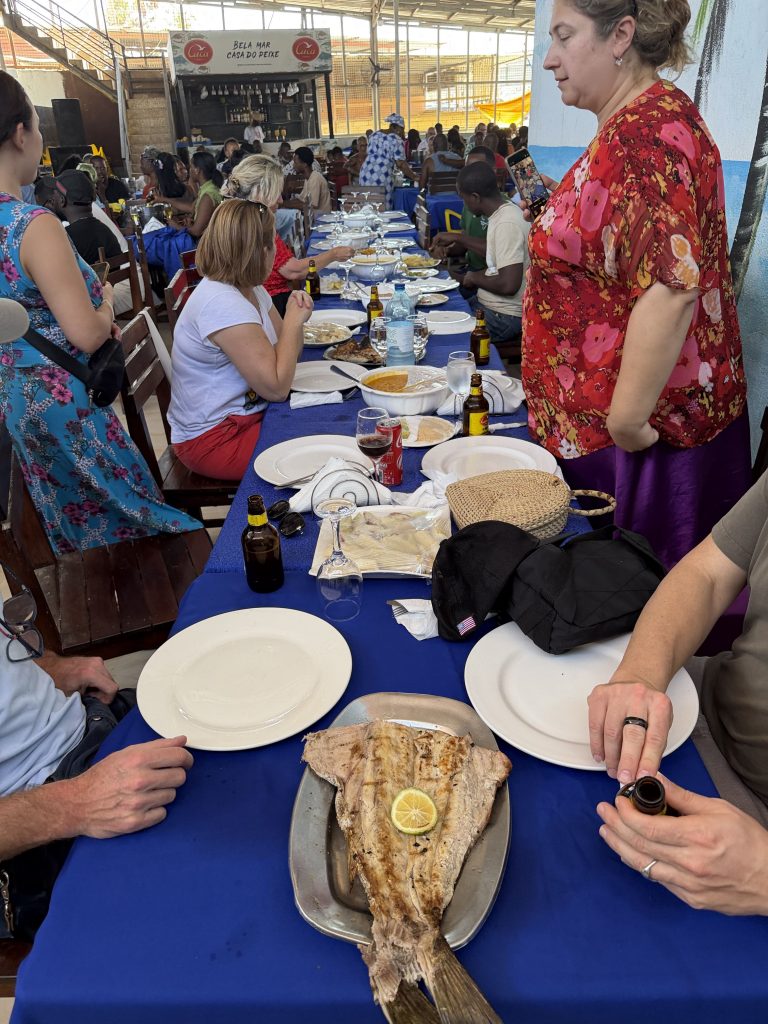
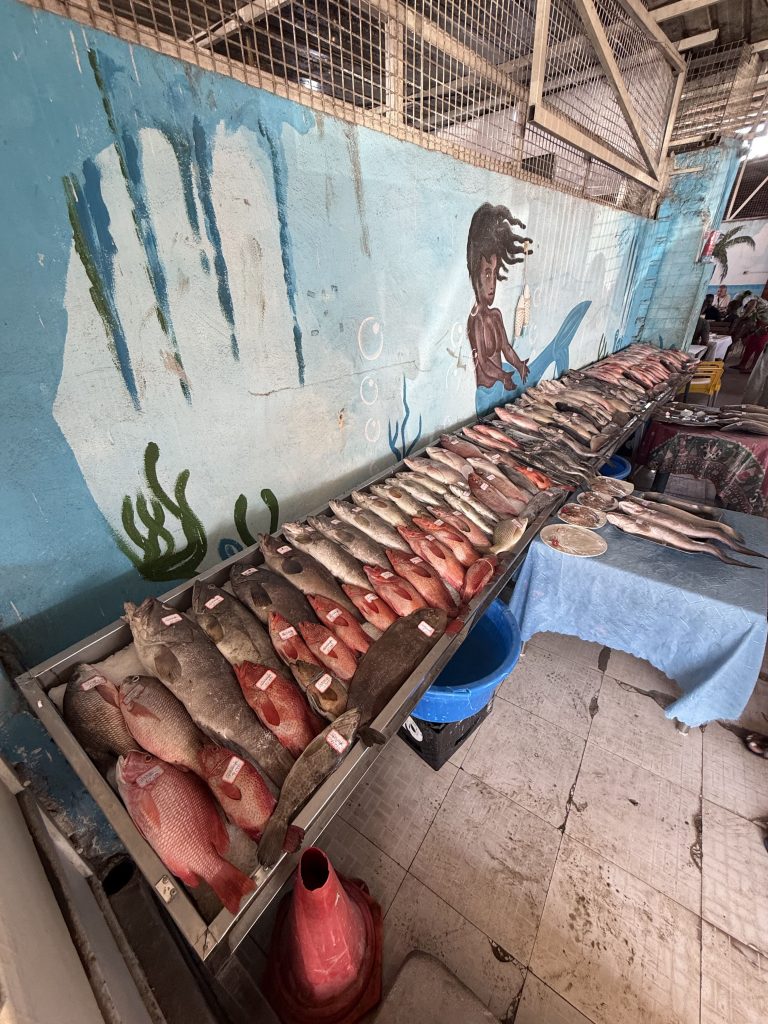
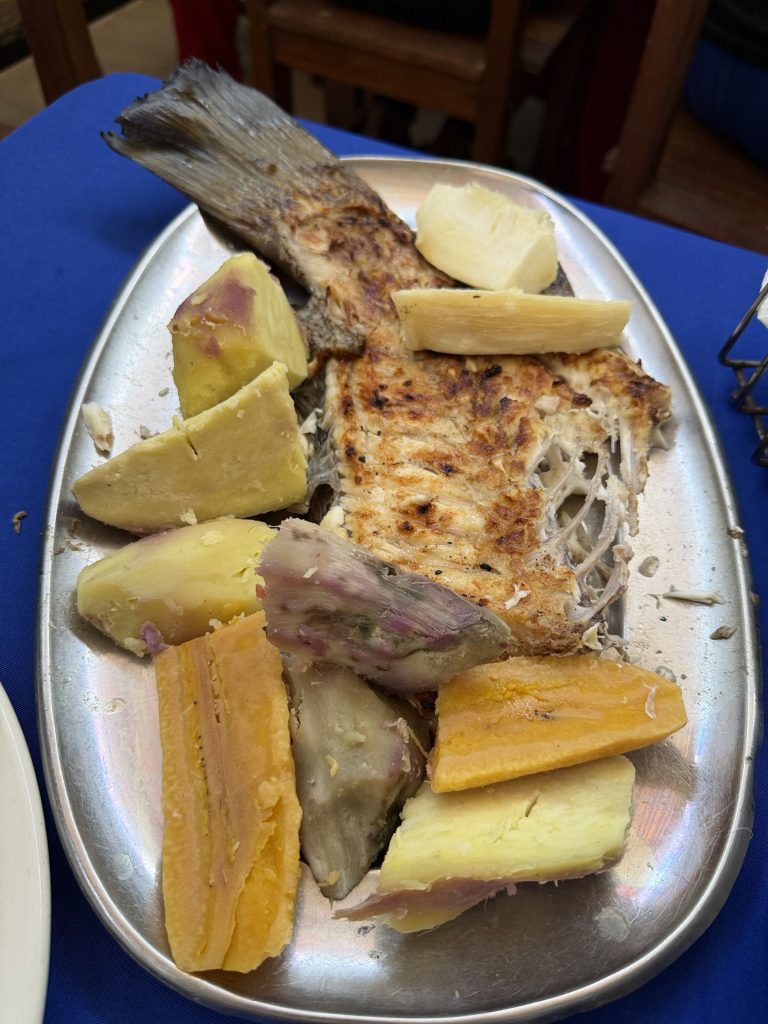
A more local and affordable option. This spot is well known for serving very fresh fish, often caught the same day. It’s a great place to try mufete, the classic Angolan dish of grilled fish served with beans, cassava, and plantains.
São João Restaurante
A long-standing favourite in the city. The restaurant is particularly known for Portuguese-style cuisine, reflecting the historical connection between Angola and Portugal. It’s also a good place to try traditional Angolan dishes such as muamba de galinha, the rich chicken stew cooked with palm oil and vegetables.
For visitors, trying local food is one of the best ways to experience Angola. From traditional stews to fresh coastal seafood, the country’s cuisine offers a simple but memorable taste of its culture and traditions.
Click here to check our Angola tours.
About Post Author