When analysing the beginnings of the Arab Spring in different countries, it is often very small moments that really lit the flame of dissatisfaction and underlying tensions. From Tunisia, the protests spread like wildfire across the Middle East and North Africa, with several countries such as Tunisia and Egypt resulting in large scale revolts and regime change. The Syrian protests triggered the Syrian Civil War from underlying tensions and dissatisfaction with the 6 decade long Assad regime. Many people don’t know that these protests began with teenage boys in the small southern city of Daraa and a few words that would change Syria forever.
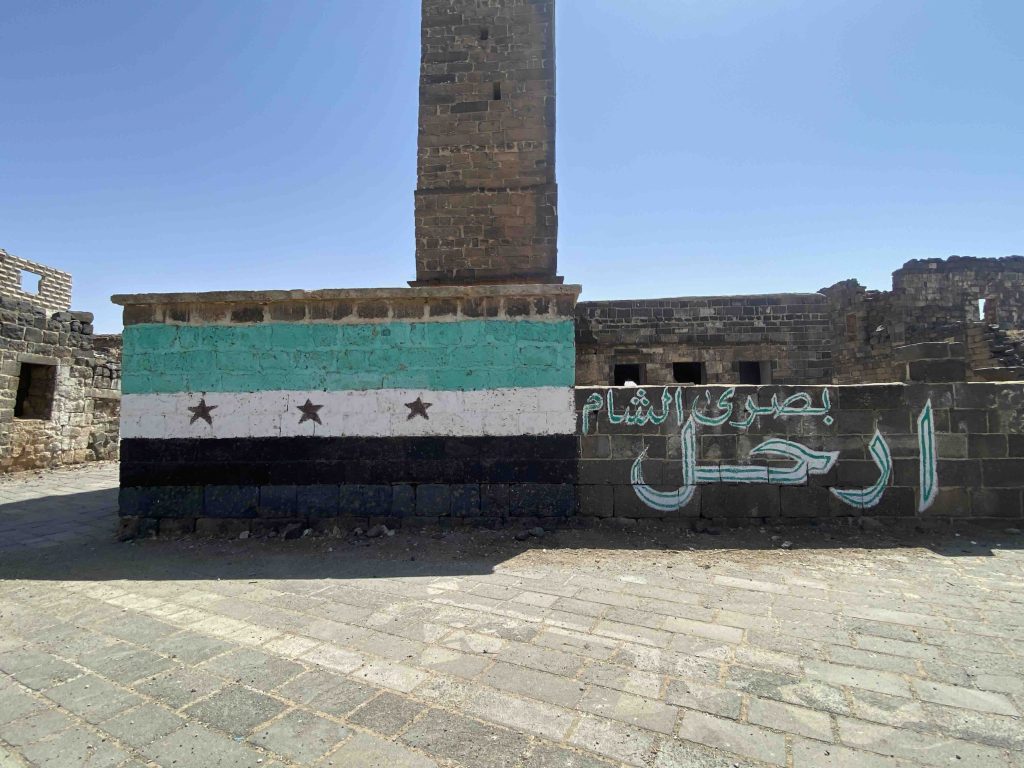
Table of Contents
The Start of The Arab Spring
The Arab Spring began in Tunisia, a country struggling with high unemployment, deep-rooted corruption, and a steadily worsening economy. The spark came in December 2010, when Mohamed Bouazizi, a street vendor whose goods had been confiscated by local officials, set himself on fire in protest. His act became a powerful symbol of public anger toward authoritarian rule, economic hardship, and everyday humiliation by the state.
From Tunisia, the wave of unrest quickly spread across North Africa and the Arab world, where many countries were facing the same frustrations. Protests erupted in Egypt, Libya, and Bahrain, and by early 2011, the movement had reached Syria, where long-standing political repression and economic pressure would soon push the country into its own uprising.
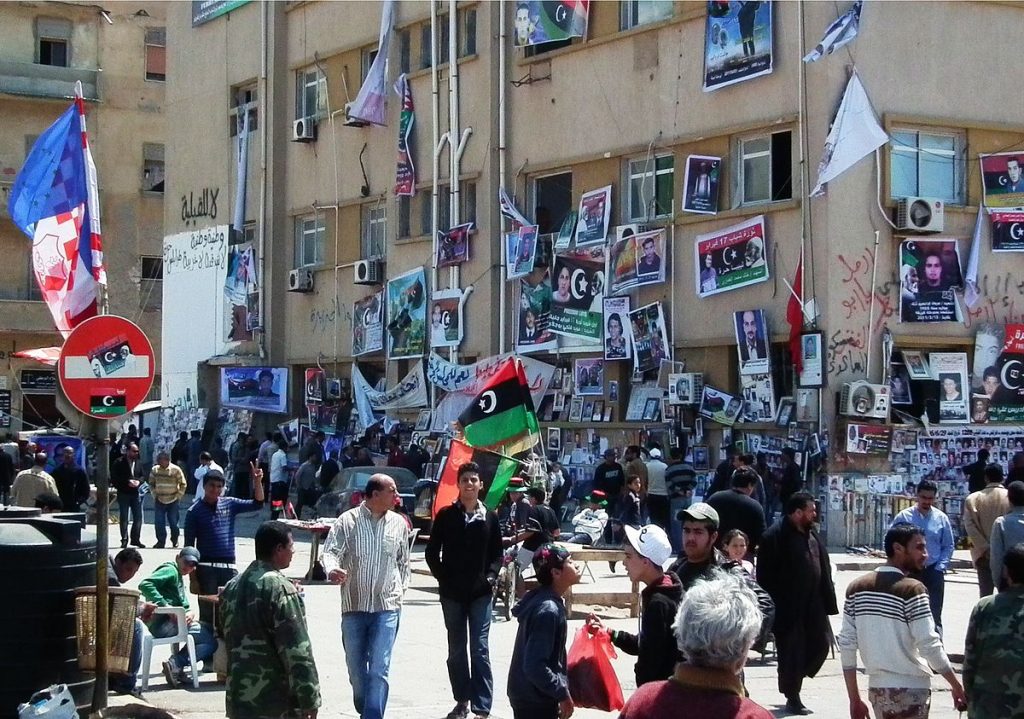
The Syrian protests
In February 2026 in the southern city of Daraa, a young group of boys graffitied a local wall after school. These young boys took to the wall to write a sentence that changed Syria forever.
Your turn has come, O Doctor / أجاك الدور يا دكتور
This references Bashar Al Assad, who is a trained optometrist. Your turn next, refers to the overthrow of Tunisian President Zine El Abidine Ben Ali, Egyptian President Hosni Mubarak and of course, Libya’s Muammar Gaddafi. Many other countries such as the Gulf countries implemented changes in response to the protests and some countries were largely unaffected.
When anti-regime graffiti began appearing on a wall in Daraa, it was quickly reported to the city’s police chief and intelligence boss, Atef Najib. Security forces were ordered to find whoever was responsible, but when no one came forward, they took a far more brutal approach. They rounded up anyone whose name had ever been written on the wall and any boy under the age of 20. Fifteen teenagers were arrested and disappeared into custody, where they were beaten, tortured, and even had their fingernails pulled out over the course of several weeks.
When their parents went to demand their release, they were denied. One security official reportedly told them, “Forget your children. If you want children, make more. If you don’t know how, bring us your women and we will make them for you.”
Families and local residents poured into the streets to protest, only to be driven back again and again by police firing tear gas and live ammunition. After 26 days, and under growing public pressure, the boys were finally released battered, traumatised, and with no evidence ever produced against them.
Instead of calming the situation, their release only fuelled more anger. New slogans began appearing across Daraa’s walls, and the authorities responded by arresting anyone known for writing graffiti. Protests soon gathered around the Al-Omari Mosque, an 8th-century landmark that had become a makeshift clinic for those wounded by security forces. In the early hours of 23 March 2011, government troops stormed the mosque, killing 15 people after sealing off the city and cutting all phone and internet connections to stop news from getting out.
The government quickly went into damage-control mode. State television showed images of a supposed weapons cache inside the mosque and claimed that “armed gangs” and Islamist militants had taken over the protests, even accusing them of using kidnapped children as human shields. But for people in Daraa, the truth was already clear: what began as a few words on a wall had now turned into a violent confrontation between the state and its own citizens, igniting the spark that would soon engulf all of Syria.
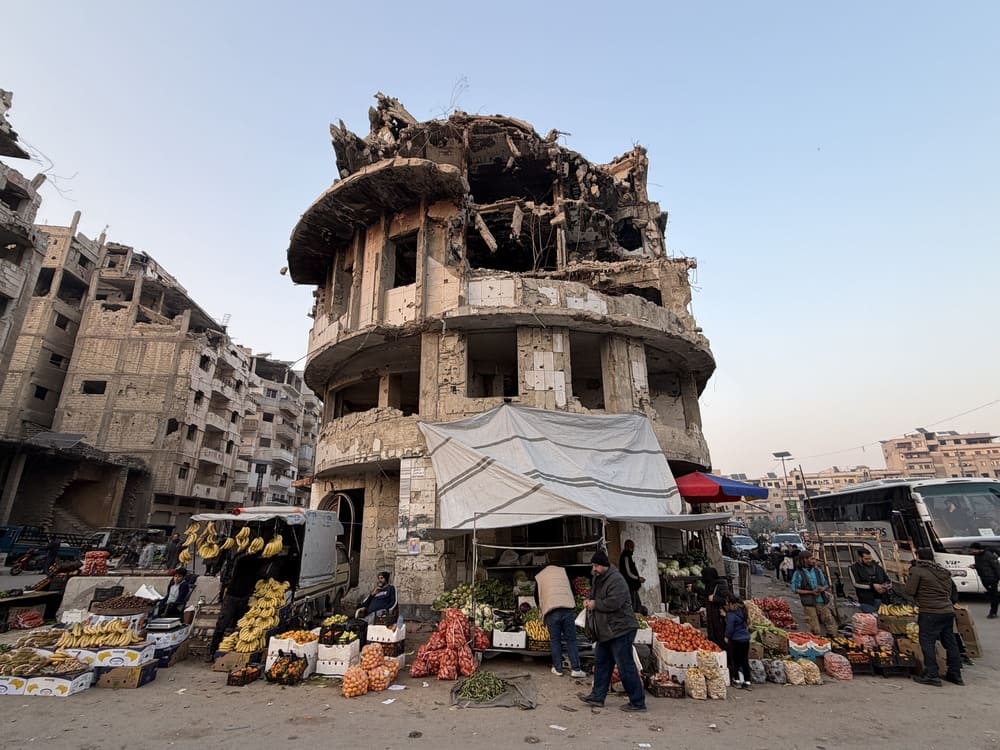
But It Was Too Late To Stop The Syrian Protests
The protests did not stop in Daraa – they had already spread to other cities that harboured huge dissatisfaction – Homs, Aleppo, the suburbs of Damascus, Qamishli and Latakia. People too to the streets despite brutality and threats used against protesters.
Many people who participated in the protests were killed, imprisoned or had to flee the country to avoid forced disappearances. Many fled to refugee camps in neighbouring countries.
There are currently up to 300,000 Syrians still missing from the war time
Anywhere up to 300,000 Syrians are still missing, 90% or more who were directly carried out by the Assad government. In Syria, you will often see posters on the wall of families asking for information about their loved ones who haven’t been seen in over a decade. Six million people were internationally displaced and seven million were internally displaced due to the fighting that ensued. Many of these people are still displaced today.
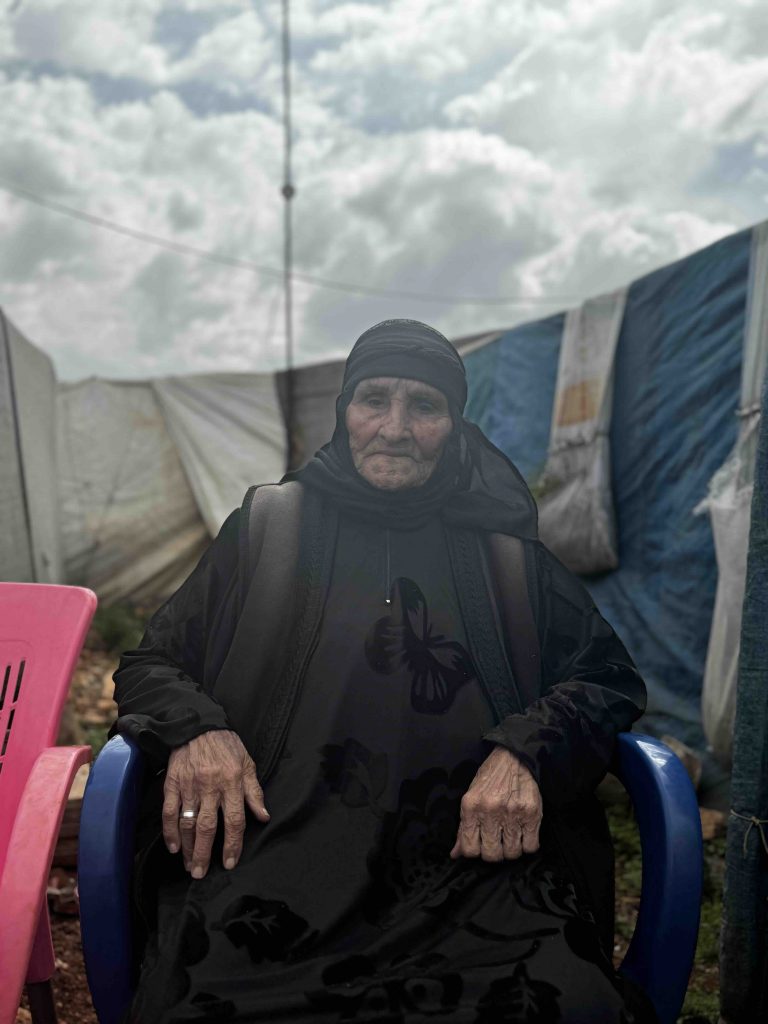
Mouawiya Syasneh, The Boy Who Sparked The Syrian Protests And Revolution
Mouawiya Syasneh and his friends were responsible for the graffiti that triggered the revolution. At the time, the boys were just fifteen years old.
The boys were locked up for 26 days inside the cells of Syria’s feared secret police, the Mukhabarat, where torture was routine. One of them, Syasneh, later described the worst of it: being dragged into a wet bathroom, the shower turned on, and electricity sent through the water and into his body. “Wherever the water touched me, the shock followed,” he said.
News of what was happening inside those cells spread fast, and soon thousands of people flooded the streets of Daraa demanding the boys be released. When the regime answered those protests with bullets and batons, the unrest didn’t die — it exploded, spreading across the country and marking the real beginning of the Syrian protests. What started as graffiti on a wall had now become a national revolt.
Syasneh never set out to trigger a revolution, but his story became a symbol of everything Syrians had been quietly boiling over for years under Bashar al-Assad’s rule. Daraa became ground zero, and as protests turned into armed resistance, Syria began sliding into full-scale civil war.
The war hit Syasneh personally in 2013, when his father, a retired architect, was killed by a mortar shell on his way to the mosque. That was the moment everything changed. He joined the Free Syrian Army, not out of ideology, but out of grief. Years later, even as the city lay in ruins, Syasneh was still living in his damaged childhood home in Daraa with his mother and siblings. And when Assad’s grip finally broke, he went straight to Damascus, walking into the capital that had once ordered his torture — and accidentally helped ignite a revolution.
Visiting Daraa
Daraa is a sensitive place, but an important one. On our Syria Liberation Day Tour, we will visit important places key to the Syrian protests including the famous wall which triggered the revolution more than a decade ago.
About Post Author