Talking about money in Sierra Leone is not like talking about cash in London or New York. It is a mix of colonial history, daily survival, and practical life. If you are in Freetown, Bo, or small towns, you quickly learn that cash matters. Not just any cash, but the currency of Sierra Leone carries history, identity, and control over everyday transactions. Bills and coins are more than tools for buying food or transport. They are symbols of economics, independence, and practical living.
Today the money used in Sierra Leone is the leone. It is the official currency of Sierra Leone and is used for all transactions across the country. Understanding the history of Sierra Leone money helps explain how the nation manages cash, trade, and daily life.
Table of Contents

Colonial History and Early Currency
Before independence, Sierra Leone was a British colony. The British West African pound was used for trade and daily life. When Sierra Leone gained independence in 1961, it needed its own national currency. In 1964, the government introduced the leone as the official currency of Sierra Leone. One leone replaced the British West African pound at a rate of one to one. This gave the country control over its financial system and allowed it to assert national identity through money.
Early Sierra Leone money included coins and banknotes with colonial influence in design but also symbols of the new independent state. Coins were small denominations for practical use, while banknotes covered larger purchases.
Coins and Banknotes
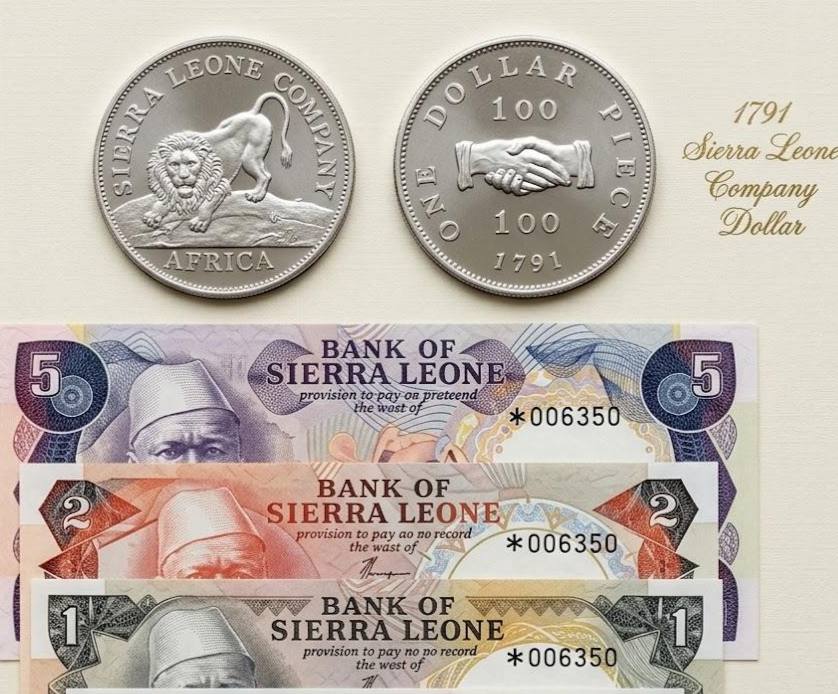
Today, Sierra Leone money consists of coins and banknotes issued by the Bank of Sierra Leone. Coins include one, five, ten, twenty-five, fifty, and one hundred leones. Banknotes are issued in denominations of five hundred, one thousand, two thousand, five thousand, and ten thousand leones. The banknotes feature national symbols, prominent figures, and landmarks. Coins support minor transactions, while banknotes are essential for larger purchases.
Older Sierra Leone banknotes and coins are sought by collectors because they reflect the evolution of the country’s economy and independence. Some early issues from the 1960s and 1970s feature designs and portraits that are no longer in circulation.

Using Sierra Leone Money Daily
In Sierra Leone, cash is the primary way to buy goods and services. Most transactions in markets, shops, taxis, and restaurants are done with Sierra Leone coins and banknotes. ATMs exist in major cities such as Freetown and Bo, but they can run out of cash or fail. Credit cards are not widely accepted, even in larger hotels or restaurants. Travelers should rely mainly on Sierra Leone money.
Large bills may be difficult to break in smaller markets, so carrying smaller denominations is practical. Coins are essential for street vendors, public transport, and minor purchases.
Changing Money in Sierra Leone
For travelers, exchanging foreign currency into Sierra Leone money is essential. Banks and official money changers in Freetown, Bo, and other major cities will exchange euros, US dollars, and pounds. Outside major urban areas, finding reliable money changers can be difficult. The leone is a floating currency, and exchange rates can vary, so it is wise to check rates in official banks.
Changing money with unofficial vendors is risky. Counterfeit notes are common, and street rates are often worse than official bank rates. Planning ahead and carrying proper denominations of Sierra Leone banknotes and coins ensures smoother transactions.

Using Credit Cards in Sierra Leone
Credit cards are not widely used in Sierra Leone. Some large hotels and international businesses may accept Visa or Mastercard, but this is the exception. Most purchases require Sierra Leone money.
Travelers must carry enough cash and rely on coins and smaller banknotes for daily expenses. ATMs exist but may be unreliable and may limit withdrawals. Relying solely on credit cards is impractical in Sierra Leone.
Practical Tips for Travelers
Understanding money in Sierra Leone is essential for smooth travel. Carry small denominations of leones for everyday purchases. Keep larger bills for hotels, restaurants, or major purchases. Avoid exchanging money on the street. Use official banks or reputable money changers. Learn to recognize Sierra Leone banknotes and coins to avoid counterfeit problems.
Exchange rates may fluctuate, so check official sources before exchanging cash. Local vendors expect cash, so travelers must rely on Sierra Leone money for most transactions.
All about the money…..
For collectors, old Sierra Leone banknotes and coins are treasures. For travelers, understanding cash is practical and essential. For locals, money is a tool, a symbol, and a part of daily life. Observing how coins and banknotes are used provides insight into life in a country where cash dominates everyday transactions.
In conclusion, money in Sierra Leone is a mix of history, practicality, and survival. From British West African pounds to modern leones, Sierra Leone money tells a story of how the nation got to where it is today.
Click to check our Africa Tours.
About Post Author