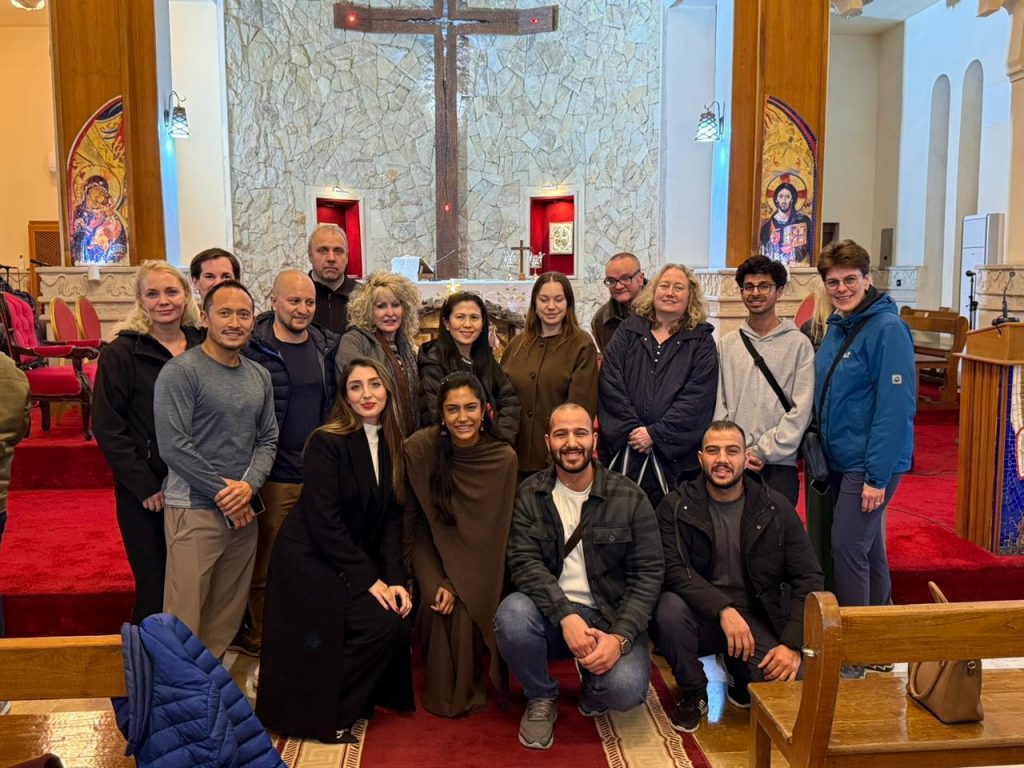
It was an honor that for Christmas Eve 2025, our YPT Christmas In Iraq tour group were invited to attend Chaldean Christmas Eve mass in Baghdad. After many years of war, the Christian community in Iraq have become, understandably, relatively insular. Many of the local churches will have security guards, checking those who enter for any weapons or anything dangerous. After decades of war and a large majority of the Christian community emigrating from Iraq, those who are left usually conduct their religious affairs privately, or within small communities.
Table of Contents
Who Are The Chaldeans?
The Chaldeans are an ancient community from Iraq, with roots going back to Mesopotamia. Originally, the word “Chaldean” referred to people living in southern Iraq thousands of years ago, but today it’s mostly used to describe Chaldean Christians. They belong to the Chaldean Catholic Church, which is linked to Rome but keeps its own traditions, language, and way of worship.
Most Chaldeans historically lived in northern Iraq, especially around Mosul and the Nineveh Plains, though many have since moved abroad due to war and instability. You’ll find big communities in places like Detroit, Europe, and Australia. Many still speak Neo-Aramaic, a modern version of the language that’s been spoken in the region for centuries, particularly in church settings.
Culturally, Chaldeans see themselves as indigenous to Iraq, with a strong connection to the land and a long history that predates modern borders. Even after years of displacement, they’ve held onto their identity, faith, and sense of community.
How do the Chaldeans Differ From Other Catholic Sects?
At its core, the Chaldean faith isn’t wildly different from other Catholic traditions, but it has its own flavour shaped by history, geography, and culture.
Chaldean Christians are part of the Chaldean Catholic Church, which means they recognise the Pope in Rome, unlike Assyrian or Syriac churches that split earlier. That said, their day-to-day religious life doesn’t feel very “Roman.” The liturgy is ancient and comes from the Church of the East, with prayers that go back well over a thousand years.
One big difference is language. Parts of the service are still done in Aramaic (specifically Syriac), which is close to the language Jesus would have spoken. Even people who don’t speak it fluently often understand key phrases because they’ve grown up hearing them in church.
The style of worship is also more restrained than, say, evangelical churches. There’s a strong focus on ritual, fasting, saints, and long liturgical calendars. Community and family play a huge role too — church life is as much about social bonds as it is about belief.
So while the theology lines up with Catholicism, the experience feels older, quieter, and very tied to Mesopotamian history rather than European Christianity.
Our Experience Attending Chaldean Christmas Eve Mass in Baghdad
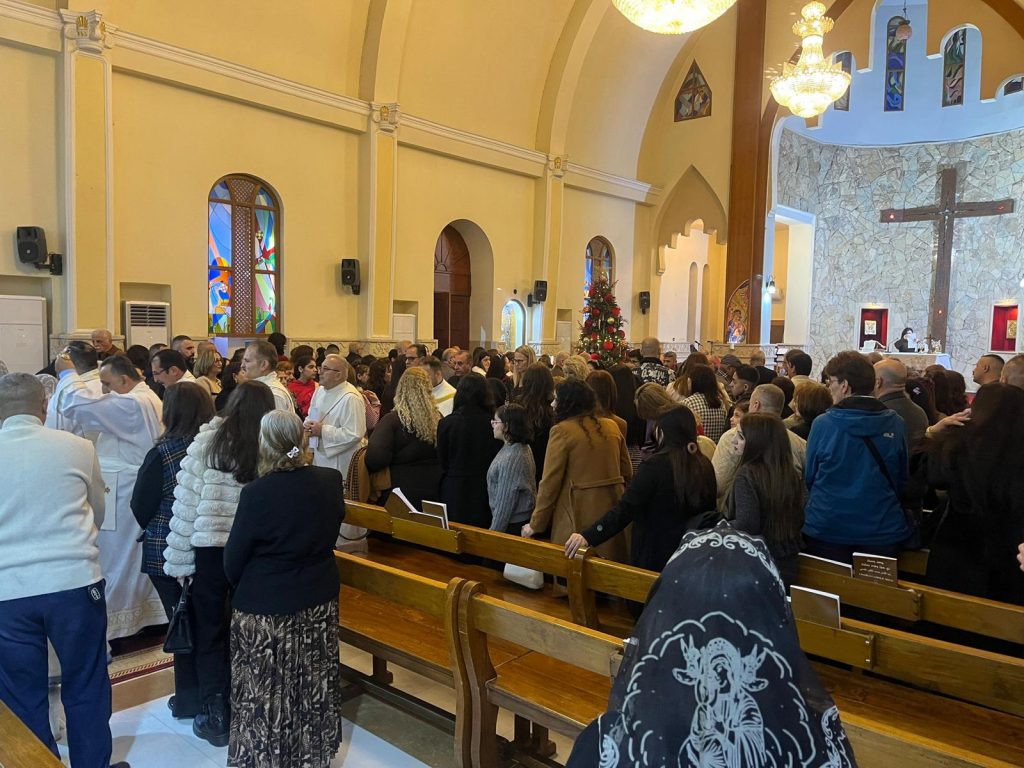
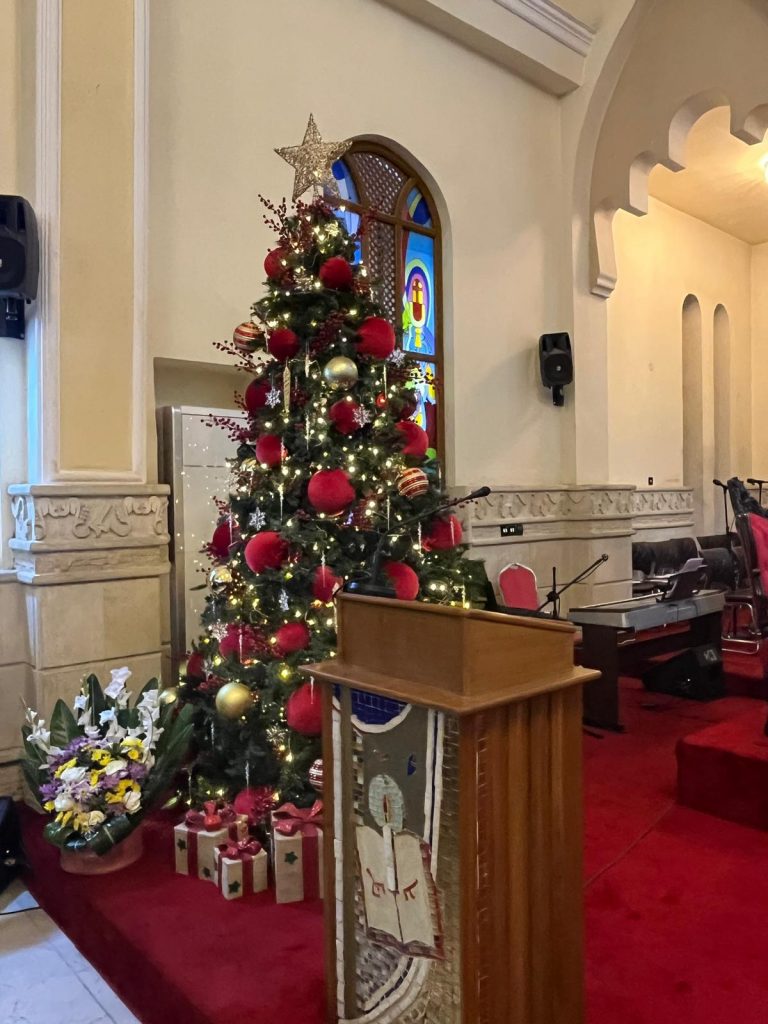
We were lucky enough to be invited by members of the Chaldean community to attend a Christmas Eve Mass in Baghdad- which by invitation is the only way foreigners or members outside the community can visit. After checking with security at the front, we were ushered into the courtyard where many people were chatting and relaxing before mass. There was a huge Christmas tree and decorations celebrating Christmas.
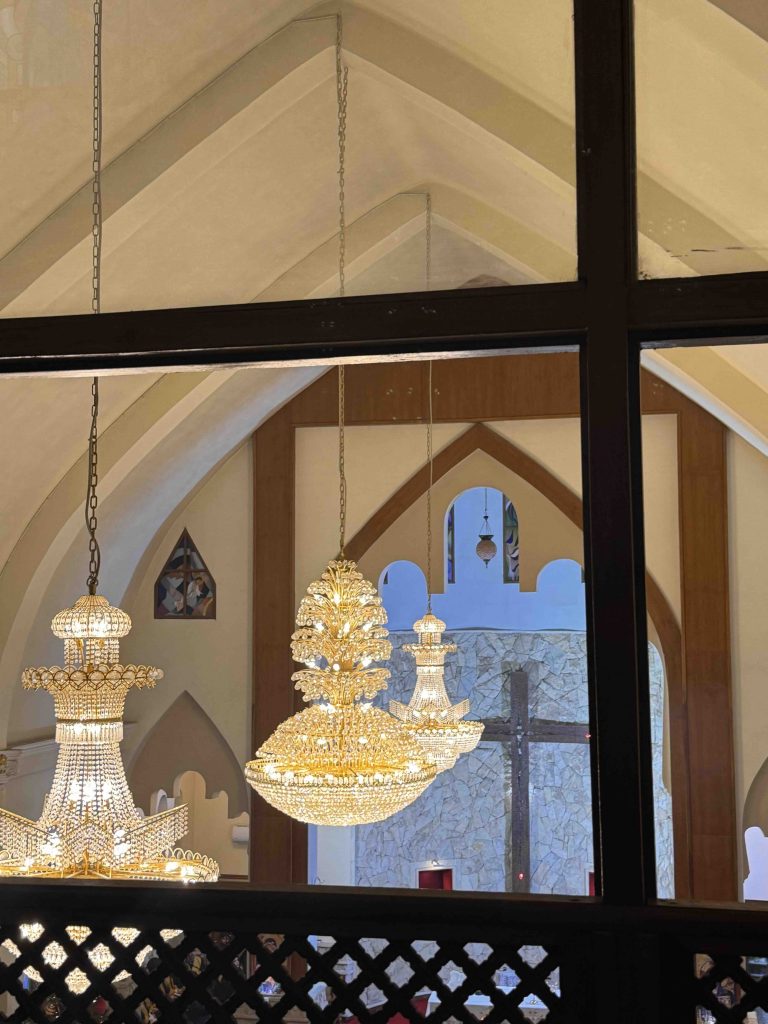
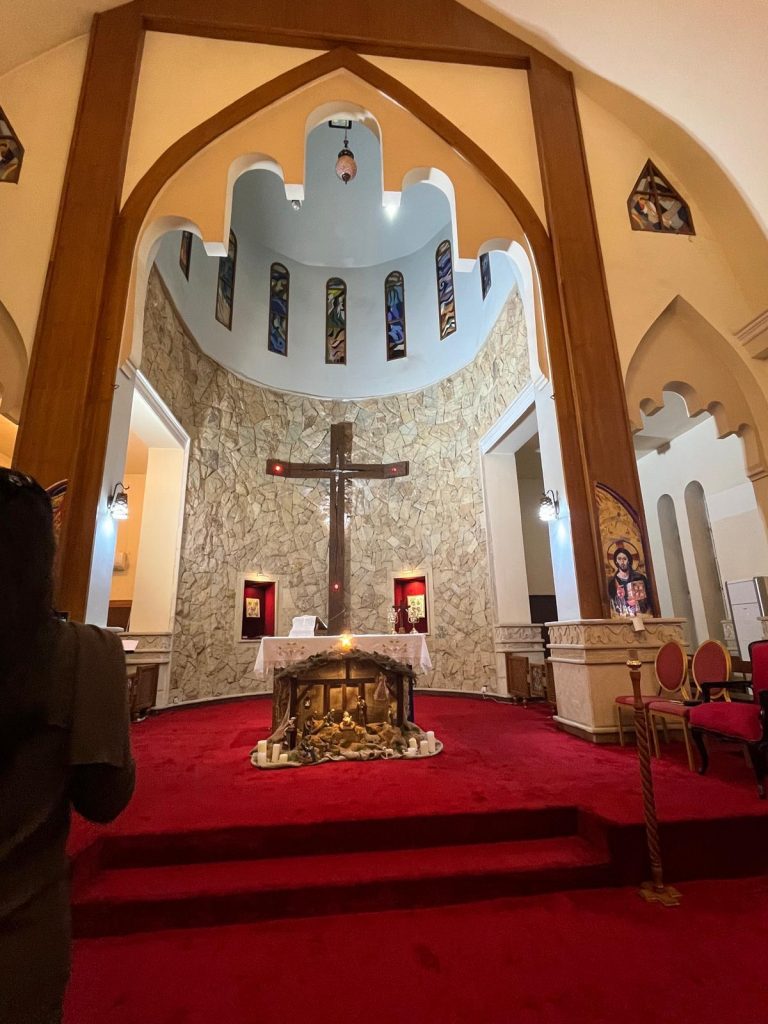
We were then directed into the church and spread out among different pews. The church was grand and filled with gold and red decorations. Once the mass started, there were many priests who took turns reading different scripts in Aramaic and in Arabic. There was also a choir made up of community youth who sang close to 10 hymns throughout the two hour mass. The Mass involved many prayers, giving thanks and taking communion.
After the mass, we congregated outside where there was a cross lit on fire. In Chaldean communities, especially in Iraq, lighting a cross on fire at Christmas is more of a local tradition than a formal church practice. It isn’t something you’ll see everywhere, and it’s very much tied to village life and older customs.
The fire represents light and renewal, as well as Christ’s birth bringing light into a dark world. In practical terms, fire was always central to winter life in Mesopotamia: it meant warmth, safety, and survival. Marking Christmas with fire just made sense, and over time it became symbolic.
The cross being lit isn’t about burning or destroying it. It’s about illumination. In some places, the whole community would gather to light the cross together, and families would take embers home to relight their own fires, as a sign of blessing and continuity.
There’s also likely a link to pre-Christian traditions in the region, where fire was used to mark important moments and seasonal changes. Like many Middle Eastern Christian customs, older cultural practices blended naturally into Christian celebrations rather than being replaced.
Fake snow was released from a machine, making it a very ‘White Christmas’! We were wished Merry Christmas by many members of the friendly community.
A Unique And Powerful Experience
It was an honour to be invited and celebrate Christmas with the Chaldeon community which has faced many challenges in recent history. Despite everything, they opened their doors and welcomed strangers in to celebrate Christmas, something that seems to bond many people together, despite personal religious beliefs.
Tours to Iraq
We offer many tours to Iraq in March, May, October and December!
About Post Author