Despite existing super under the radar Syrian cuisine is actually not just one of the best of the Middle-East, but perhaps the world. And this is for many reasons, such as its access to great ingredients, Mediterranean location and indeed proximity to some of the best food on the planet.
In it is so good that I personally rate it 34th on the planet, while the chaps at Taste Atlas put it similarly at 34th. And there are some killer dishes, such as Kibbeh (minced meat patties), Muhammara (a spicy dip) and of course shawarma Syrian style!
Table of Contents
What is Syrian Cuisine?
Syrian cuisine is the product of millennia of trade, conquest, and cultural exchange. Ottoman influence is clear, from baklava to kebabs, while Levantine traditions tie it to Lebanon, Jordan, and Palestine. The cuisine differs from its neighbours through the subtle layering of spices, use of preserved ingredients like pomegranate molasses, and the balance of sweet, sour, and smoky flavours in a single dish.
Syrian cooks also make far more frequent use of walnuts, pine nuts, and fresh herbs than their northern or southern neighbours. While hummus and falafel exist everywhere in the Levant, Syria often adds unique touches, like the Aleppo pepper, which gives everything from sauces to kebabs a mild, fruity heat.

Regional Varieties of Syrian Food
Syria’s geography dictates its flavours. Coastal cities such as Latakia or Tartus favour seafood dishes with a lemony, herby punch. Aleppo, historically a spice hub, is famous for rich, oily, and fragrant cuisine including muhammara, kebabs, and kibbeh varieties.
Damascus leans more towards the sweet-savoury balance, with dishes like maqluba and fatteh, and a strong tradition of desserts such as baklava and knafeh. Inland, the mountains of Homs and Hama produce dishes rich in grains, pulses, and lamb stews, often slow-cooked over wood fires. The desert regions, meanwhile, rely on preserved and dried foods, with flatbreads and meat jerky forming the backbone of Bedouin cuisine.
Top Syrian 10 Dishes You Need to Try
There is. Actually so much range to Syrian cuisine that picking 10 dishes is actually a hard ting to do, but do so we have at least tried!
Kibbeh (كبة)
Minced lamb or beef mixed with bulgur and spices, shaped into balls or patties. Can be baked, fried, or eaten raw as kibbeh nayeh. Aleppo-style kibbeh is particularly famous for its balanced spice and pine nut filling.

Muhammara (محمرة)
A smoky red pepper and walnut dip from Aleppo, sweetened with pomegranate molasses. Perfect for bread or as a meze starter.

Fatteh (فتة)
Layers of fried bread, chickpeas, yogurt, and ghee, often topped with nuts. A breakfast and festival staple.

Yalanji / Warak Enab (ورق عنب)
Grape leaves stuffed with rice, herbs, and pine nuts, sometimes minced meat. Served cold as part of a meze.

Maqluba (مقلوبة)
Literally “upside-down,” a rice, vegetable, and meat casserole flipped when served. Homs-style maqluba is a classic comfort dish.

Falafel (فلافل)
Deep-fried spiced chickpea or fava bean balls. Crispy outside, soft inside, usually served with tahini or wrapped in flatbread with salad.

Sfiha / Lahm bi Ajeen (صفيحة / لحم بعجين)
Small open-faced meat pies, seasoned lamb on flatbread. Common street food in Aleppo and Damascus.

Baklava (بقلاوة)
Phyllo pastry layered with nuts, soaked in orange blossom or rosewater syrup. Aleppo baklava is particularly prized for its delicate texture.

Mujaddara (مجدرة)
Lentils and rice topped with caramelised onions. Humble, filling, and perfect as a vegetarian staple.

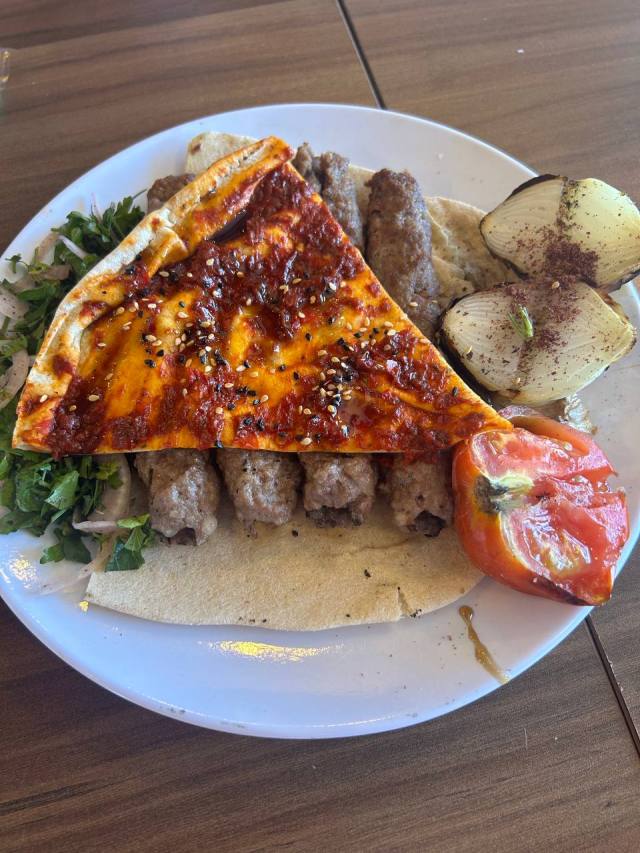
Kofta (كفتة)
Spiced ground meat skewers, often grilled over charcoal and served with tahini or yogurt sauce. A popular item across Syria.
Street Food Syria
Syrian street food is a world of aroma, smoke, and spice. From the alleyways of Damascus to Aleppo’s bustling markets, street vendors serve up some of the best, cheapest, and most authentic flavours you can find. It’s messy, lively, and full of character.

Ka’ak (كعك)
Sesame-studded bread rings, often eaten with cheese or za’atar.

Sambousek (سمبوسك)
Deep-fried pastry filled with spiced meat or cheese, usually served hot from street carts.

Halawet el Jibn (حلاوة الجبن)
Sweet cheese rolls stuffed with semolina or pistachios, perfect as a dessert on the street.

Shawarma (شاورما)
Thinly sliced spiced meat roasted on a vertical spit, wrapped in flatbread with garlic sauce and pickles. Damascus is famous for its street-style sandwiches.

Foul Medames (فول مدمس)
Slow-cooked fava beans with olive oil, garlic, and lemon juice, eaten with fresh bread for breakfast.

Drinking in Syria
Can you drink in Syria? The short answer is yes, or rather you certainly could, though the political climate and Islamist influence could affect availability in future. Previously, Damascus and coastal cities like Latakia had lively nightlife, with a mixture of local wine, arak, and imported spirits. Coffee culture dominates daily life, but alcohol was widely enjoyed in social settings.
Arak (عرق)
Anise-flavoured spirit, often diluted with water and served with ice.

Syrian Wine
Damascus and Qardaha produce some excellent locally crafted wines, particularly red blends.

Syrian Beer
Local breweries, particularly in Aleppo and Latakia, produce light, easy-drinking lagers.

Coffee (قهوة)
Strong, cardamom-infused coffee, served thick and black. A daily ritual across Syria.

Ayran (عيران)
Salty yogurt drink, cooling and refreshing, perfect with grilled meats.

Tamarind Juice (عصير التمر الهندي)
Sweet-sour tamarind pulp served chilled, popular in Damascus street stalls.

Jallab (جلاب)
Molasses-based drink with rosewater and pine nuts, served over ice.

Conclusion
So to cut a long story short not only will you not go hungry in Syria, but if you are adventurous and prepared to try new things, then you will have a great culinary time in Syria. Combine this with the fact that people are super friendly and this is truly one of the best travel, social and culinary adventures you can have.
Click to see our Syria Tours.
About Post Author