There are few places in the world where history feels as unavoidable, as it does at the Kigali Genocide Memorial. Sitting on a quiet hillside in the Gisozi district of Kigali, the memorial is both a museum and the final resting place for over 250,000 victims of the Rwandan genocide. We visit it as a central part of our Rwanda tour, not out of obligation, but because without it, Rwanda makes far less sense.
Table of Contents
Before 1994: How It Came to This
To understand the memorial, you need to understand that the genocide did not emerge in isolation. The exhibition takes time to walk visitors through Rwanda’s pre-colonial structure, where identities such as Hutu and Tutsi were more fluid, often linked to social status rather than rigid ethnicity.
This changed under German, and later Belgian, colonial rule. The Belgians formalised ethnic divisions, introducing identity cards and reinforcing a hierarchy that privileged Tutsis over Hutus. Over time, resentment built, particularly as power shifted in the years leading up to independence in 1962.
Post-independence Rwanda saw cycles of violence, discrimination, and exile, with many Tutsis fleeing to neighbouring countries. By the early 1990s, tensions had escalated into civil war between the government and the Rwandan Patriotic Front, largely composed of Tutsi exiles.
The trigger came on 6 April 1994, when the plane carrying President Juvénal Habyarimana was shot down. Within hours, roadblocks were erected, lists were activated, and the killing began.
Inside the Memorial: A Structured Descent
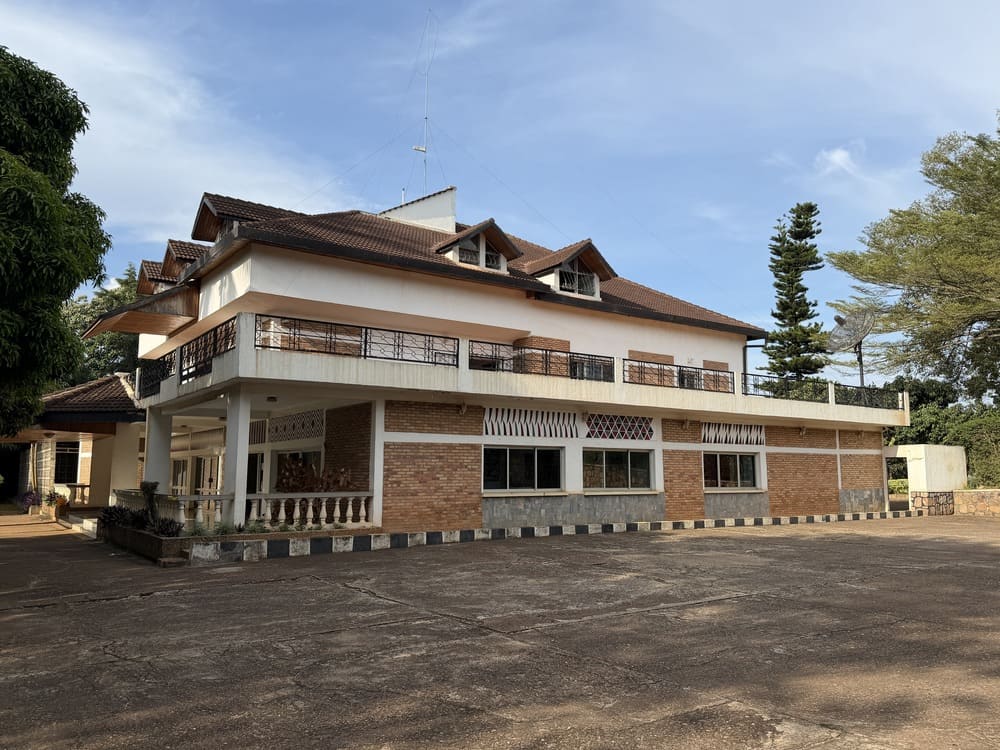
The Kigali Genocide Memorial is carefully curated to guide visitors through a layered understanding of what happened.
The first galleries establish the historical timeline. Archival footage, political documents, and propaganda material illustrate how division was not only encouraged but systematised. Radio broadcasts, particularly those from Radio télévision libre des Mille Collines (RTLM), are contextualised, showing how language was weaponised to dehumanise Tutsis and moderate Hutus.
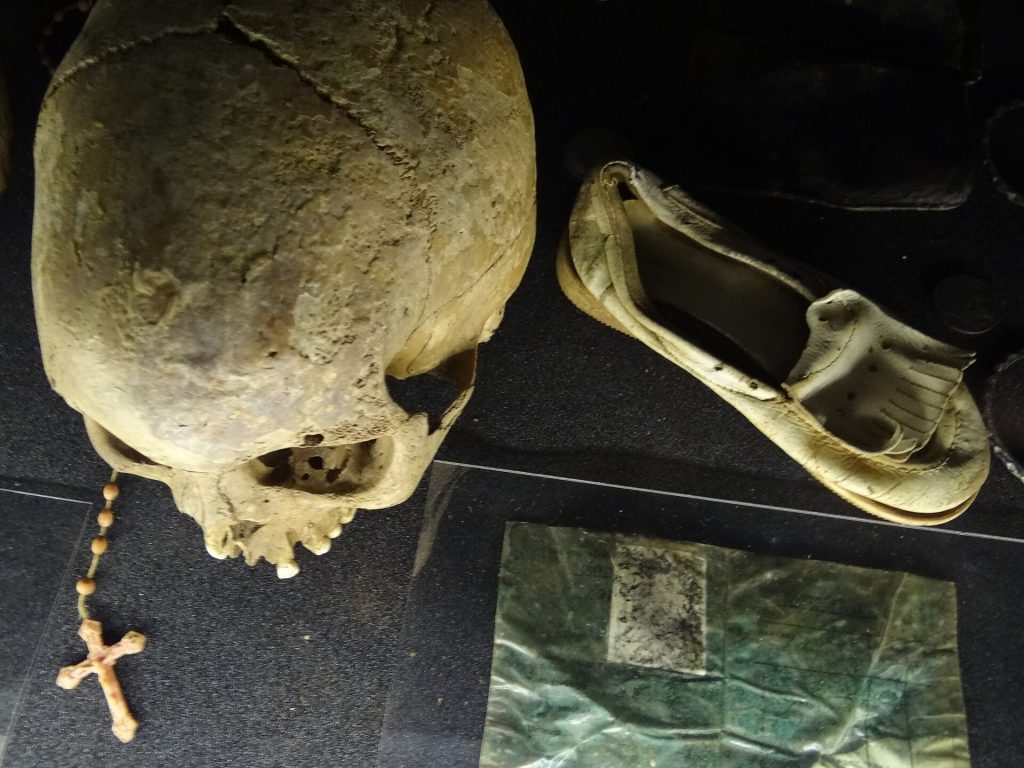
Moving deeper, the focus shifts to 1994 itself. Here, the narrative becomes more immediate. Photographs line the walls, many taken during or shortly after the genocide. Personal belongings recovered from mass graves, clothing, tools, fragments of daily life, are displayed in stark contrast to the violence that ended those lives.
One of the most affecting sections is the children’s memorial. Simple panels present individual stories: a name, a photograph, favourite food, favourite game, and then, often bluntly, the manner of death. It is deliberately minimal, and precisely because of that, difficult to absorb.
Another section widens the lens, placing Rwanda alongside other genocides, including the Holocaust, Bosnia, and Cambodia. The intention is not comparison in scale, but in pattern, showing how similar mechanisms of exclusion, propaganda, and international inaction repeat across different contexts.
The Kigali Genocide Memorial Grounds: Where Memory Is Physical
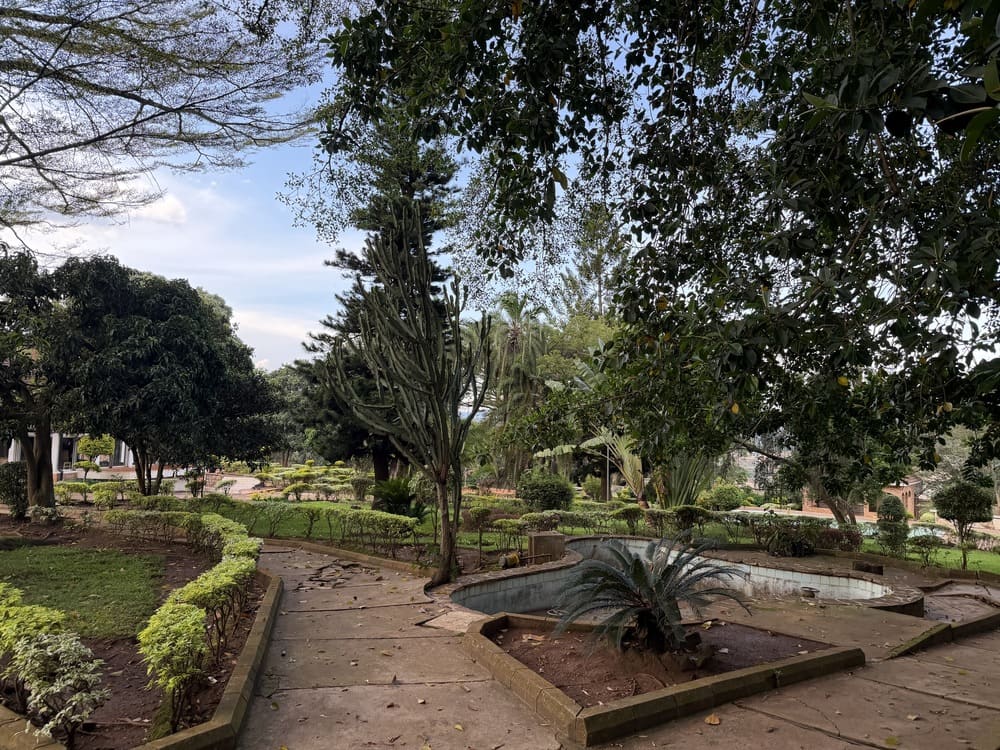
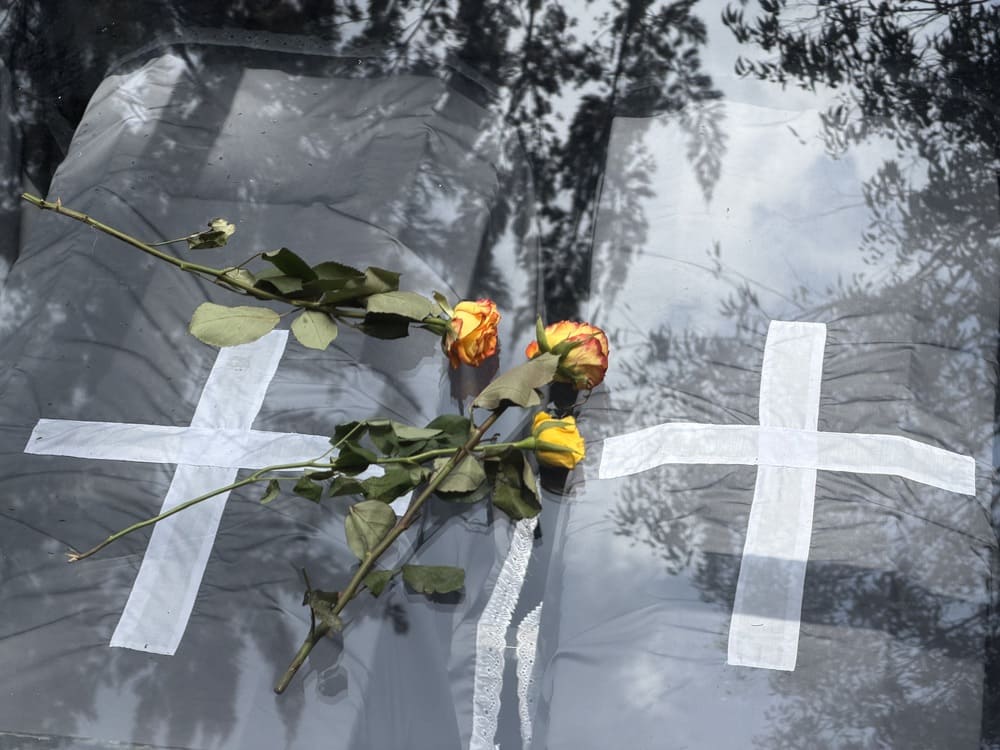
Outside, the memorial shifts in tone. The gardens are quiet, deliberately so. Large concrete slabs mark the mass graves beneath, where over a quarter of a million victims are buried. These are not symbolic graves; they contain remains that are still being recovered and interred.
Visitors often spend time here after going through the exhibitions. The contrast between the calm setting and the knowledge of what lies beneath it is striking. It is also where the memorial becomes less about information and more about reflection.
There is also a Wall of Names, though many victims remain unidentified. In that absence, the scale of the loss becomes even more apparent.
The International Dimension
One of the memorial’s key themes is the role, or lack thereof, of the international community. The withdrawal of UN peacekeepers, the reluctance of foreign governments to intervene, and the bureaucratic avoidance of the word “genocide” are all addressed directly.
Figures such as Roméo Dallaire are referenced, highlighting both the limitations of the UN mission and the warnings that went unheeded. This part of the exhibition often resonates strongly with visitors, particularly those familiar with other conflict zones.
It also serves as a reminder that the genocide unfolded in full view of the world.
Rwanda Today: Context Beyond the Memorial
Visiting the memorial inevitably shapes how you see the rest of Rwanda. Modern Kigali is orderly, structured, and notably clean. There is a strong emphasis on national unity, with public discourse avoiding ethnic labels in favour of a shared Rwandan identity.
The government’s approach to reconciliation, justice through Gacaca courts, and economic rebuilding are not covered in depth within the memorial itself, but they are part of the broader story that visitors encounter during their time in the country.
Without the grounding provided by the memorial, these aspects can feel abstract. After visiting, they tend to feel necessary.
What It’s Like to Visit the Kigali Genocide Memorial
We allocate proper time here on our tours. Rushing through would defeat the purpose.
The memorial is well-organised, with clear signage and optional audio guides that provide additional context. The tone throughout is factual and restrained. There is no sensationalism, but there is also no attempt to dilute what happened.
Photography is forbidden indoors, and visitors are expected to behave respectfully. Conversations tend to be quieter, and many people move through the space at a slower pace than they might in a typical museum.
It is not uncommon for the visit to stay with people long after they leave.
YPT tours often focus on places that are politically complex, historically significant, or logistically unusual. Rwanda fits all three, but the Kigali Genocide Memorial anchors the experience in a way few sites can.
It provides a foundation. Without it, Rwanda risks being reduced to surface impressions: clean streets, efficient systems, a country that appears to function remarkably well. With it, those same observations take on weight and meaning.
This is not an easy stop on the itinerary, but it is one of the most important.
About Post Author