While much lesser known than the former east‑west Berlin Cold War border, there was of course a huge border between the Federal Republic of Germany and the German Democratic Republic.
And while much of this has disappeared since reunification, there are still not just reminders of its grim past, but also historical sites, museums and the like that make the German internal border a great place to visit. How though do you navigate it and what is there to see?
Table of Contents
What was the German Internal Border?
The German internal border was the physical and ideological line between West Germany (FRG) and East Germany (GDR) from 1949 until reunification in 1990. Stretching more than 1,400 kilometres from the Baltic Sea in the north down to the former Czechoslovakia in the south, it was one of the most fortified frontiers of the Cold War.
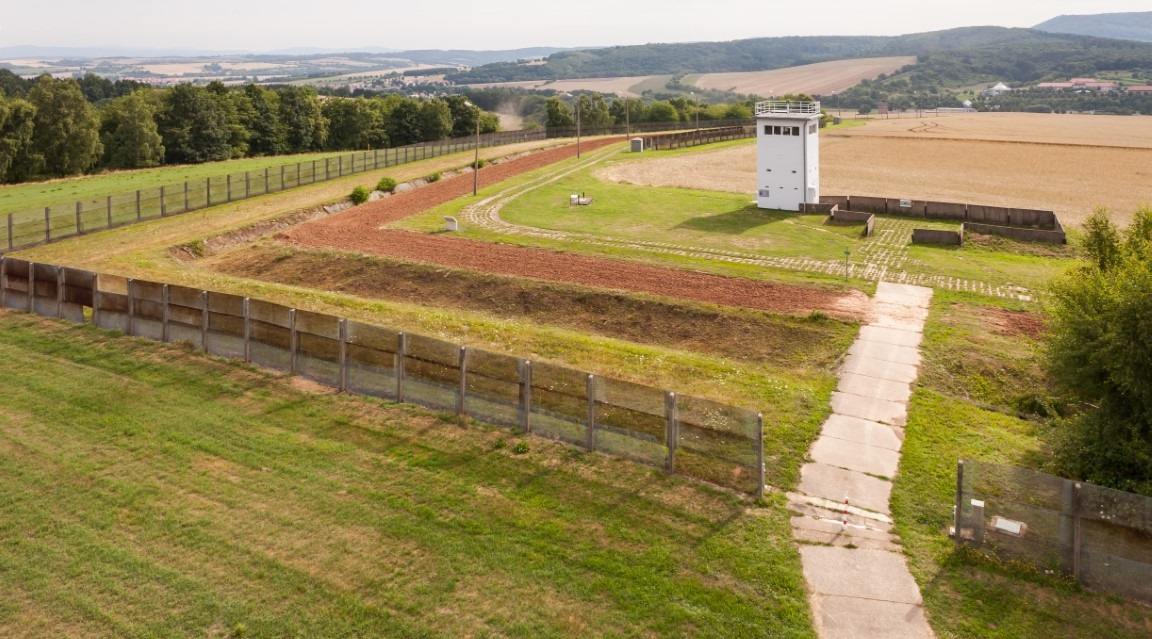
Unlike the Berlin Wall, which bisected a single city, this border cut through forests, fields, rivers, and even villages. In its most secure sectors it consisted of wire fences, anti‑vehicle trenches, minefields, guard towers and a military patrol road restricted even to local residents. Only a handful of checkpoints existed where travel was allowed under strict controls. Families were split, farmers lost access to fields, and escape attempts were met with deadly force.
Today most barriers are gone, but scattered watchtowers, memorials, museums and dedicated cycling/walking trails trace the line of division, preserving the memory of a Germany that was once locked in the middle of a global standoff.

How long does it take to drive the German Internal Border?
This is where those bullshit “18–20 hours” guesses fall apart if you actually want to see anything worth seeing. The literal distance from the Baltic Sea (near Rostock) down to where the border met Czechoslovakia (near Hof) is around 1,400–1,500 kilometres as the crow flies.
You though are not flying, you’re driving on real roads, stopping at sites, detouring into towns, parking and walking around memorials, peering into museums that close at weird times, and eating currywurst. Maybe even eating sausages and drinking seiners.
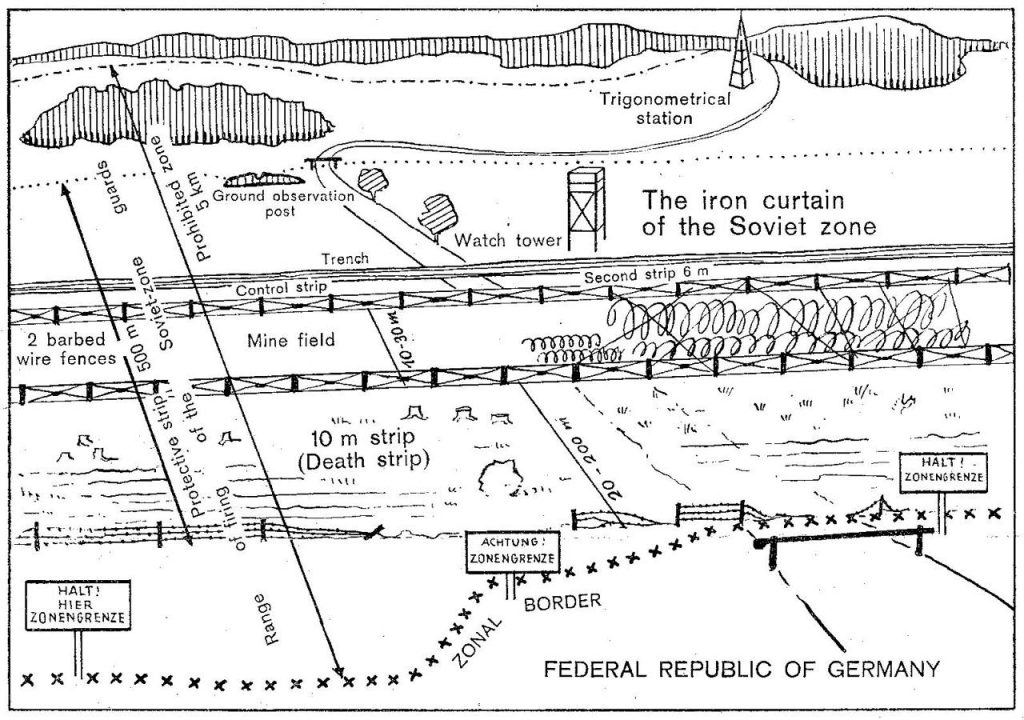
Driving without stops on the German Internal Border
If you truly just follow the rough path of the old border using modern highways and backroads, you’re looking at roughly 20–24 hours of pure driving, which is painful and stupid. This assumes no traffic, no coffee stops, no gas, and no curiosity. It would be like running your car through a treadmill and is largely for the mental.
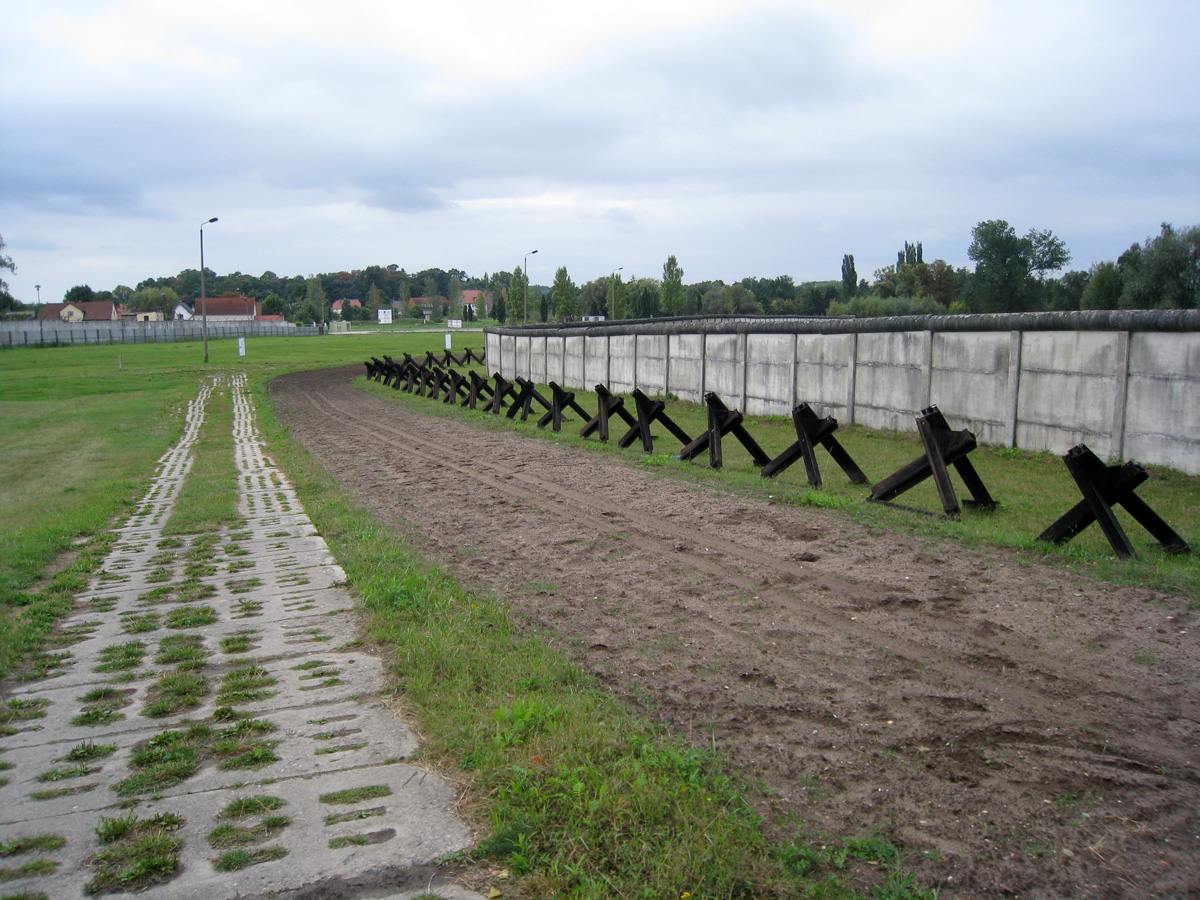
Driving with stops along the German Internal Border
If you actually want to experience the border: historic checkpoints, watchtowers, memorials, towns split in two, landscapes that once were death strips, then you need to double or triple that. A minimum of 3–4 days gives you enough time to:
- start in Berlin (a logical gateway because of its Cold War history),
- hit major sites like Point Alpha, Marienborn, the border trails in Thuringia,
- sleep in border towns,
- wander museums,
- and take the detours that people are really worth it.
If you’re a proper history nerd who wants walking trail segments, local museums, and rural cemeteries where escapees are commemorated, then build 5–7 days into your trip. The route isn’t a straight line; oftentimes you’ll be zig‑zagging along old patrol roads that now serve as hiking/cycling routes because there simply aren’t continuous highways hugging the old frontier.
In short:
- Non‑stop driving: 20–24 hours
- Realistic travel with key stops: 3–4 days
- Deep historical trip: 5–7 days (or more if you’re obsessive)
What is there to see?
The former German internal border has transformed from one of the most oppressive frontiers in Europe to a quiet, eerie, fascinating historical landscape. You could easily spend a week dipping into little museums, old watchtowers, cemeteries, river crossings, and memorials that few tourists ever bother with.

Point Alpha, Hesse
A Cold War frontline outpost where NATO and Warsaw Pact forces literally faced off. Today there’s a museum, reconstructed observation towers, interpretive trails and guides who will tell you how close the world got to blowing itself up over this line.

The Border Fence Trail, Thuringia
A long walking and cycling route that follows the old barrier through forests, rivers and farmland. It’s peaceful now — which makes you think twice when you remember that it used to be death strip.
Checkpoint Alpha Museum, Marienborn
One of the main crossing points between East and West during the Cold War. Authentic booths, guard towers, border control installations and tonnes of dusty memorabilia.

Geisa Memorial (Hesse/Thuringia)
A sobering site dedicated to those who tried to cross the border and never made it. Old fence lines, watchtower foundations and explanatory plaques make this one of the most poignant stops.
Do YPT offer East Germany Tours?
YPT have offered tours throughout East Germany as part of our wider Soviet Tours for many years, although we have not as of yet offered a DDR Group Tour (watch this space)
It is though something we are very much looking into, perhaps even with some added World War 2 and Nazi‑based extras thrown in. And while Germany might be a tint bit vanilla by YPT standards, we really feel this would get us way off the beaten track….
Click to see our East Germany Tours.
About Post Author