The Tuareg are one of the Sahara’s most recognisable peoples. Known as the “Blue People of the Sahara” for their indigo robes and veiled faces, they have lived for centuries in one of the harshest environments on earth. But the Tuareg are far more than a tourist cliché.
They are a sophisticated culture, shaped by trade, travel, and survival in a desert that would swallow the unprepared in a heartbeat.
Their traditional territory stretches across modern Mali, Niger, southern Algeria, Libya, and Burkina Faso. Despite national borders slicing through their lands, the Tuareg remain united by language, culture, and a shared sense of identity without passport nationality.
Table of Contents
Life in the Desert
Nomadic pastoralism has defined Tuareg life for centuries. Families move with herds of camels, goats, and cattle, following the scarce seasonal grazing and water sources. The desert is far from empty. It contains hidden wells, salt flats, and grasses that bloom after rare rains. Tuareg knowledge of these resources is extensive, passed down orally over generations.
Their camps are built for mobility. Tents made from leather or woven mats can be dismantled and loaded onto camels in hours. Entire communities move together, often with several hundred animals, following routes that have been in use for centuries. Survival depends on memory, instinct, and a profound understanding of the desert’s rhythms.
Caravans were historically central to their economy. Tuareg traders moved salt, gold, dates, and other goods across the Sahara. Some journeys lasted weeks, sometimes months. Knowledge of navigation, weather patterns, and sandstorms was essential, and respected caravan leaders held authority both socially and economically.
The Veil and Clothing
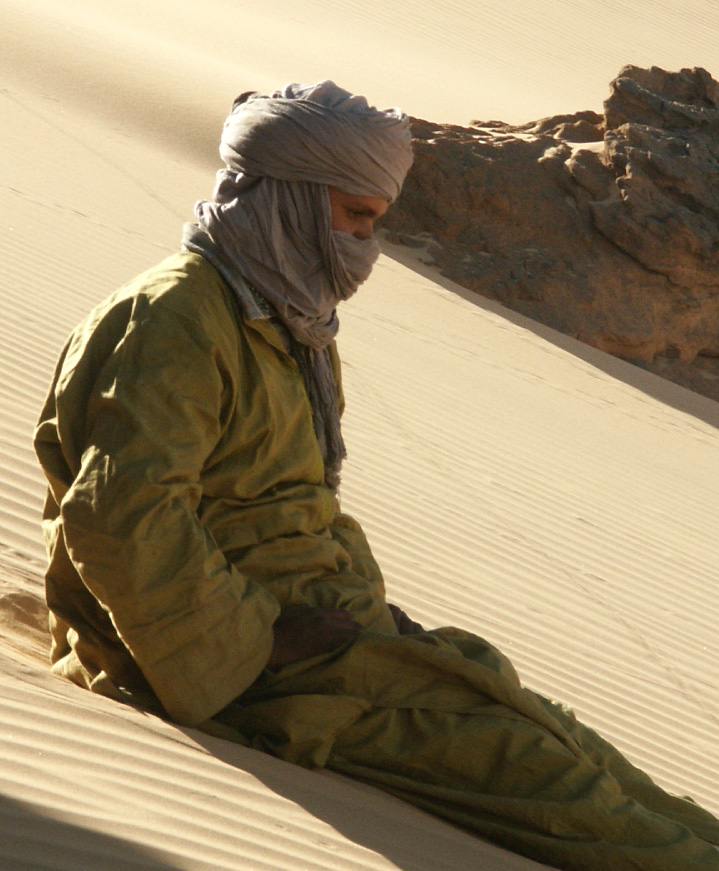
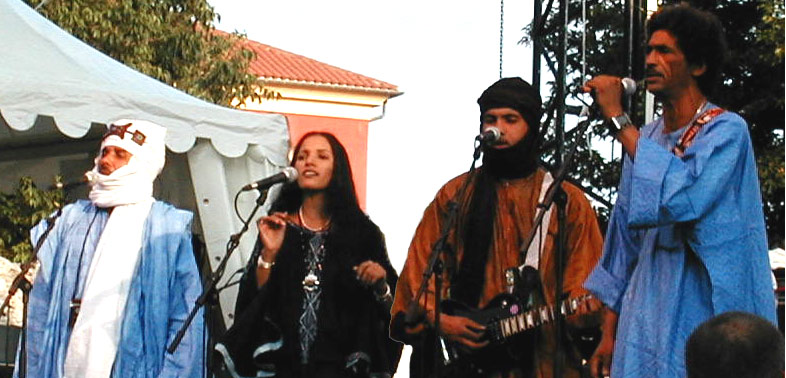
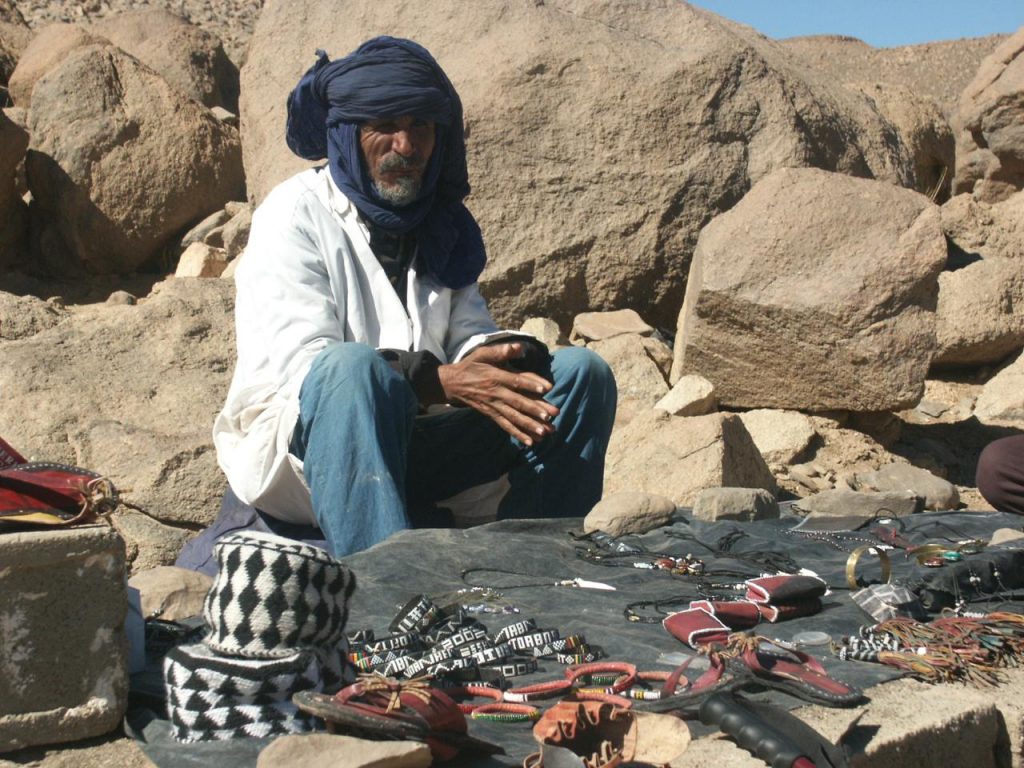
The Tuareg are instantly recognisable thanks to their distinctive clothing. Adult men wear the tagelmust, a long indigo cloth covering the head and lower face. It protects against the sun, sand, and wind, but it also signals adulthood and social identity. The indigo dye rubs off on the skin, giving them the “Blue People” nickname.
Women, by contrast, do not cover their faces. This inversion of expectation in a desert society is one of many ways the Tuareg defy typical stereotypes about the region. Men rarely remove their veils in public, and the fabric and wrapping style can indicate social status, clan affiliation, or regional origin.
Matrilineal Society and Women’s Role
Perhaps the most striking feature of Tuareg society is its matrilineal structure. Family lineage and inheritance pass through the mother rather than the father. Women traditionally own the family tent, and if a marriage ends, the husband leaves while the children and tent remain with the woman. This system gives women considerable authority and security within their communities.
Tuareg women are also central to cultural life. They preserve oral history, compose and perform poetry, and educate the next generation in both practical skills and cultural knowledge. Compared with neighbouring societies, Tuareg women enjoy greater social freedom. They can interact with men, travel independently within the group, and make significant decisions for family and community life.

Language and Writing
Tuareg culture is tightly bound to its language, Tamasheq, part of the Berber family. Despite the spread of Arabic and French due to colonial influence, Tamasheq remains a marker of identity and cohesion.
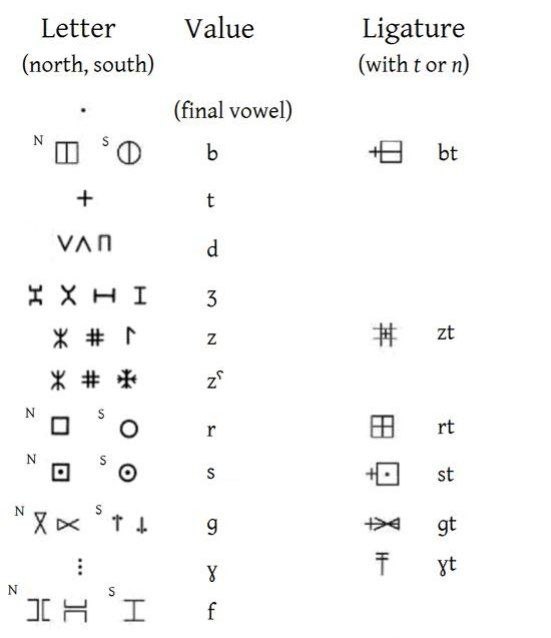
The Tuareg also use Tifinagh, an ancient script still seen on rock carvings, jewellery, and tents. While not widely used in daily life, it is a powerful cultural symbol, a reminder of continuity and resilience in a harsh and changing world.

Social Structure and Hierarchy
Traditional Tuareg society has historically been hierarchical. Noble clans led caravans and managed trade routes. Religious leaders provided spiritual guidance, while artisan groups produced essential tools, weapons, and crafts. Music, storytelling, and poetry were central, preserving history and culture through generations.
Though modern pressures have eroded these hierarchies, clan identity, respect for elders, and traditional roles continue to shape community life. Leadership often comes from experience, knowledge of desert survival, and wisdom rather than mere wealth.
Music, Art, and Culture
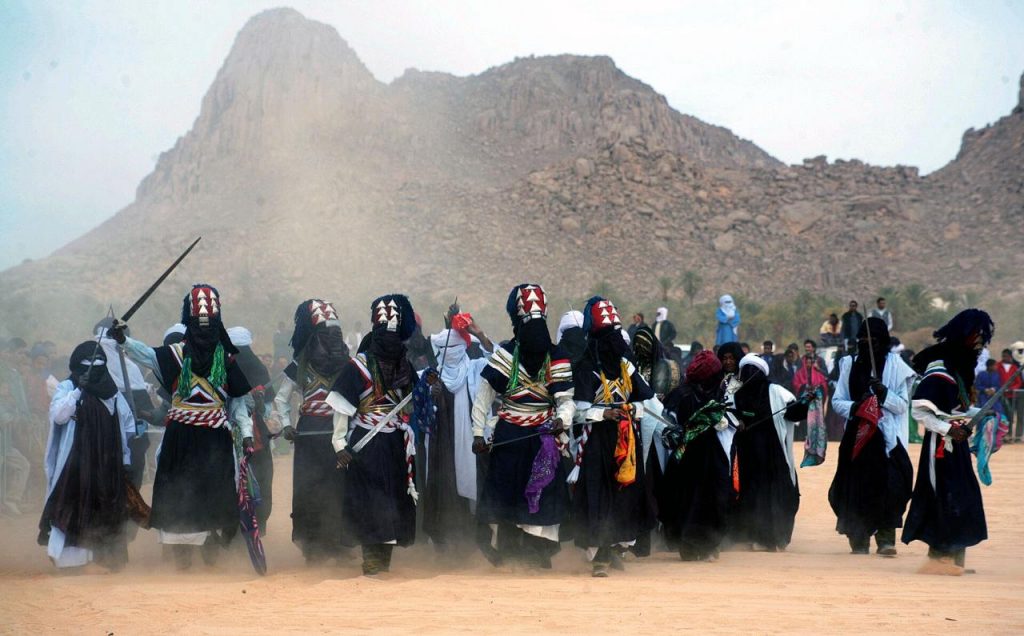
Music is one of the Tuareg’s most recognised cultural expressions. Songs tell stories of desert life, travel, exile, love, and political struggle. In recent decades, bands like Tinariwen have brought Tuareg music to the world, blending traditional rhythms with electric guitars to create “desert blues.”
Art and poetry remain central to identity. Patterns in clothing, jewellery, and tents convey messages of family, tribe, and social standing. Cultural knowledge is shared orally, often in long nights spent around fires in the desert.
Daily Life and Survival
Life in the desert is hard. The Tuareg rely on camels for transport and milk, goats for meat and cheese, and careful management of scarce water. Cooking is done over fire or coals, often in communal spaces. Children learn survival skills early: navigation, animal husbandry, and knowledge of edible plants.
Despite the harsh conditions, Tuareg society values hospitality highly. Travellers are offered food, water, and guidance. Sharing resources is both a survival tactic and a moral obligation, ensuring the community endures together.
Challenges and Change
Modern Tuareg life is far from untouched by change. Drought, desertification, and political instability have forced many to settle in towns or take up wage labour. Conflicts in Mali and Niger have occasionally erupted into rebellion, as communities seek recognition, autonomy, or a return to traditional lands.
Technology has altered nomadic life. Motorbikes accompany camel caravans. Mobile phones and solar panels are becoming common. Yet many traditions persist: clothing, language, music, and social structures remain vital to identity.

The Tuareg Today
Today, the Tuareg balance tradition and modernity. Some families still move seasonally with livestock, while others live in urban centres. Even those in cities maintain cultural practices: women preserve poetry and matrilineal authority, men wear tagelmusts for special occasions, and festivals celebrate music and storytelling.
The Sahara may seem empty to outsiders, but for the Tuareg it is home and where they do their thing. Yes, it is harsh, but it is this harshness and their resilience that makes them who they are.
Click to check out our Africa Tours.
About Post Author