When traveling to Saudi Arabia, the center of the country is usually overlooked in favur of the Jeddah beaches, the modern utopia of Riyadh and the photographer’s dream in AlUla. However, there is a place overlooked near the small city of Ha’il – Jubbah Archaeological Site. Jubbah is a small town encompassed by archaeological rock formations with images inscribed believed to be more than 7,000 years old! These are some of the oldest known inscriptions in Arabia. Despite the Jubbah Archaeological site being one of the most impressive in the country, it is not visited often. However, it is a must-see site when traveling to Saudi Arabia!
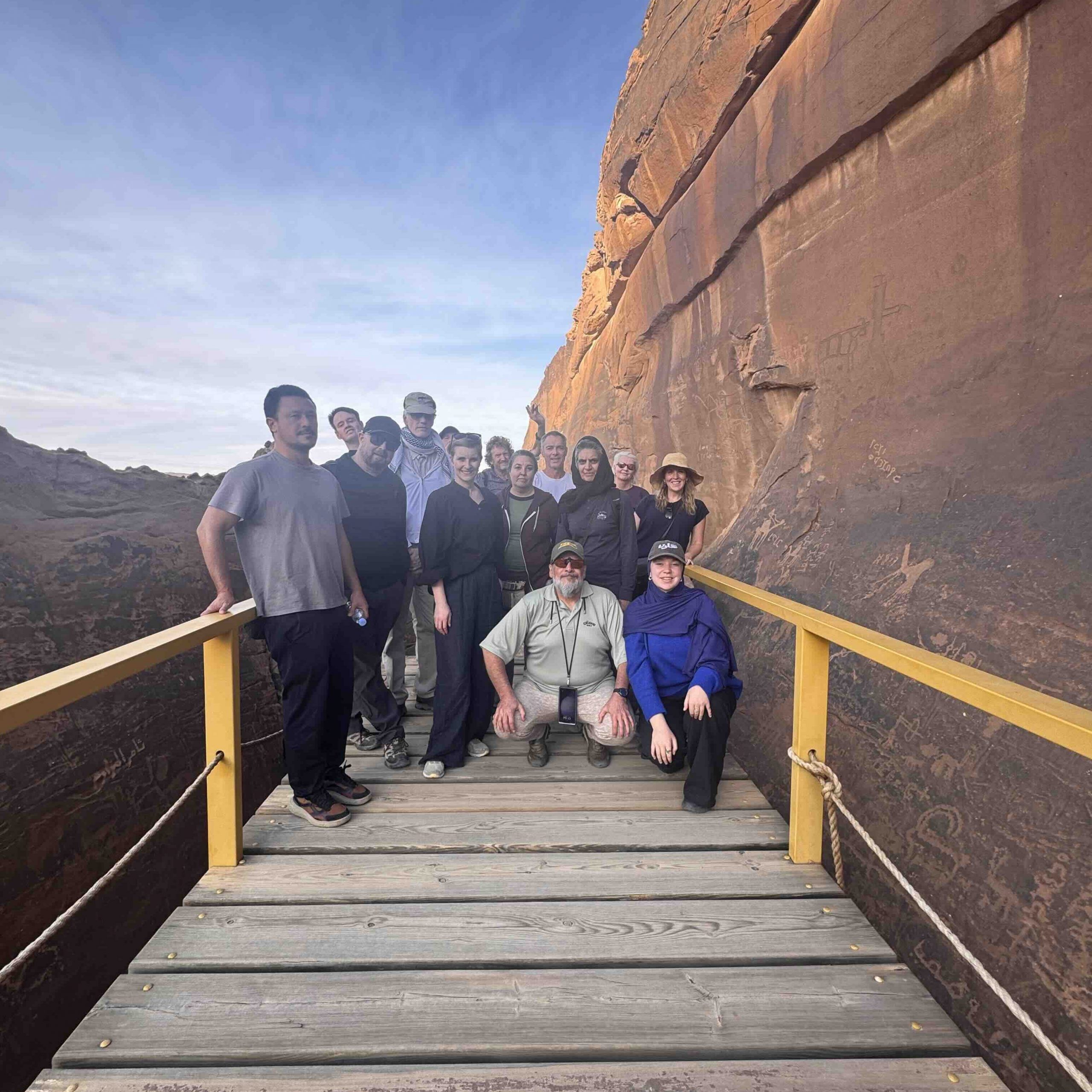
Table of Contents
Jubbah Archaeological Site – History and Discovery
The Jubbah archaeological site is made up of two general areas where inscriptions have been found and preserved – Umm Sinman and Ghouta mountains. These areas have been preserved and are protected due the UNESCO ascension of the site to World Heritage status in 2015.
Some formations are believed to be as old as the 7th millennium BC (9,000 – 12,000 years ago) and beyond. What makes Jubbah interesting is that it is not the depiction of one era of history, however it is a collection of different peoples, tribes and stages of human evolution who all left their mark (quite literally) on the rocks.
A lake was once upon a time situated near the site which attracted human settlement. This was a popular palace for tribes and animals as it provided relief from the Great Narfoud Desert. Over time, the wadi dried up and became engulfed in sand. However the imprint of those tribes still remain and offer an insight into society and survival over a period of 10,000 years.
The site was rediscovered by foreign visitors in the 1800’s. In 1845, Finnish explorer Georg August Wallin visited and described the oasis town, noting its mud houses, water wells, and residents from the Al Ramal clan of the Shammar tribe. In 1879, Lady Anne Blunt and her husband Wilfred Blunt travelled through the Nafud Desert and stopped at Jubbah, documented it extensively, and were among the first to bring attention to the extensive rock art in the region.
Key Rock Art – Important Periods Of Time
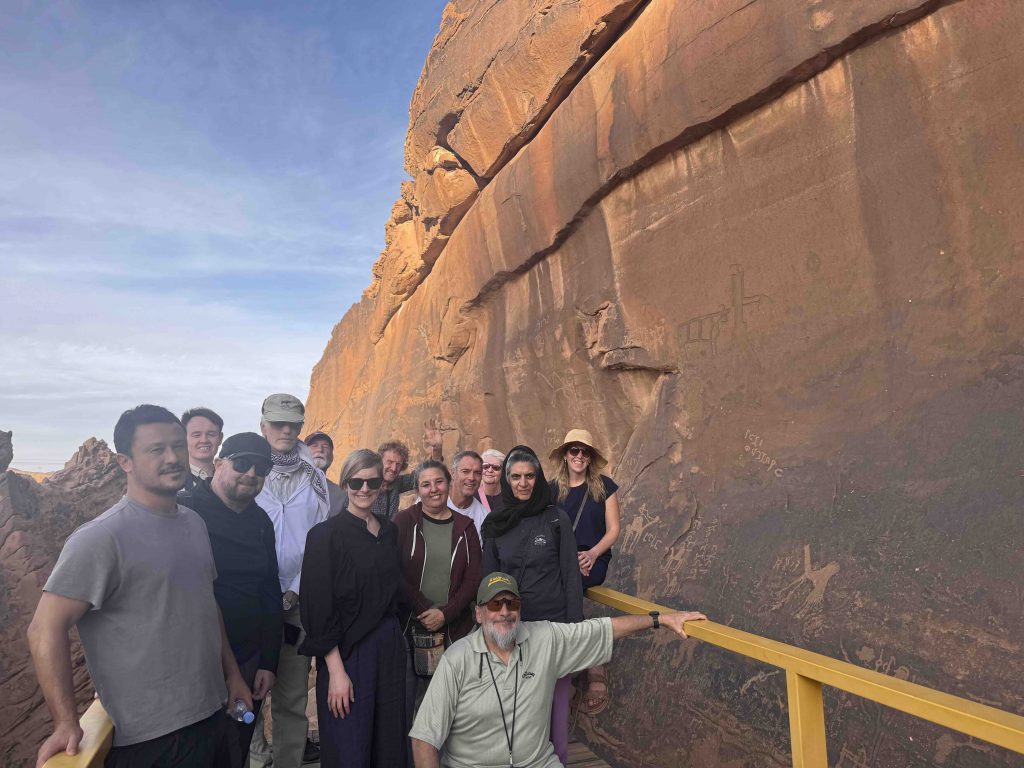
The star of the show in Jubbah would be a few different clear inscriptions that tell us a lot about society at the time of the inscriptions. It is important to note that the inscriptions were not made during one time period – no, in fact the inscriptions (from the date of the assumed first illustration until the last) span a period of up to 10,000 years!
The ‘authors’ can be described under the following umbrella categories:
Prehistoric Hunter-Gatherers and Early Herders
The earliest and most prominent creators at Jubbah were Neolithic communities dating from approximately 7,000 to 5,000 BCE. These ancestors lived when the region was a lush savanna with freshwater lakes, and they utilized simple stone tools to carve large-scale petroglyphs. Their work primarily consists of naturalistic depictions of humans, cattle, and wild animals like ibex, serving as a “visual diary” of a vanished ecosystem before the onset of desertification.
Thamudic Nomads and Merchant Traders
During the first millennium BCE, various North Arabian tribes, collectively referred to by archaeologists as Thamudic, began leaving alphabetic inscriptions alongside their art. These nomadic groups and merchant traders frequently moved between oasis towns like Tayma and Ha’il, using the sandstone cliffs of Jabal Umm Sinman to record their names, lineages, and personal messages. This era is marked by a shift in imagery toward the dromedary camel, which became essential for survival and trade as the environment became more arid.
Early Islamic and Modern Travelers
The final major group of contributors includes travelers, pilgrims, and Bedouin tribes from the 7th century CE into the modern era. These individuals left inscriptions in Kufic and other early Arabic scripts, often consisting of religious prayers, commemorative notes, or tribal marks (Wasm). This ongoing tradition demonstrates a thousands-year-old continuity of human presence, as even recent nomadic groups have continued to add stylised engravings to the rock faces up until the 20th century.

Why You Should Visit Jubbah Archaeological Site
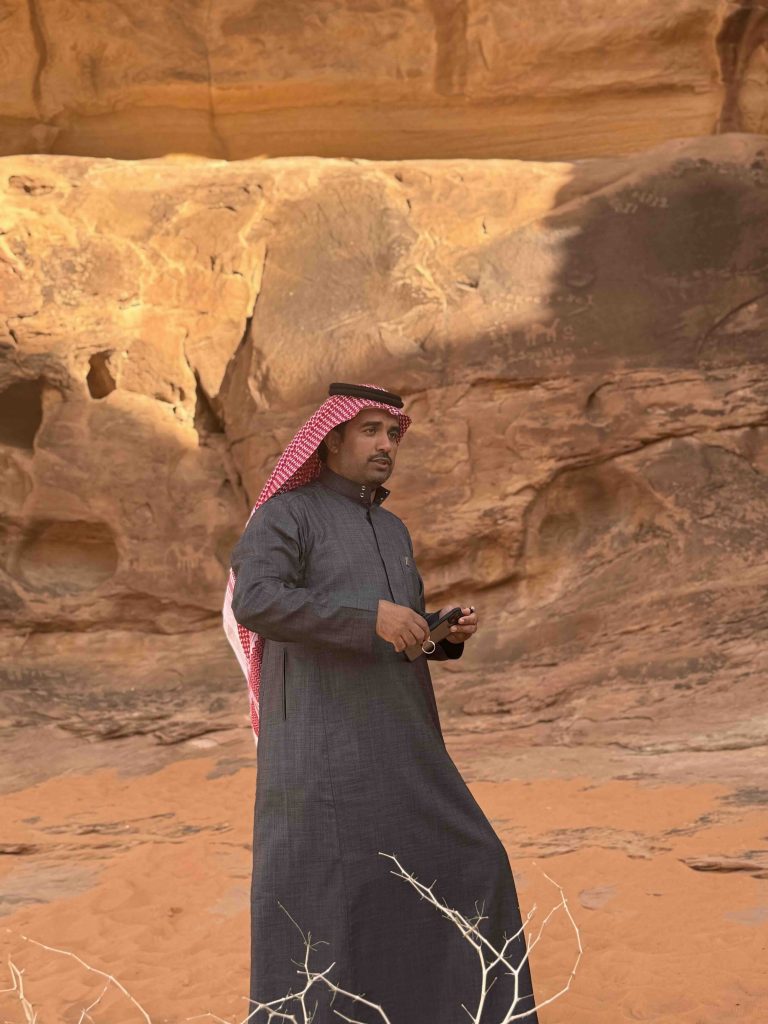
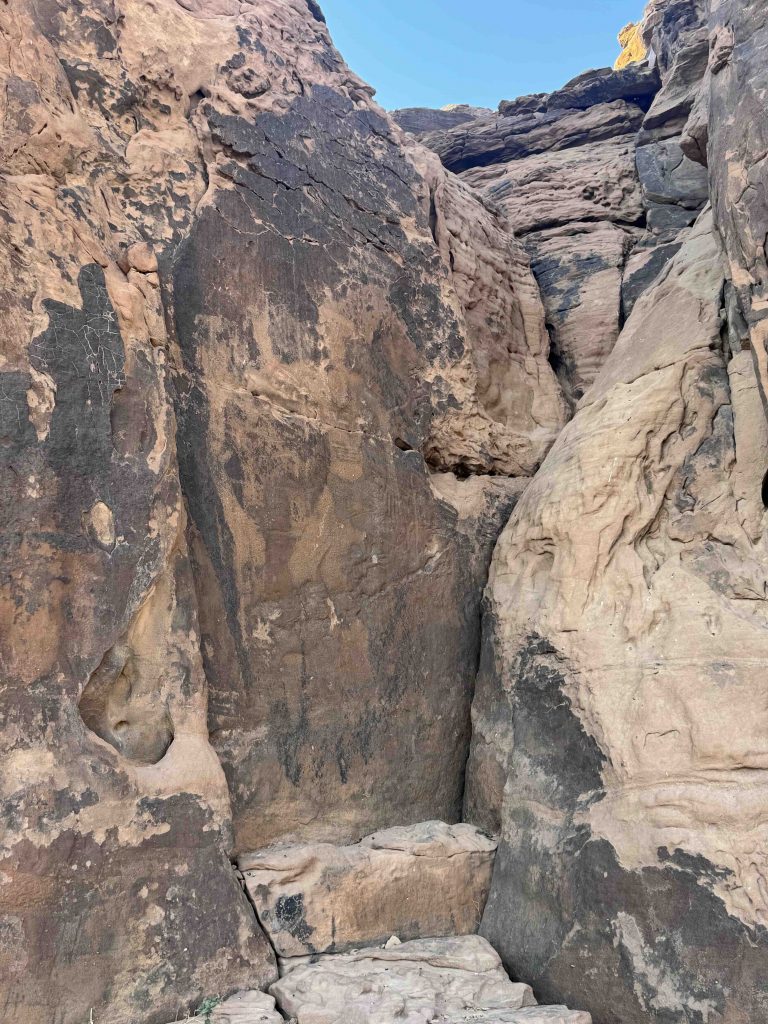
Even for those not particularly enthralled by ancient societies, the Jubbah archaeological site provides an incredible insight into the lives of peoples thousands of years ago. Some inscriptions are not only extremely detailed and accurate, but contribute significantly to our understanding of human and geographical development in the region.
We include visits to Jubbah on our Saudi Arabia Spring tour, our Gulf Trek tour and our Saudi Arabia Autumn tours!
About Post Author