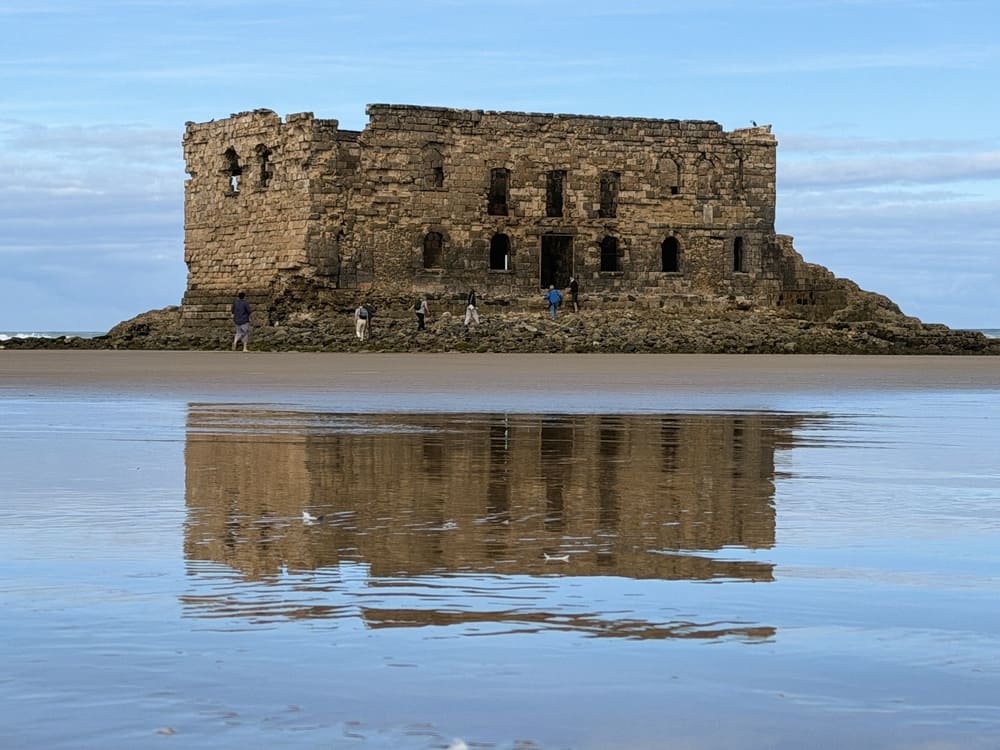
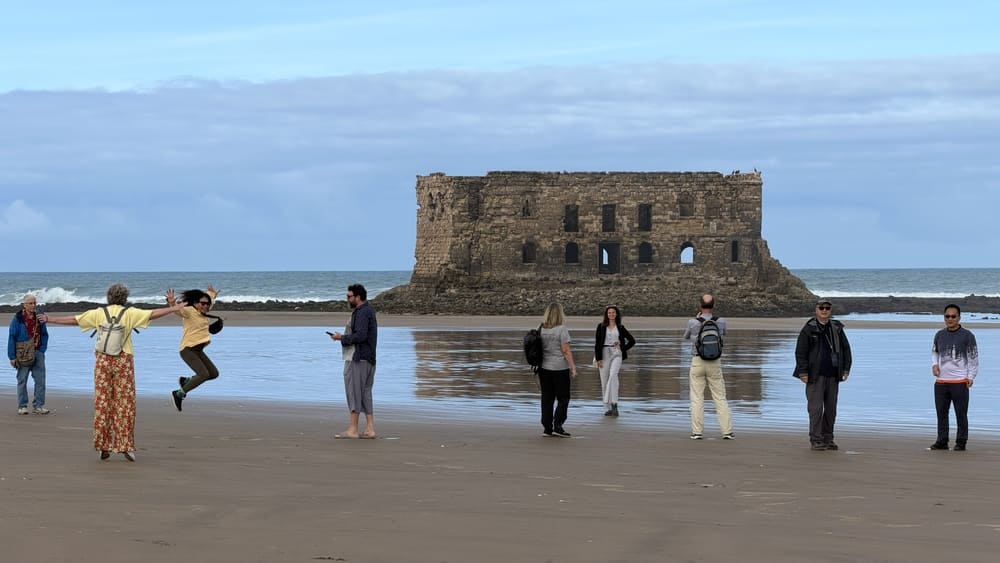
On the exposed Atlantic shoreline of Western Sahara, near the town of Tarfaya, stands a lonely structure rising out of the surf. Known locally as Casa del Mar, and historically as Port Victoria or Mackenzie’s Factory, it is one of the most unusual relics of nineteenth-century commercial expansion along the Saharan coast.
Table of Contents
A Scottish commercial gamble
Casa del Mar was not a Spanish fort, nor a romantic pirate outpost. It was a British trading factory, built in 1882 at Cape Juby by the Scottish merchant Donald Mackenzie. Mackenzie, operating through the North West Africa Company, secured permission from the Sultan of Morocco to establish a trading post along this largely unadministered stretch of coastline. His aim was straightforward: tap into Saharan caravan networks and develop trade in goods moving between the interior and the Atlantic world.
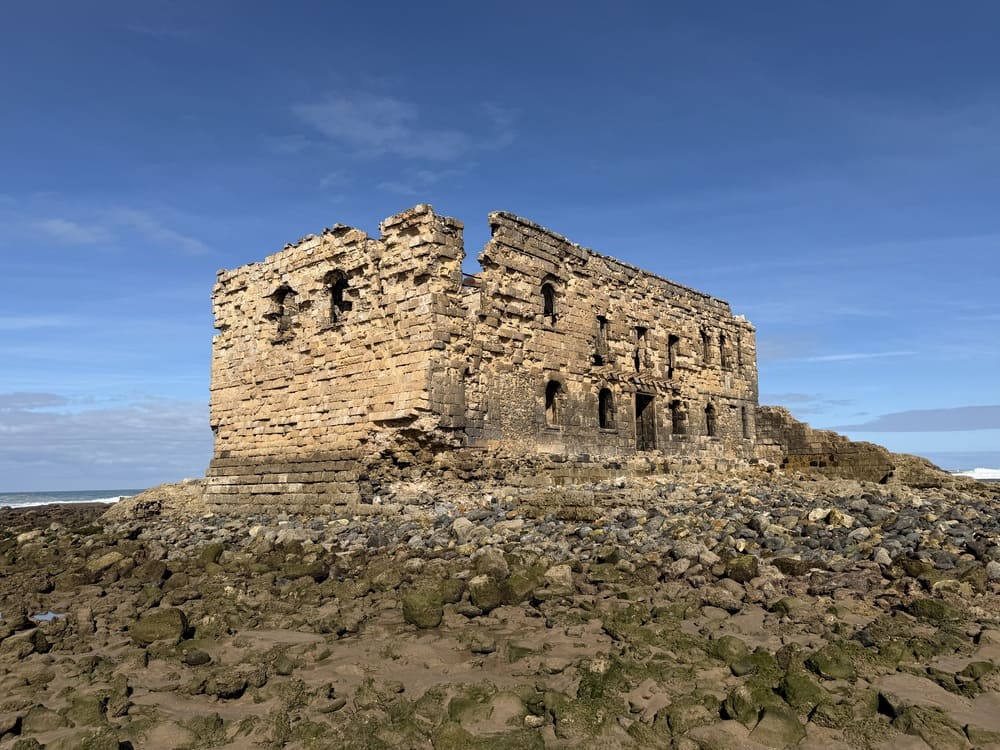
The structure he built, called Port Victoria, quickly became known as “Mackenzie’s Factory”. In nineteenth-century usage, a “factory” meant a fortified trading station rather than an industrial site. The building was constructed partly on rock and partly on an artificial platform in the sea, designed to be supplied directly by ship while remaining defensible from land.
Its isolation was deliberate. The surrounding region was controlled by Saharan tribes who were wary of foreign encroachment. The Atlantic, while harsh, offered Mackenzie a logistical lifeline.
Trade, tension and failure
The commercial vision proved difficult to sustain. Trade volumes were inconsistent, relations with local tribes were fragile, and the remote position made operations expensive. The factory was attacked more than once, and maintaining a permanent presence required constant negotiation and security measures.
By the mid-1890s, the project had effectively collapsed. In 1895, Spain purchased the site, incorporating it into its expanding claims along what became Spanish Sahara. Mackenzie’s Scottish foothold on the Saharan coast had lasted little more than a decade.
From Cape Juby to the colonial frontier
Cape Juby later formed part of Spain’s southern Moroccan territories, distinct from but geographically linked to Spanish Sahara. The region around Tarfaya became strategically significant in the early twentieth century, serving as an aviation stopover and colonial outpost.
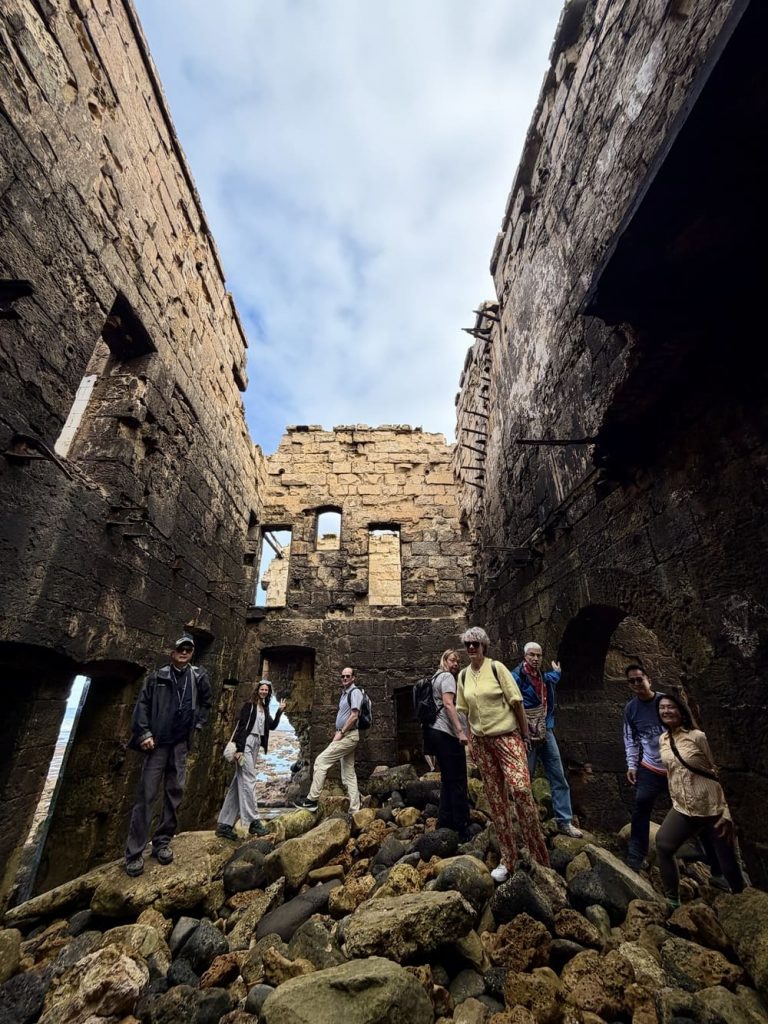
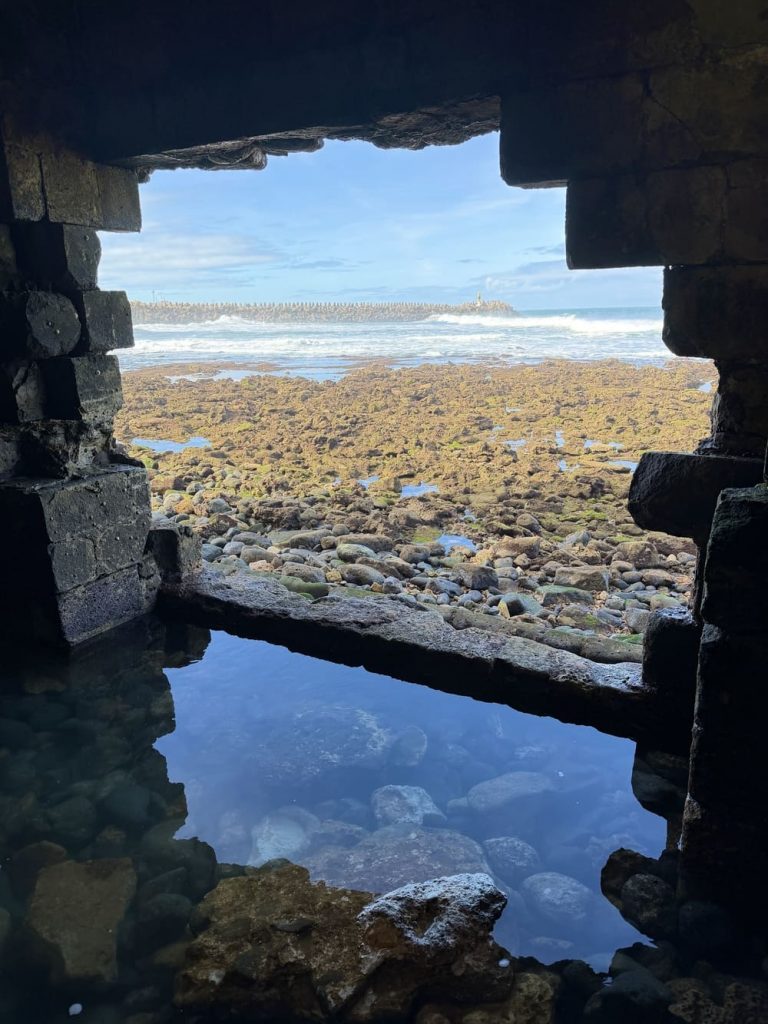
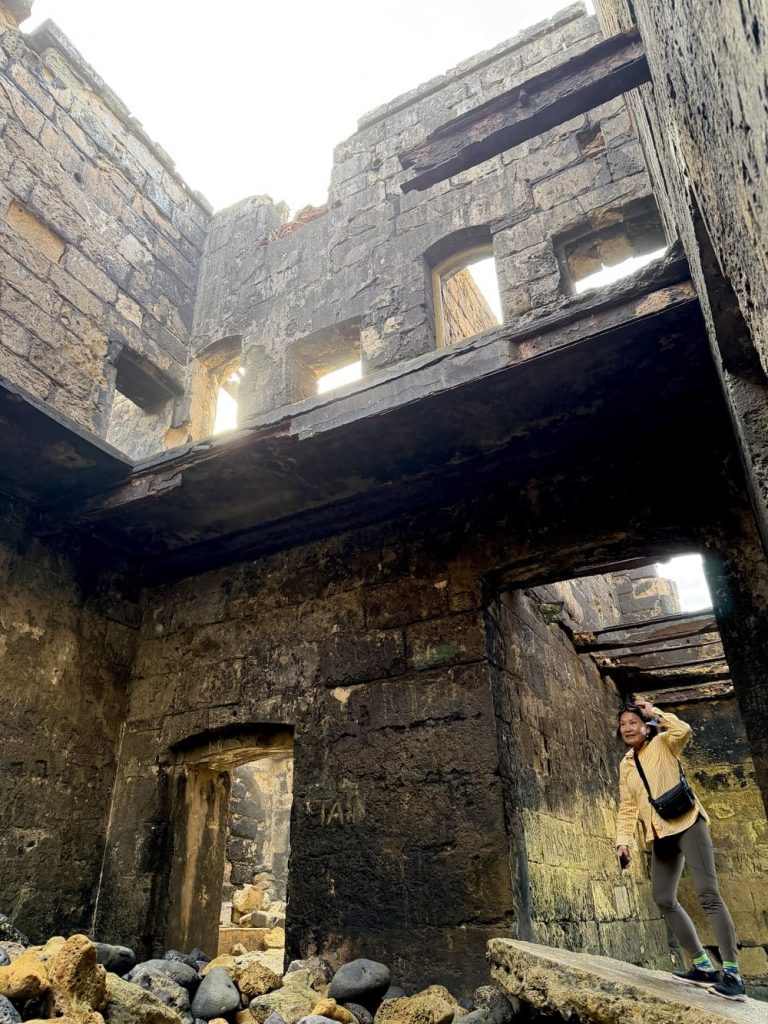
Today, Casa del Mar stands abandoned offshore, cut off by tides and decay. Waves break against its weathered walls; access is limited and conditions depend entirely on the sea. There are no polished displays or curated visitor centres. It remains a ruin, stark and exposed.
Why Casa del Mar is worth visiting
The combination of the Atlantic swell, the desert hinterland, and the abandoned stonework evokes a vivid sense of nineteenth-century ambition and risk. Access is best timed with calm tides, and the approach requires local guidance or boat transport. Yet for those willing to make the effort, the site offers a rare glimpse of a forgotten layer of Morocco’s coastal history, where Scottish commercial enterprise briefly intersected with Saharan maritime life.
Casa del Mar represents a rarely discussed strand of history: small-scale, private imperial ambition. Before formal colonial borders hardened across northwest Africa, individuals like Donald Mackenzie attempted to carve out commercial enclaves along the desert’s maritime edge.
For travellers interested in the overlapping spheres of Moroccan authority, European commercial expansion, and Saharan autonomy, this ruin tells a precise and verifiable story. It is the remains of a Scottish trading experiment on the Atlantic frontier of the Sahara, which we visit during our Western Sahara Tour.
And it is still there, battered by wind and tide, a reminder that not every imperial project was backed by armies. Some began with a single merchant, a charter, and a very exposed piece of coastline.
About Post Author