Ashgabat, Turkmenistan’s capital – Ashgabat, is unlike any other city on earth. Over the past two decades it has been deliberately shaped not just as a capital, but as a record-holding showcase. White marble dominates the skyline, monumental symbolism defines public buildings, and mass participation events are staged with Guinness World Records in mind.
Most of Turkmenistan’s Guinness titles are concentrated in Ashgabat and were awarded during the presidency of Gurbanguly Berdimuhamedow, the country’s third president (2006–2022). During this period, Turkmenistan accumulated dozens of Guinness World Records, many officially certified and others heavily promoted domestically. The strategy was clear: global recognition through scale, spectacle, and architectural uniqueness.
And the list does not stop there: beyond Ashgabat, Turkmenistan also boasts a number of unusual Guinness World Records in unexpected locations across the country, underscoring that the pursuit of global recognition extends well beyond the capital.
Below are the key records, grouped by theme, that define Ashgabat’s reputation as one of the world’s most record-oriented cities.
While some earlier records have since been surpassed, Turkmenistan continues to rank among the most record-holding nations per capita, with the vast majority of titles located in Ashgabat itself.
Architecture & Urban Design Records
Ashgabat’s most distinctive records are architectural. The city holds the Guinness World Record for the highest concentration of white marble-clad buildings, with more than 540 structures covered in over 4.5 million square meters of marble. This design choice has reshaped the city into a uniform, gleaming landscape unmatched anywhere else.
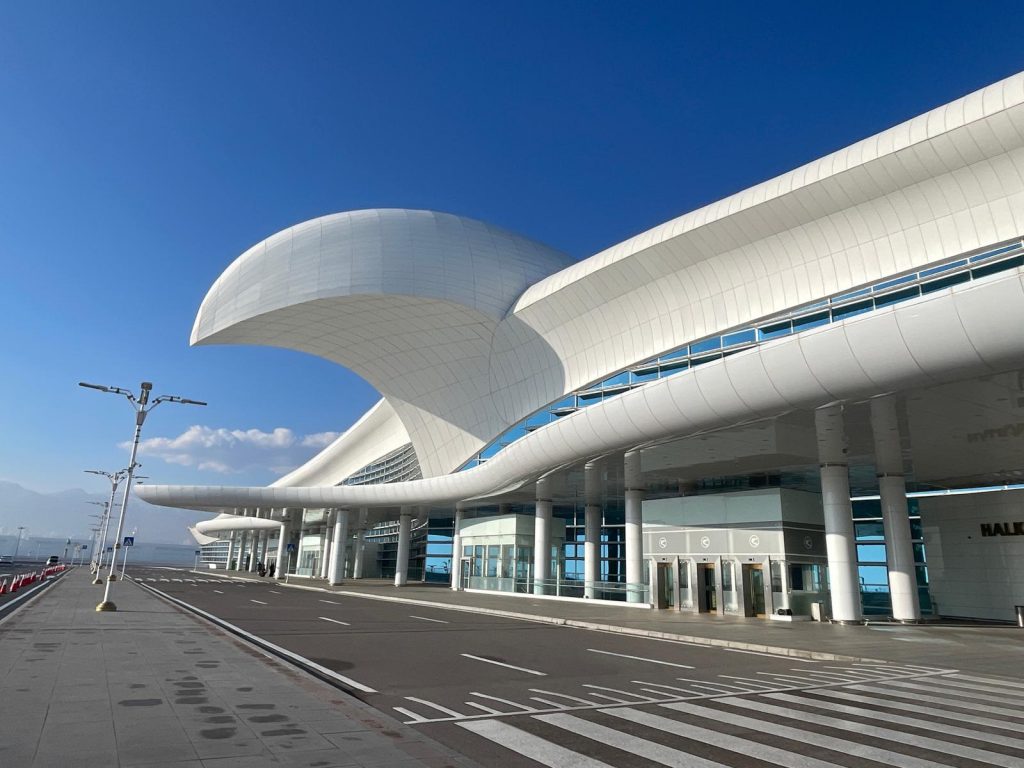
The capital is also home to several record-breaking symbolic structures. These include the largest eight-pointed architectural star, built into the national television tower, and the largest star-shaped roof, which crowns Ashgabat International Airport. Traditional Turkmen motifs are elevated to monumental scale, such as the largest carpet gul pattern, integrated directly into the airport terminal roof.
Together, these records reflect a deliberate fusion of national symbolism, monumental scale, and urban branding that defines Ashgabat’s modern identity.
Highest density of white marble-clad buildings — 543 marble-covered buildings across 4.5 million m² If the marble was laid out flat, there would be one square metre of marble for every 4.87 m² of land. The main avenue, Bitarap Türkmenistan Sayolu, is 12.6 km (7.83 miles) long and lined with 170 buildings clad with a total of 1,156,818 m² (12,451,835 ft²) of white marble (certified 25 March 2013)
Largest architectural star — 3,240 m² eight-pointed star integrated into the Turkmenistan TV Tower (17 October 2011)
Largest star-shaped roof — Ashgabat International Airport terminal measures 12,046 m² (129672 ft²) (certified 2016)
Largest harbour port below sea level — The largest harbour port below sea level measures 1,358,484 m² (14,622,599 ft² 73 in²) and was achieved by Turkmenbashi International Sea Port (Turkmenistan) in Turkmenbashi (2018)
Largest artificial island below sea level — The largest artificial island below sea level measures 3,192,761 m² (34,366,592 ft² 7 in²) and was achieved by Turkmenbashi International Sea Port (Turkmenistan) in Turkmenbashi (2018).
Largest carpet “gul” architectural pattern — 705 m² gul motif on the airport roof. A gul is a medallion-like design feature which often form the main motif for weavings and traditional designs from Turkmenistan. The large-sized version is located on the roof of the terminal building, which is styled to resemble a falcon in flight. (2016)
Largest bronze bas-relief — 117.84 m² depiction of Akhal-Teke horses in Ashgabat (2014)
Tallest unsupported flagpole — 133 m (436 feet) tall flagpole located in front of the National Museum of History and it holds a 52.5 m x35m flag. (held record in 2008; later surpassed)
Entertainment, Leisure & Public Spaces
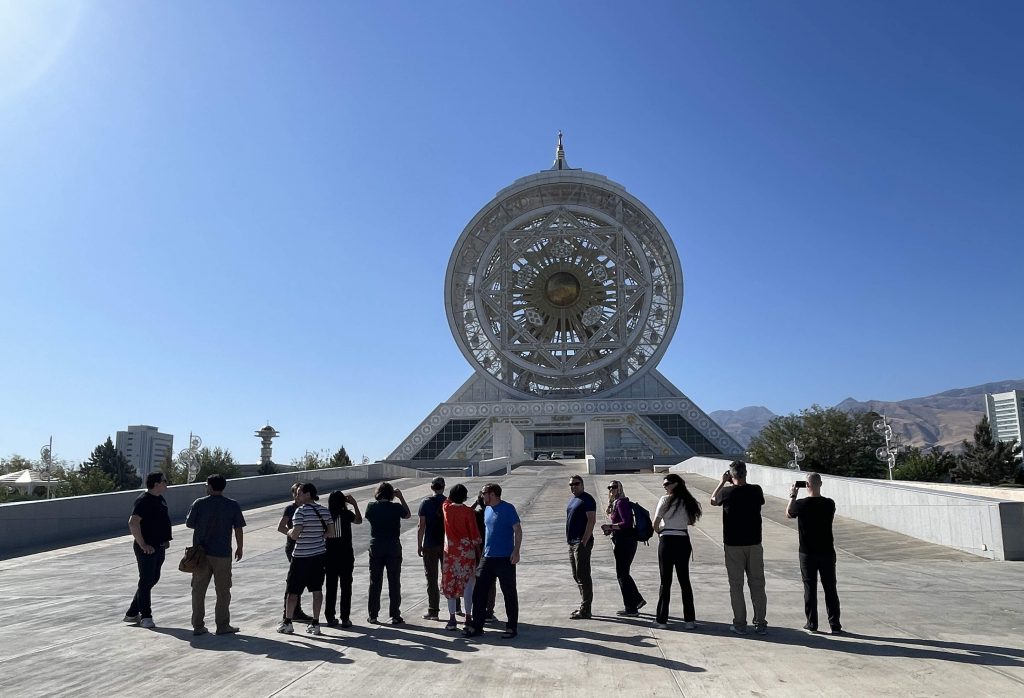
Ashgabat’s records extend well beyond static architecture into entertainment and recreation. One of the city’s most famous attractions is the world’s largest indoor Ferris wheel, enclosed within a glass and steel dome at the Alem Entertainment Centre. The wheel is fully operational and remains one of the most unusual Guinness-certified attractions anywhere.
The city also holds records for water and leisure facilities, including the largest indoor aquatics park, located within the Olympic Complex. Outdoor public spaces are equally ambitious: the Ashgabat Fountain Complex holds the record for the most fountain pools in a public place, featuring synchronized lighting and choreography across a vast landscaped area.
These projects reinforce the city’s image as a capital designed not just to function, but to impress on a global scale.
Most fountain pools in a public place — 27 synchronized fountains at the Ashgabat Fountain Complex (2008)
Largest indoor aquatics park — 4,976.65 m² (53,568 ft²) facility within the Olympic Complex (2016)
Largest enclosed Ferris wheel building — Glass-and-steel structure housing the Alem Ferris wheel (2012).
Cultural, Sporting & Mass Participation Records
Several of Turkmenistan’s Guinness World Records were achieved through large-scale public participation, often tied to national celebrations and state-led initiatives. Ashgabat hosted the largest cycling awareness lesson and the longest single-line bicycle parade, both involving thousands of participants and tied with World Bicycle Day initiatives championed by the government.
Cultural unity is also reflected in the record for the most people singing in a round, where over 4,000 participants performed a song composed by the president during a major ceremonial opening. Beyond the capital, Turkmenistan holds records for traditional craftsmanship, including the largest hand-woven carpet (record since surpassed), underscoring the importance of heritage alongside modern spectacle.
These events highlight how Guinness records were used as tools for collective participation and international visibility during Berdimuhamedow’s presidency.
Largest cycling awareness lesson — 3,246 participants (2018)
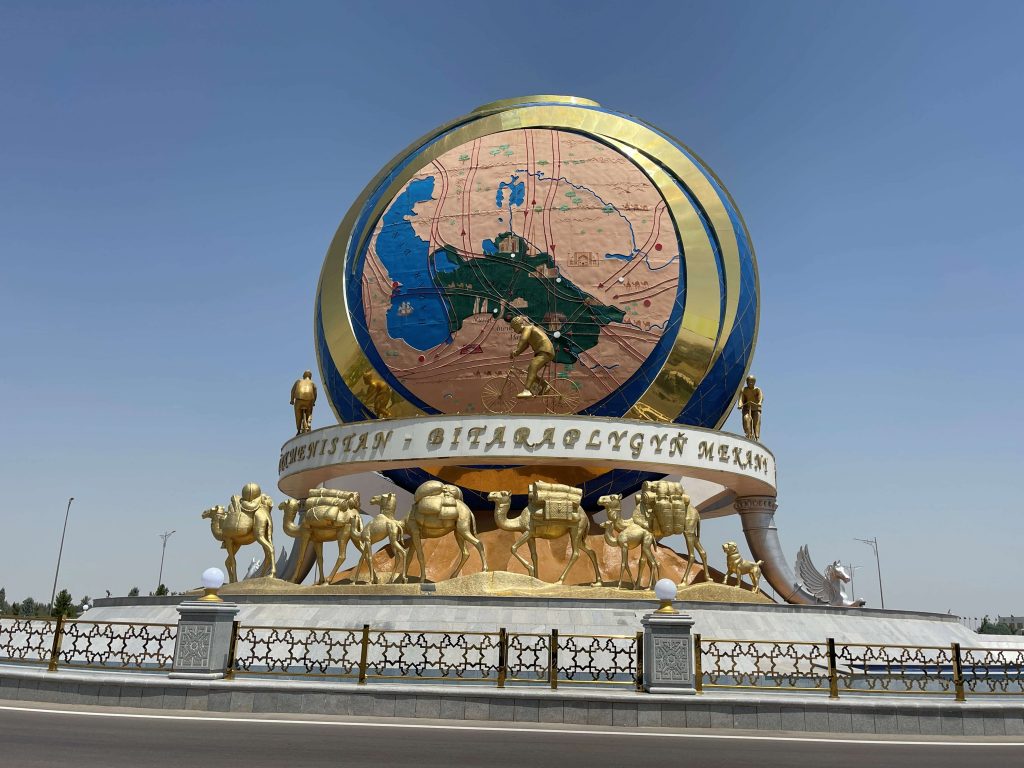
Longest single-line bicycle parade — 1,995 cyclists (2019)
Most people singing in a round — 4,166 participants performing a presidential composition in Mary (26 November 2015)
Largest ecology lesson — Guinness-certified national participation event consists of 2,935 participants (2019)
Largest hand-woven carpet — 301 m² “Golden Age” carpet
The carpet measures 14 by 21.5 meters, weighs 1,200 kilograms, and was created to commemorate the 10th anniversary of Turkmenistan’s independence (2001, subsequently surpassed in 2007)
Largest gardening lesson — The largest gardening lesson involved 539 people, lasting a total of 60 minutes, with 25 minutes of theory and a practical grapevine-planting session (2022)
Largest gathering of world leaders – The largest organized gathering of world leaders occurred at the UN World Summit in 2005 at United Nations Headquarters in New York. Held from 14–16 September 2005, the summit brought together 154 heads of state and government. UN estimates show that 149 leaders addressed the summit, which also included nearly 900 senior officials, about 5,200 delegates, and over 2,200 journalists. While some state funerals have drawn more leaders, this remains the largest planned meeting of top world leaders on record.
Symbolic, Technological & Unusual Records
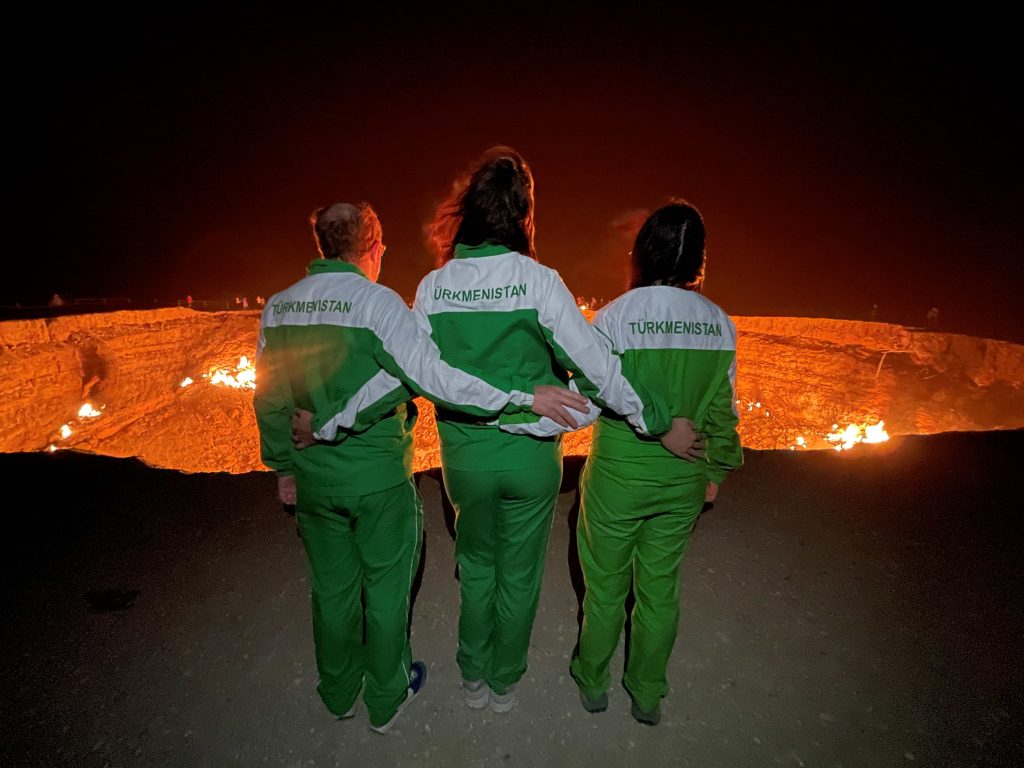
Some of Turkmenistan’s records are simply unique, combining natural phenomena, human endurance, and symbolic spectacle. Among the most striking is the Darvaza Gas Crater, located near the village of Derweze in the Karakum Desert. Often referred to as the “Door to Hell,” the crater has been burning continuously since 1971, after geologists deliberately ignited escaping methane following the collapse of ground during drilling operations. Measuring approximately 69 metres in diameter and 30 metres deep, it holds the Guinness World Record for the longest-burning methane crater.
The crater has also been the site of record-setting exploration. In 2013, Canadian explorer and storm chaser George Kourounis became both the first person to explore the Darvaza Crater and the first to reach its bottom, descending more than 30 metres in temperatures exceeding 1,000°C. His expedition revealed heat-resistant bacteria, demonstrating that life can survive in extreme environments.
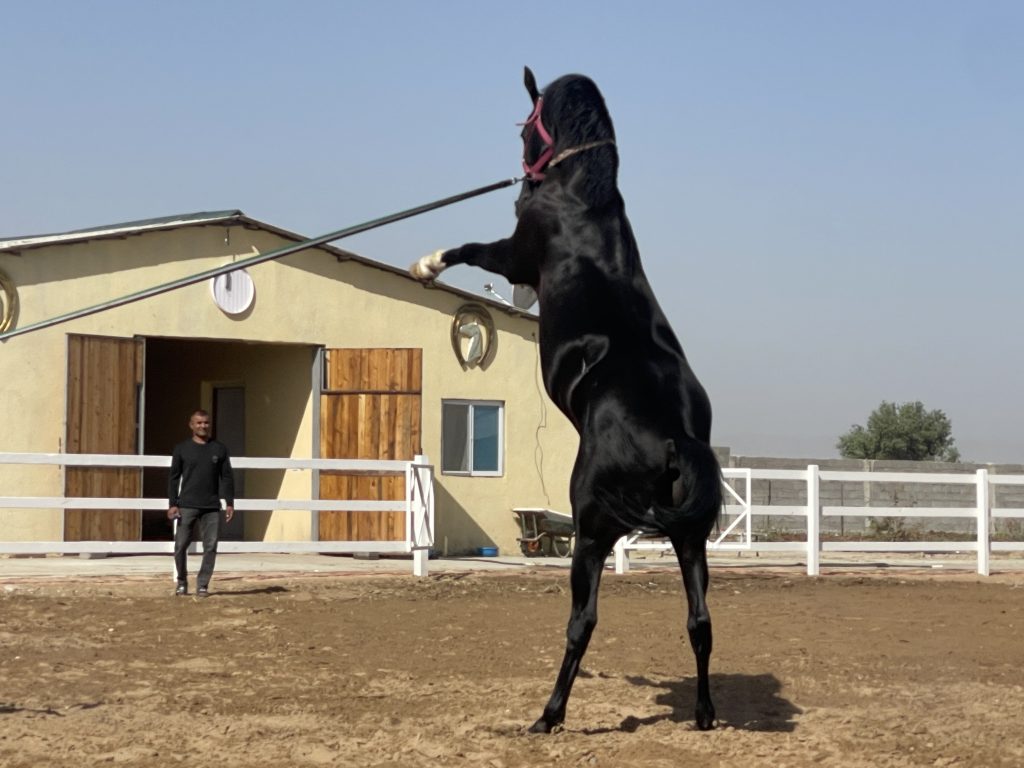
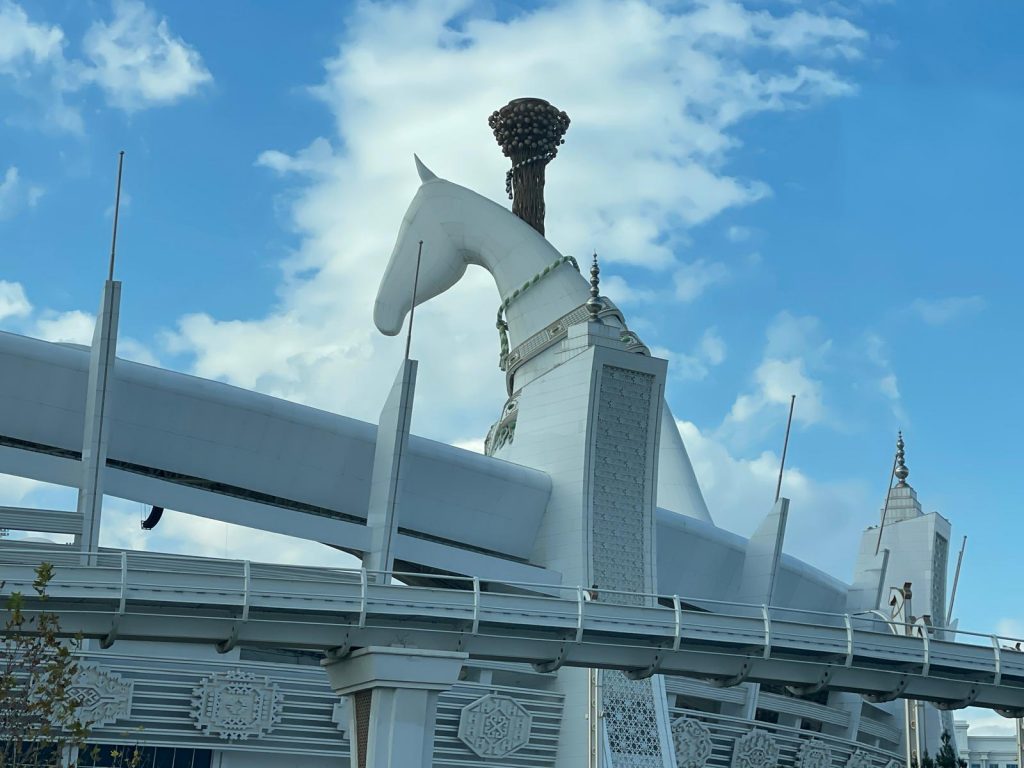
In a more symbolic vein, an Akhal-Teke horse named Akhan—a national icon—set the Guinness World Record for the fastest 10-metre run on hind legs, blending novelty with national pride. Ashgabat further reinforces this record-driven narrative through monumental equine symbolism, including a massive horse-themed stadium structure frequently cited as the world’s largest of its kind, though not all such claims have been formally certified. Even records later surpassed, such as the city’s once-tallest unsupported flagpole, remain part of Ashgabat’s carefully curated culture of spectacle.
Together, these achievements illustrate how Turkmenistan used Guinness World Records as a lasting expression of national identity, ambition, and spectacle.
Longest burning methane crater — Located near the village of Derweze in the Karakum Desert, the Darvaza Gas Crater—often called the “Door to Hell”—has been continuously burning since 1971. Formed after the collapse of ground during drilling operations, the crater was deliberately ignited to prevent methane leakage. Measuring approximately 69 m in diameter and 30 m deep, it holds the Guinness World Record for the longest-burning methane crater.
First person to explore the Darvaza crater and First person to reach the bottom of the gas crater — In 2013, Canadian explorer and storm chaser George Kourounis became the first known person to enter and explore the burning Darvaza Gas Crater. Wearing a specialized heat-resistant aluminium suit and using a custom Kevlar harness, he descended into the crater to collect rock samples. George Kourounis also became the first person to reach the bottom of the crater, descending more than 30 meters (99 ft) in temperatures exceeding 1,000°C (1,830°F). Laboratory analysis later revealed the presence of heat-resistant bacteria, demonstrating that life can survive in extreme environments.
Fastest 10-metre run on hind legs by a horse — An Akhal-Teke horse named Akhan set the Guinness World Record by completing a 10-metre run on his hind legs in 4.19 seconds. Akhan, born in 2006, is owned by then-President Gurbanguly Berdimuhamedov. The record highlights the cultural and symbolic importance of the Akhal-Teke breed in Turkmenistan. (2018)
Largest building in the shape of a horse (claimed) — The Ashgabat Olympic Stadium complex is often promoted within Turkmenistan as the world’s largest building shaped like a horse. This claim reflects the city’s emphasis on monumental equestrian symbolism, although it has not been formally certified by Guinness World Records.
Guinness World Records Under the Third President
During the presidency of Gurbanguly Berdimuhamedow, Turkmenistan received more than 30 Guinness World Records, with the majority awarded between 2011 and 2019 and in Ashgabat. These achievements were driven by large-scale architecture, national symbolism, and mass participation events, positioning the city as a global outlier in record-based urban branding.
On our longer YPT tours, travelers have the opportunity to visit and experience some of the world’s most unusual Guinness World Record sites, including those highlighted above. These longer itineraries are designed for curious travelers who want to go deeper and experience destinations far beyond the standard tourist route.
If you’re interested, click here to explore our tours.
About Post Author