Turkmenistan’s UNESCO Intangible Cultural Heritage traditions are not museum pieces or staged performances — they are living, breathing parts of daily life, and two of the best examples are traditional clothing and the ritual dance Küştdepdi.
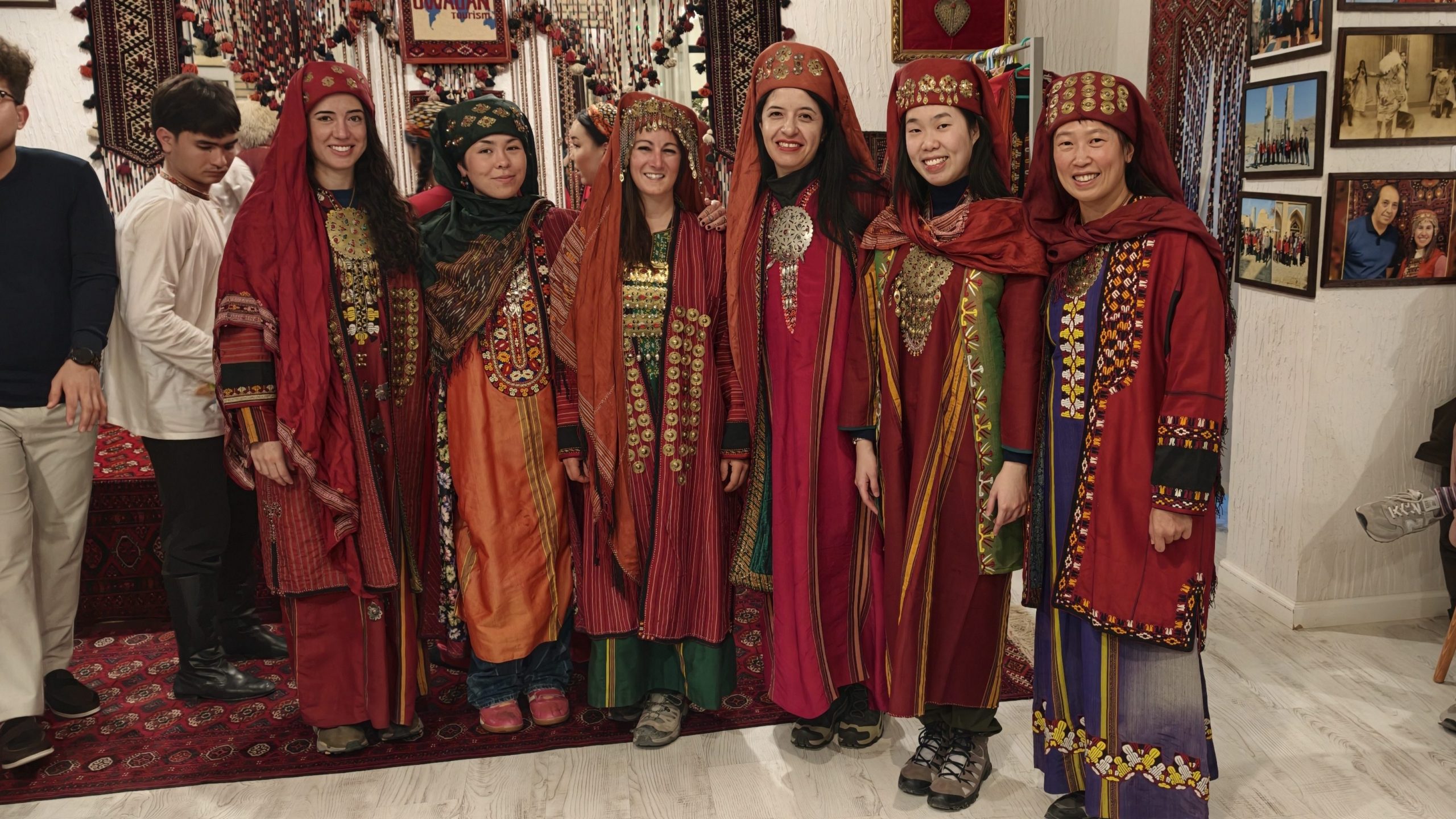
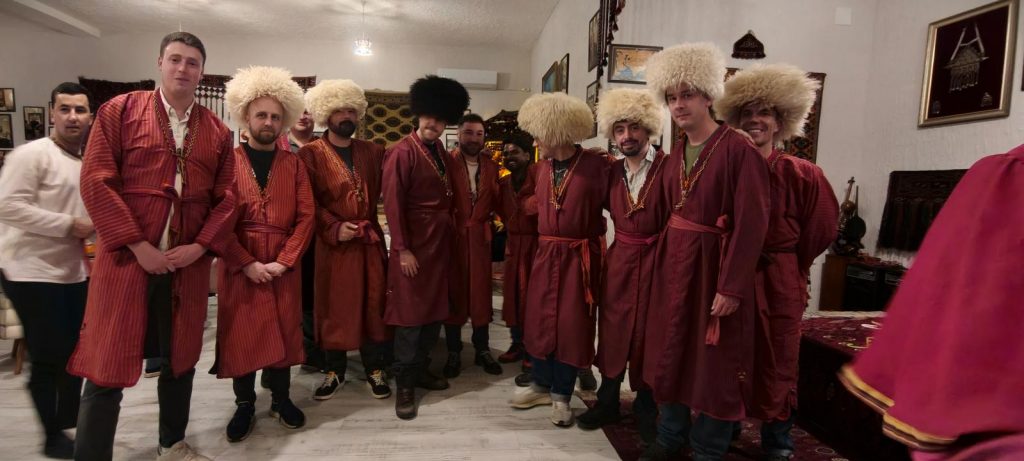
Traditional Turkmen clothing is instantly recognizable for its strong colors, detailed embroidery, and deep symbolism. Women wear long dresses made from silk or cotton, often hand-embroidered with bold geometric patterns that reflect tribal identity, family history, and personal status. These outfits are usually paired with heavy silver jewelry set with carnelian stones, which are traditionally believed to bring protection and good fortune. Men’s clothing is simpler but no less iconic, especially the famous telpek, a large sheepskin hat designed to protect against the desert climate and now seen as a symbol of pride and masculinity. These garments are still worn during holidays, weddings, and official events, showing how tradition continues to shape modern life in Turkmenistan.
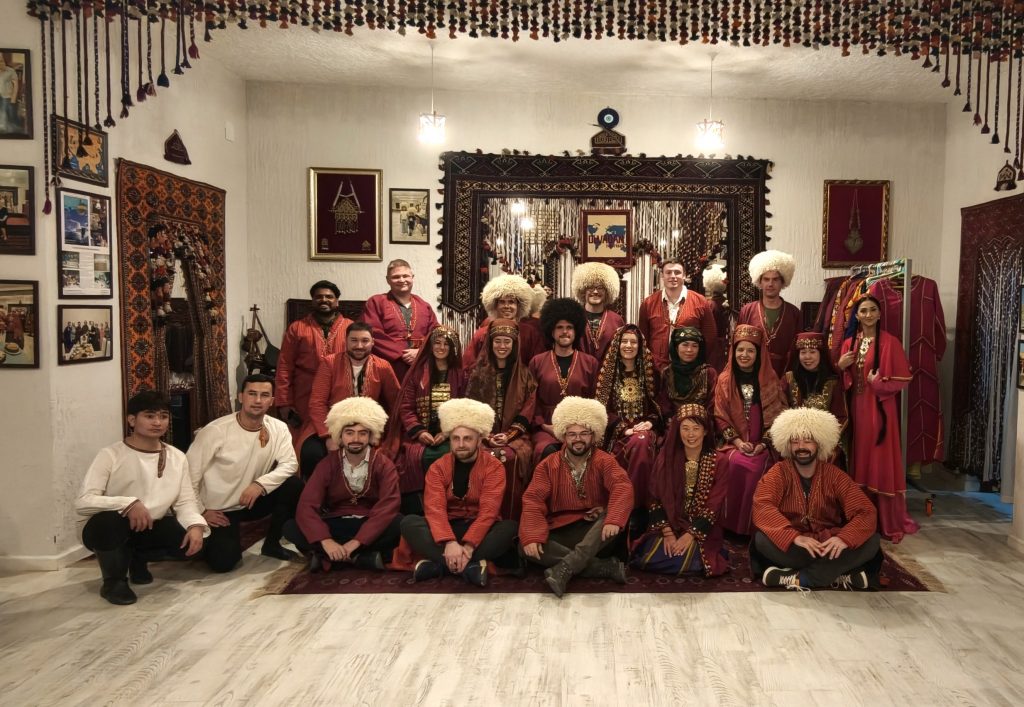
One of the most meaningful elements of Turkmenistan’s UNESCO Intangible Cultural Heritage is Küştdepdi, a powerful ritual dance centered on rhythm, unity, and collective energy. Performed in a circle, Küştdepdi combines clapping, chanting, and coordinated movements that symbolize harmony between people, nature, and the spiritual world. While it is an integral part of state ceremonies and national celebrations, Küştdepdi is equally important in family and community life. It is often performed to mark personal milestones such as the birth of a child or as a key element of wedding celebrations, where it represents blessing, strength, and shared joy.
Unlike many traditional dances, Küştdepdi has no clear line between performers and spectators. Everyone is encouraged to join in, making it a deeply inclusive experience that reinforces community bonds and shared values across generations.
On our longer YPT tours, travelers don’t just observe these traditions — they experience them firsthand. We’re able to witness live demonstrations of Küştdepdi and actually take part in the dance alongside locals, following the rhythm and feeling the collective spirit for ourselves. Seeing traditional clothing worn in its natural cultural setting and joining the Küştdepdi circle transforms these UNESCO-recognized traditions into something personal, immersive, and unforgettable.
About Post Author