The Baghdad House of Wisdom (Bayt al-Hikmah in Arabic) in the Abbasid era was a hub of books and knowledge renowned across the Middle East and Europe. It was one of the first libraries that were public during the Islamic Golden Age. The Baghdad house of Wisdom became one of the most important places for knowledge and literature in the Islamic world.
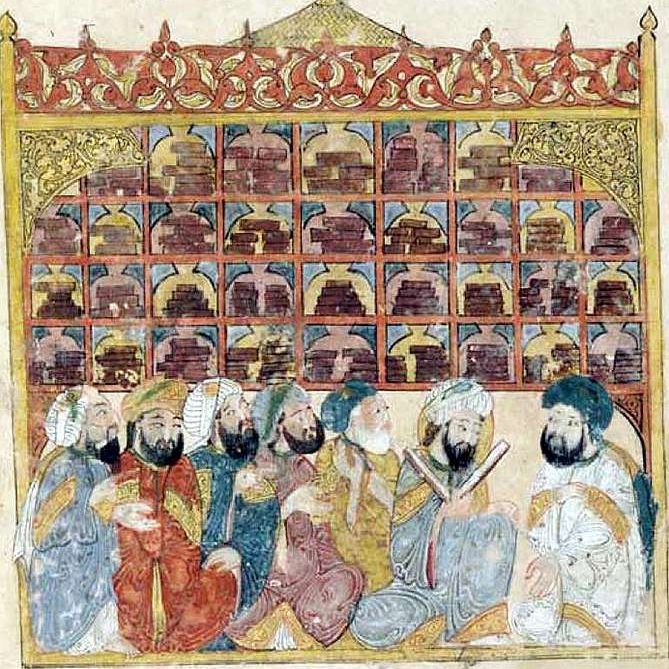
Table of Contents
What Was The Baghdad House Of Wisdom?
The Baghdad House of Wisdom was created when the second caliph of the Abbasid Empire decided to move the capital from Damascus to Baghdad. They decided to move the capital largely to move from the shadow of the Umayyad empire they had created. When they were overthrown by the Abbasids, many people in Damascus remained loyal to the former caliphate making it an unstable place to establish a new empire.
Baghdad had a large Persian populus and was close to the former capital of the Sasinad empire (Ctesphion). Situated on the Tigris river, Baghdad was a prime location for trade, agriculture and provided an opportunity to extend international trade towards the East and West.
The Baghdad House of Wisdom was prominent throughout the 9th to 13th centuries – but its purpose was far beyond being just a house for books.
The House of Wisdom functioned as the brain of the Abbasid Empire, a place that a thousand years ago was doing exactly what modern research universities and think tanks do today. Back in the 9th century, if you were serious about science, medicine, astronomy, or philosophy, Baghdad was where you wanted to be. Scholars were on the Abbasid payroll, given space to work, and encouraged to challenge and improve on what came before, whether that came from Greece, Persia, or India.
Baghdad As An Intellectual Hub
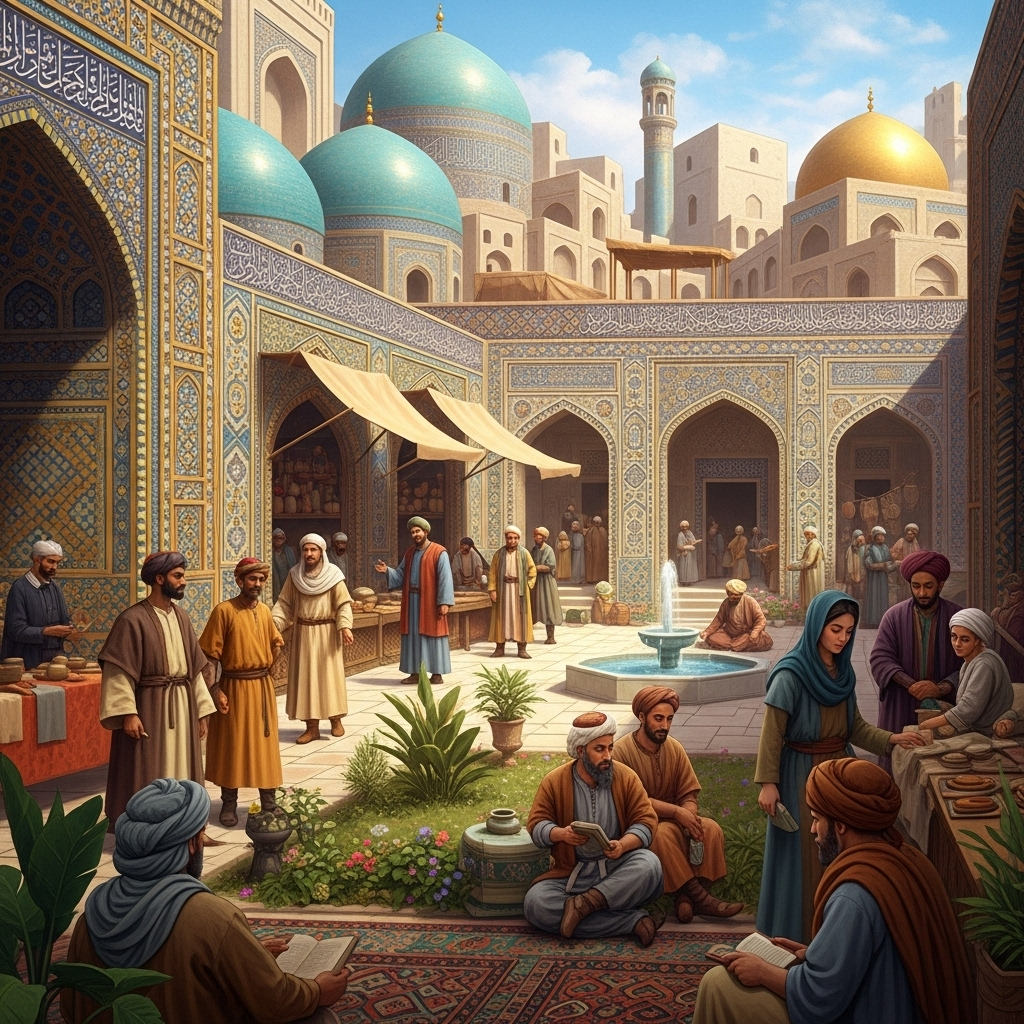
One of the most fascinating things about the House of Wisdom was its translation operation. This wasn’t one guy slowly copying manuscripts — it was a full-blown, state-funded knowledge factory. Christian, Jewish and Muslim scholars worked together translating everything from Aristotle to ancient medical textbooks into Arabic. Some translators were paid so well that they were rewarded by the weight of their books in gold. These texts weren’t just stored away either; they were studied, debated, corrected and built upon, turning Baghdad into the intellectual engine room of the medieval world.
And then there was the atmosphere. The House of Wisdom was one of the rare places in the medieval era where religion took a back seat to ideas. You could walk into a room and find a Muslim astronomer, a Christian doctor, and a Jewish mathematician all arguing over the same problem — in Arabic, the global language of science at the time. It was this mix of cultures, languages and brainpower that made Baghdad the most important city on earth for learning, long before places like Paris or Oxford had even got started.
“Cairo writes, Beirut prints, and Baghdad reads.”
What Happened To The Baghdad House Of Wisdom?
The House of Wisdom met its brutal end in 1258, when Baghdad was overrun by the Mongol army of Hulagu Khan, grandson of Genghis Khan. This wasn’t just another medieval siege, it was one of the most devastating sackings of a city in world history. After weeks of bombardment, the Mongols smashed their way into the Abbasid capital and went on a rampage that wiped out centuries of scholarship in a matter of days.
Libraries were looted and burned, scholars were killed, and the priceless collections of the House of Wisdom were thrown into the Tigris River, with later writers claiming the water turned black from ink and red from blood. Whether or not that image is literal, the reality is just as grim: one of the greatest centres of learning the world had ever known was erased almost overnight, marking the end of Baghdad’s golden age and leaving a cultural hole that would never fully be filled.
Where Are The Remnants Of The House Of Wisdom?
There is nothing remaining from the House of Wisdom (the Mongols were not known to spare any place, let alone an intellectual hub).
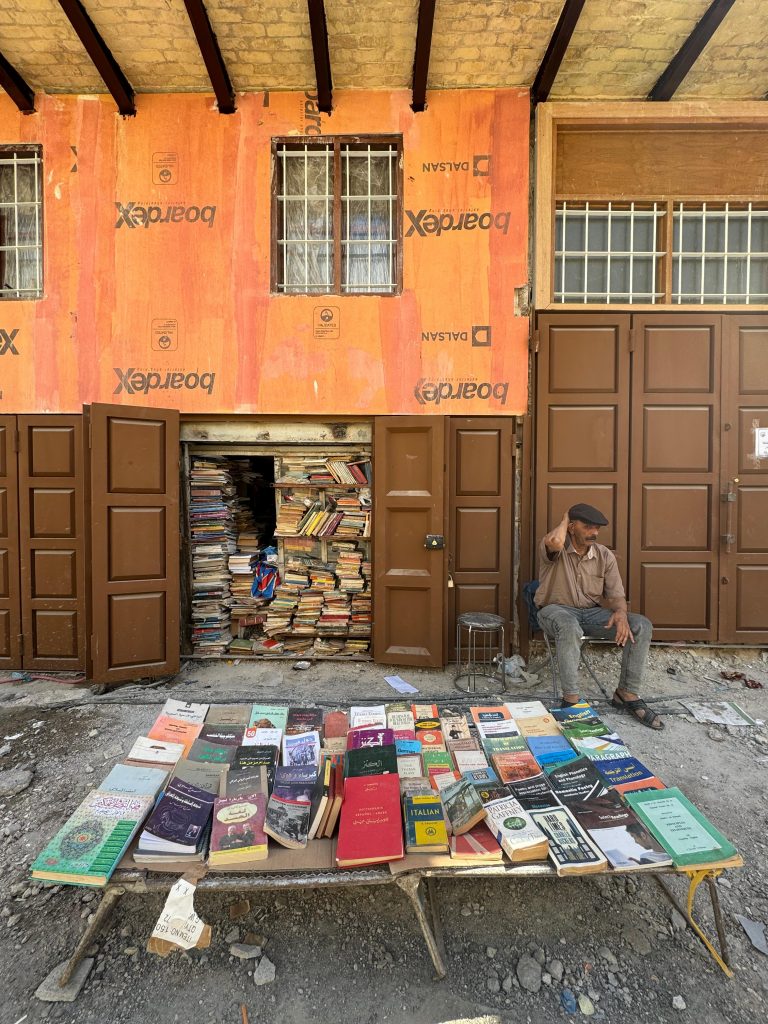
Since the physical structures were lost long ago, modern Baghdad doesn’t have an exact surviving site, but the historic quarters near Al-Mutanabbi Street on the Tigris are often mentioned today as the cultural heartland where the spirit of the House of Wisdom still lingers.
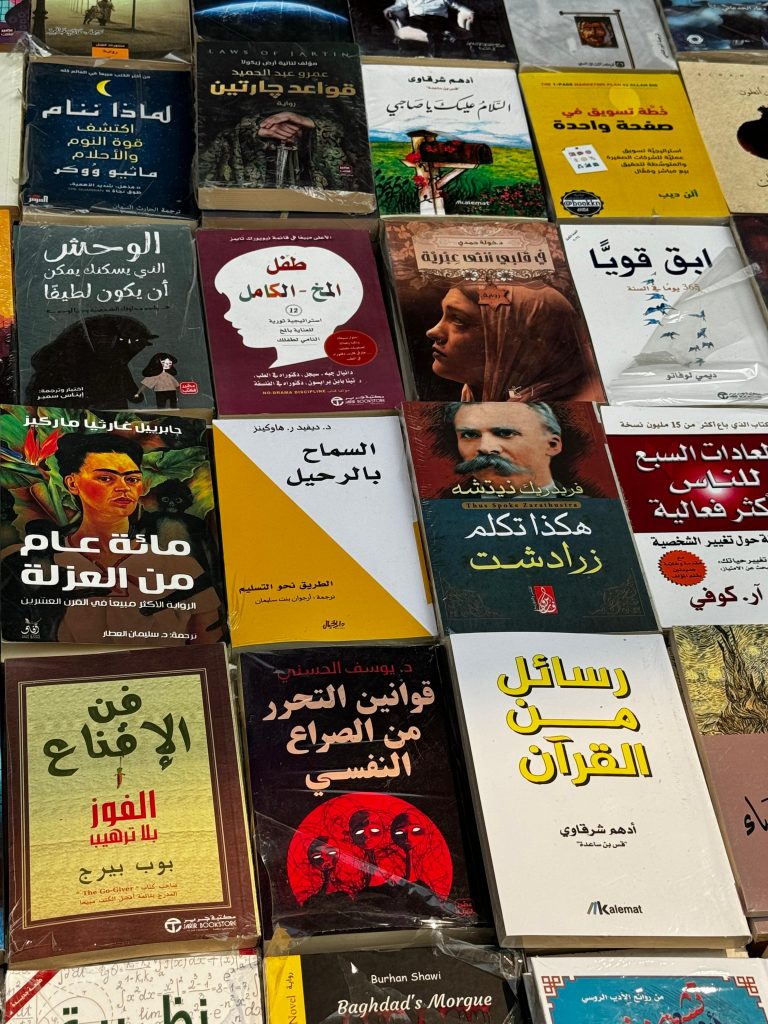
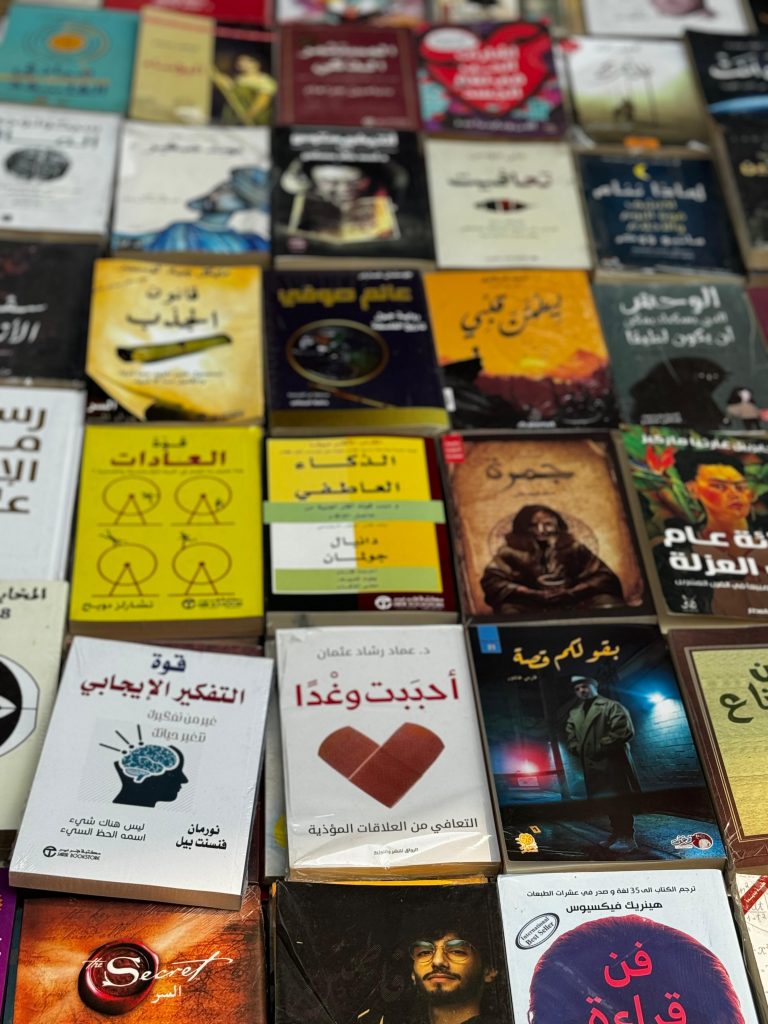
Next to the Tigris River and the old Abbasid quarter, Al-Mutanabbi Street has been Baghdad’s beating heart of books, ideas, and fiery debate for more than a century. Named after the 10th-century poet al-Mutanabbi, it’s the place Iraqis have always flocked to buy, sell, argue over, and fall headlong in love with books. From philosophy and politics to poetry, religion, banned works, and bootlegged editions, if it exists in Arabic, chances are you could find it here.
While the physical remains no longer exist, the spirit lives through the Al-Mutanabbi street.
“The thief does not read, and the reader does not steal.”
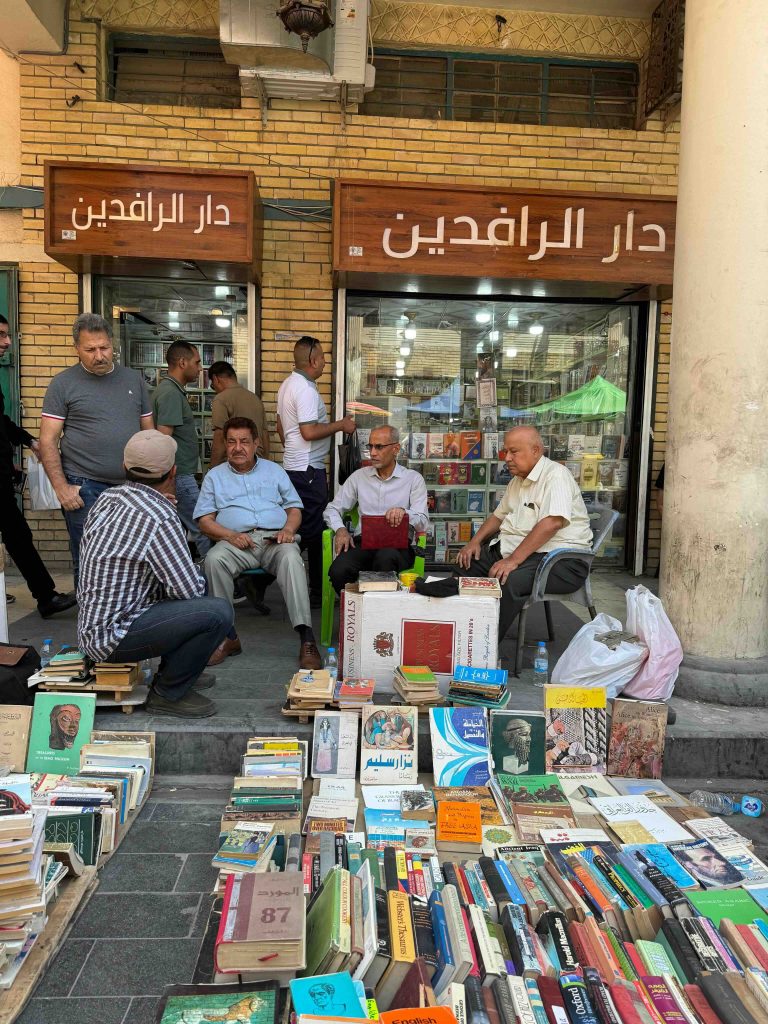
Visit Al-Mutanabbi Street With YPT On Our Southern And Whole Iraq Tours!
About Post Author