A year after the Assad regime was toppled in what was a surprising end to 2024, the transitional government has launched Syria’s new currency which has now entered circulation. A decree from current President Ahmed Al Shara has pledged the eventual withdrawal of the old Syrian banknotes.
As today marks the first day the currency enters circulation, the new designs have caused a lot of intrigue. Not only does the new currency remove two 0s, but the designs are without any public figures or people at all. Below is all you need to know about the new currency, how it differs from the old currency and what to expect until the old currency can be phased out.
Table of Contents
The Old Currency
The old currency was established in 1948 after the split between Lebanon and Syria. Before the new currency was announced this year, the old currency had notes of 500, 1000, 2000 and 5000 pound (lira). Before the economic dive during the civil war, coins also existed (50 piastre and LS 1, LS 2, LS 5, LS 10, LS 25 coins) however these became worthless due to the hyper inflation.
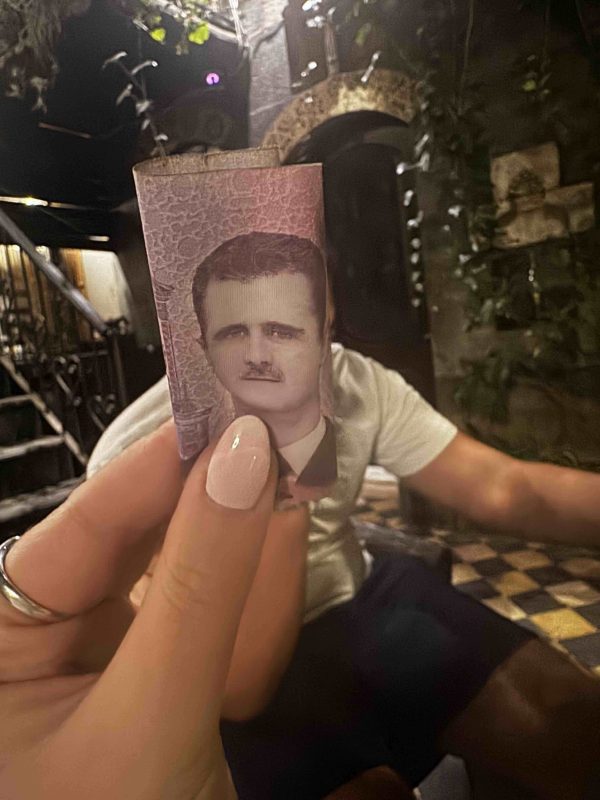
The older notes featured portraits of political leaders, such as former President Bashar al-Assad on the 2000-pound note and his father Hafez al-Assad on the 1000-pound note.
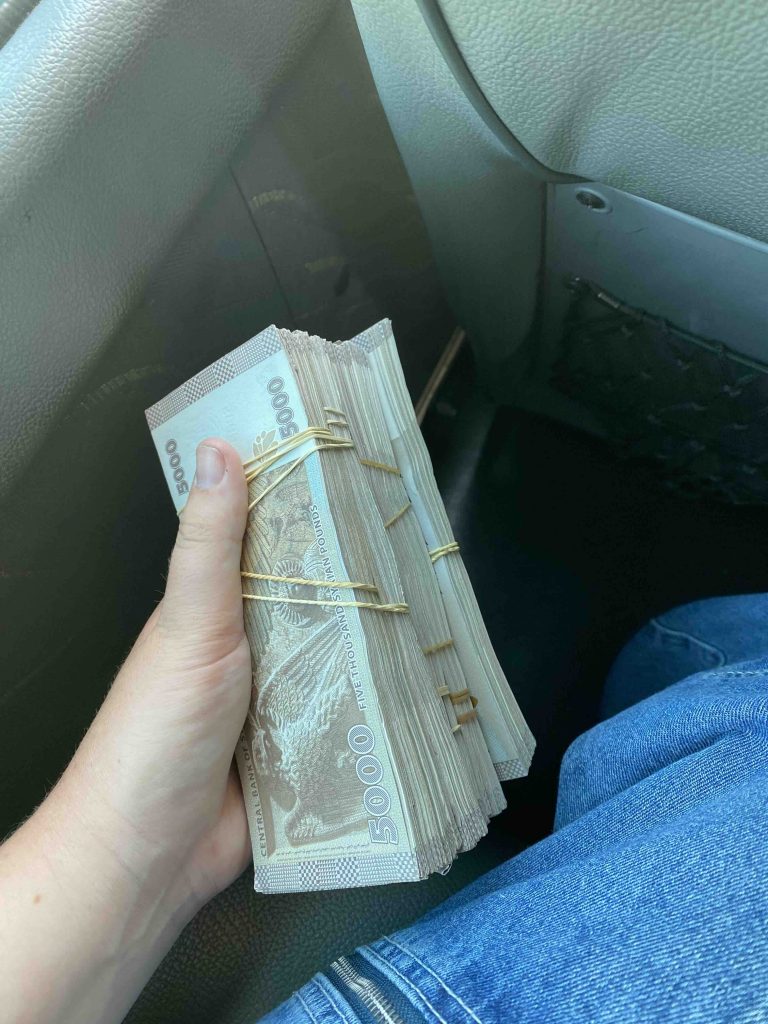
The currency experienced extreme devaluation, plummeting from an exchange rate of approximately 47 pounds per US dollar in March 2011 to around 11,000 pounds per dollar by late 2025 in the black market. The low purchasing power meant people had to carry large bundles of cash for daily transactions. When visiting Syria and exchanging 100 or 200 USD, the amount received could not fit in a wallet, or even pockets.
Syria’s New Currency
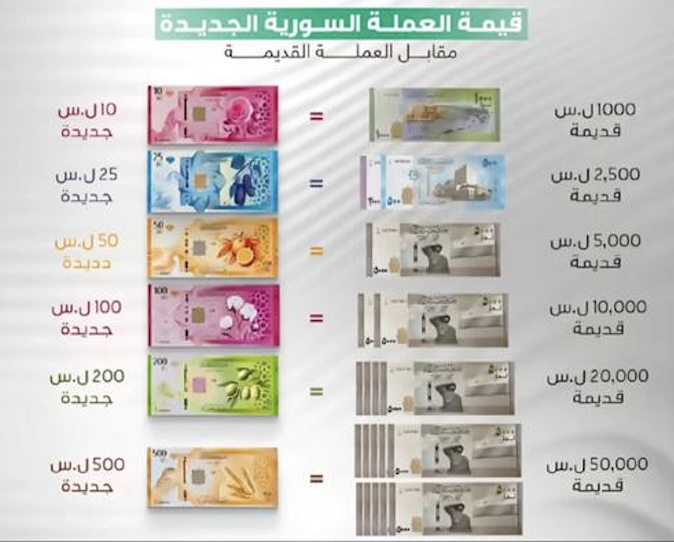
Syria’s new currency, introduced on 1 January 2026, redenominated the pound by removing two zeros, with 100 old pounds exchanged for one new pound. The move is intended to make everyday transactions easier. The redesigned banknotes feature national symbols such as olives and wheat rather than political figures, and include updated security features. Authorities have framed the change as part of a broader reset following years of conflict and political transition. A 90-day exchange period allows old and new notes to circulate at the same time. While the redenomination does not change purchasing power, it is intended to improve confidence in the currency, though concerns about inflation remain.
Syria’s new currency deliberately step away from portraits, slogans, and grand political messaging. Instead, they focus on things most Syrians recognise from daily life: crops, landscapes, and animals. The symbolism is understated, but that’s very much the point.
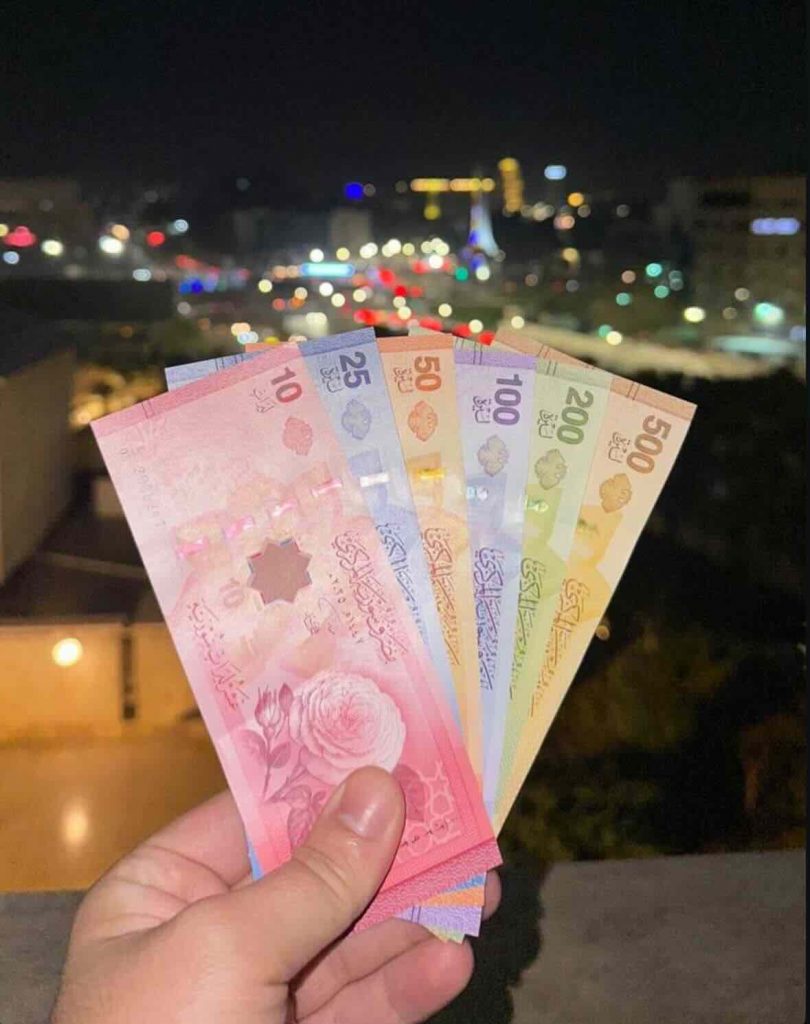
10 Pound Note
The 10-pound note, featuring a Damask rose and a butterfly, nods quietly to Damascus itself. The rose has long been associated with the city and its surrounding countryside, while the butterfly suggests fragility and change — a gentle image for the lowest denomination, used most often in everyday transactions.
25 Pound Note
On the 25-pound note, mulberries take centre stage. Mulberry trees are common across Syrian towns and villages, especially in older neighbourhoods, where they often grow in courtyards or along streets. The image reflects continuity and domestic life rather than any grand national narrative.
50 Pound Note
The 50-pound note shows oranges and a seashell, referencing Syria’s Mediterranean coast. Citrus farming has long been central to the coastal economy, and the shell subtly anchors the image to the sea. It’s a reminder of Syria’s geographic diversity, something often forgotten in outside portrayals of the country.
100 Pound Note
The 100-pound note combines cotton with a gazelle. Cotton represents one of Syria’s most important historical cash crops, particularly in the north and east, while the gazelle points to the country’s wildlife and steppe landscapes. Together, they balance industry and nature — production without overt triumphalism.
200 Pound Note
Olive trees and horses appear on the 200-pound note, both loaded with meaning without being heavy-handed. Olive trees are deeply tied to land ownership, family inheritance, and long-term survival, while horses reference mobility, rural traditions, and the country’s historical trade routes.
500 Pound Note
Finally, the 500-pound note features wheat and a house sparrow. Wheat is an obvious symbol of food security and self-sufficiency, but the sparrow is more interesting — a common, resilient bird found everywhere from farms to city streets. It feels intentionally modest for the highest denomination, grounding value in the ordinary rather than the elite.
| Old Syrian Pounds (SYP – old) | New Syrian Pounds (SYP – new) |
| 100 | 1 |
| 500 | 5 |
| 1,000 | 10 |
| 5,000 | 50 |
| 10,000 | 100 |
| 50,000 | 500 |
| 100,000 | 1,000 |
| 1,000,000 | 10,000 |
Taken together, the series avoids spectacle. There are no famous faces, no monuments, no attempts at rewriting history. Instead, the notes reflect a more neutral idea of national identity, focusing on elements of Syrian culture which bring people together, not fracture society.
Tours to Syria
You can visit Syria on one of our many Syria group tours, or we can arrange a private tour for you to suiot your timeframe, budget and interests!
About Post Author