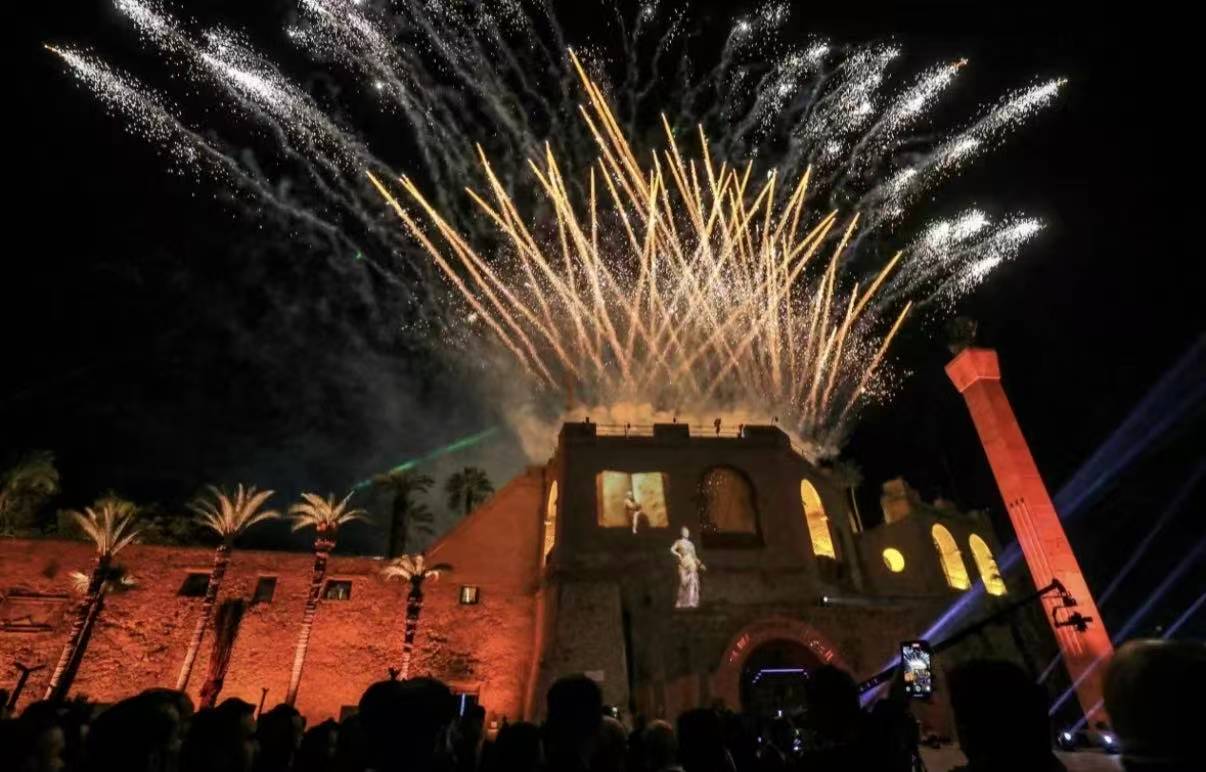
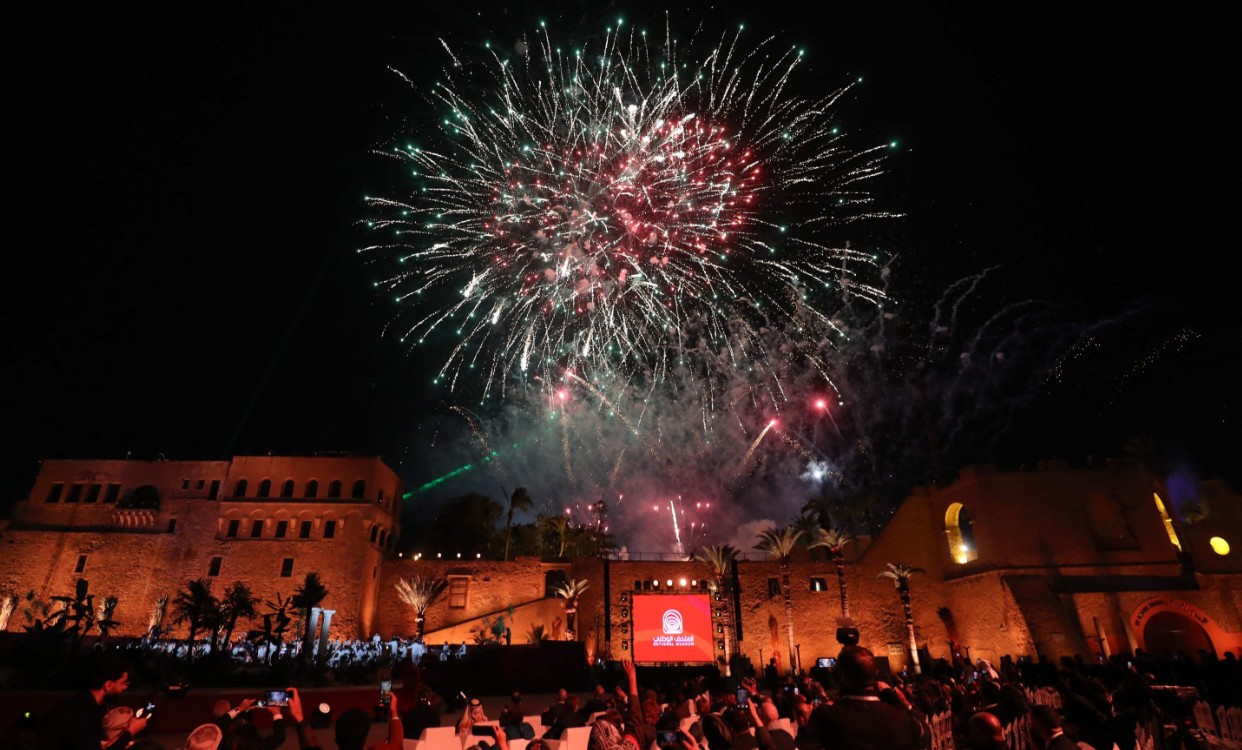
After nearly 14 years of silence, the National Museum of Libya has reopened, marking one of the country’s most powerful cultural moments since the 2011 uprising against Muammar Gaddafi. Fireworks crackled above Tripoli’s Martyrs’ Square, echoing across the old harbour. For once, the explosions were not a reminder of conflict, but of celebration.
Table of Contents
The History of The National Museum of Libya
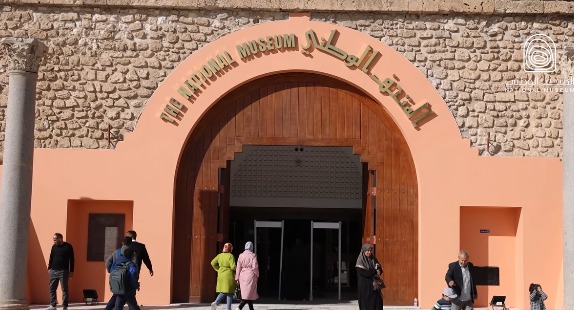
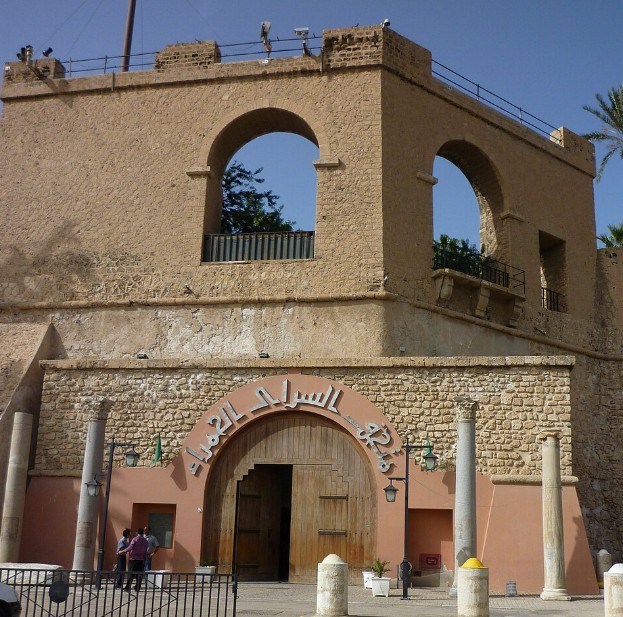
The National Museum of Libya is located inside As-Saraya Al-Hamra, or the Red Castle, a fortress that has watched Tripoli change hands for centuries. Completed in 1939, the building was originally constructed as a royal palace and later used by King Idris, Libya’s first monarch.
The museum itself was founded as early as 1919, though long delays meant it did not open fully to the public until 1988. Under Muammar Gaddafi, the complex became known as the People’s Palace, blending political symbolism with cultural display.
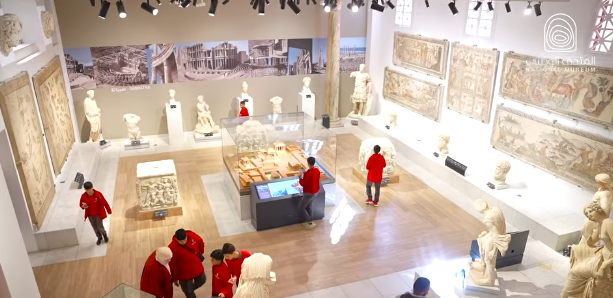
Today, the edutainment museum combines traditional archaeology with modern design. Parts of the exhibition use multimedia and immersive installations, including fog-based projection screens that visitors can walk through, and experience an unexpected touch in one of North Africa’s most historic settings.

The Closure of The National Museum of Libya
The museum closed in February 2011, at the height of Libya’s uprising during the Arab Spring. As Gaddafi’s regime collapsed, Tripoli descended into chaos, followed by years of civil conflict and political division.
During the unrest, armed groups entered the museum, mistakenly believing it contained secret tunnels. In the process, they damaged one of the most notorious exhibits: Gaddafi’s turquoise Volkswagen Beetle, later lost from the collection.
Fearing looting and international smuggling, museum officials made a dramatic decision: every artefact was secretly removed and hidden. From coins to monumental statues, Libya’s heritage disappeared from public view, locked away for protection as the country unravelled.
The Reopening of The National Museum of Libya
In December 2025, after 14 years of closure, the doors of the National Museum of Libya finally opened again. The reopening ceremony unfolded like a theatrical spectacle: orchestral music, acrobats, dancers, fire arches, and even a towering Ottoman-style ship suspended above the harbor. Diplomats, artists, and officials gathered in Martyrs’ Square, once a battleground, now a stage.
Abdul Hamid Dbeibeh, Prime Minister of the Government of National Unity, symbolically knocked on the museum’s heavy wooden doors to declare it open, calling the moment “not only cultural, but proof that Libya is rebuilding its institutions.”
Since the uprising, conflicting parallel government institutions have been established in eastern and western Libya. Former heritage officials describe the museum as a unifying force, bringing together artefacts from eastern Cyrenaica, western Tripolitania, and the southern Sahara under one roof, in a country still searching for cohesion.
Collections and Exhibitions of The National Museum of Libya
The museum’s collections span over 5,000 years of North African history, making it one of the richest archaeological museums on the continent.
Highlights of the museum include Roman mosaics and sculptures from Leptis Magna and Sabratha, two UNESCO World Heritage sites and among the best-preserved Roman cities in the Mediterranean; rock art and wall paintings comparable in significance to those of Lascaux and coins, punic inscriptions, reliefs, and funerary art from Greek, Roman, and Islamic periods.
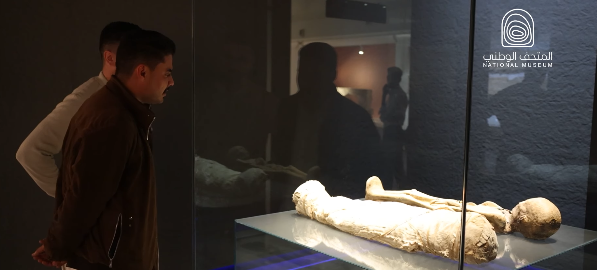
Ancient human remains from Uan Muhuggiag and Jaghbub, including one of the museum’s most extraordinary artefacts. The artefact of a 5,400-year-old mummified child, discovered in the Libyan desert in 1959, is one of the oldest naturally preserved human mummies in the world. This mummy has been kept in the National Museum since at least 1999. However, improper storage, frequent power outages, and a lack of trained conservationists have led to the decay of its bones. After the uprising, due to years of instability, the artefact remained stored in a warehouse. Now, conservation experts are calling for advanced restoration and recommending further training abroad to preserve it for future generations.
Libya’s Efforts to Bring Lost Artefacts Home
The reopening also highlights Libya’s growing efforts to reclaim its cultural heritage. Since 2011, the country has successfully recovered at least 21 smuggled artifacts from abroad, including the nine pieces returned by the United States in 2022, objects repatriated from France and Switzerland and ongoing negotiations with Spain and Austria for dozens more items
For a nation whose five UNESCO World Heritage sites were once listed as endangered due to conflict, these returns represent quiet but meaningful victories.
Conclusion
Libya rarely appears in travel writing unless something has gone wrong. The reopening of the National Museum of Libya offers a different narrative, one rooted in continuity rather than crisis.
The renovation work of the National Museum of Libya began in 2023, and for now the museum is open primarily to school groups, emphasising education and national identity. A full public opening is planned for 2026.
For travellers willing to look beyond headlines, the Red Castle now stands open once more, inviting the world to rediscover Libya.
YPT will include the Libyan National Museum in all Libyan tour packages in 2026, offering visitors the opportunity to be one of the first to visit the Libyan museum and providing a unique insight into this historically significant and turbulent country.
Click to read more about YPT‘s Libya tours.
About Post Author