In the north of Shaanxi Province, just north of Yan’an, there is a city called Zichang. Unlike many cities named after natural features or historical events, Zichang got its name from a Communist revolutionary general, Xie Zichang.
General Xie Zichang was a committed Communist. He was also one of the founders of the Shaanxi-Gansu-Ningxia revolutionary base area (the Chinese Soviet). He was a martyr who died during the Chinese Revolution. For foreign visitors who want to learn about the Red history of northern Shaanxi, Xie Zichang is an essential figure.
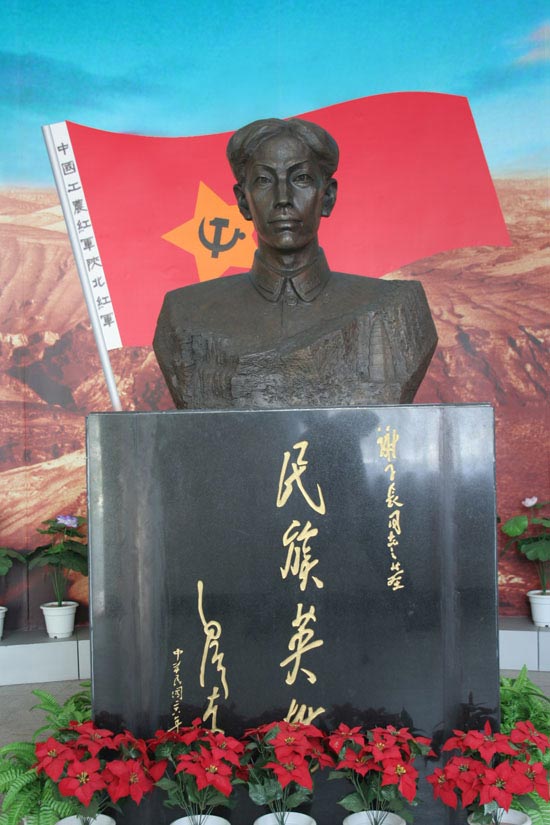
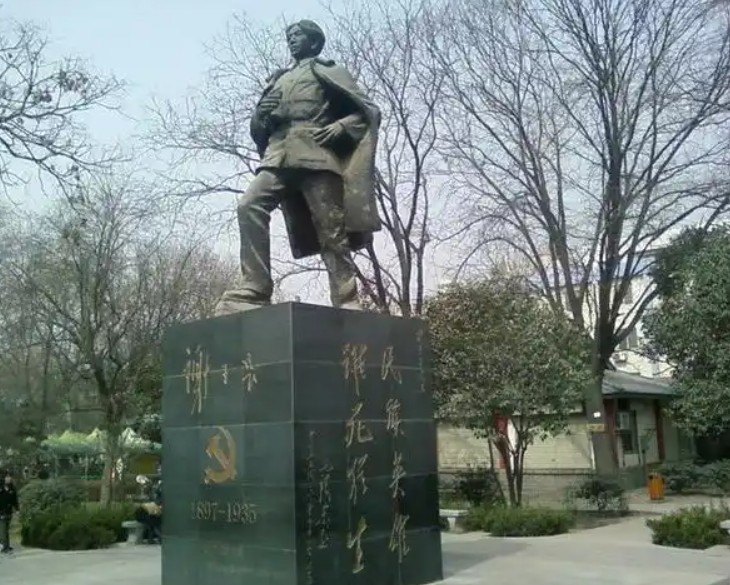
Table of Contents
Life of Xie Zichang
Xie Zichang was born on 19 January 1897. He was born in Zaoshuping Village in Anding County, Shaanxi Province, which is now Zichang City. He came from a relatively well-off farming family. In his early years, he received a formal education. He was strongly influenced by the May Fourth Movement.
In 1919, he entered Shaanxi Provincial First Secondary School. Later, he moved to Yulin Secondary School. He also became the head of the student union. He believed education could save the nation. He left school early and returned to his hometown to set up a primary school. He wanted to wake people up through knowledge. But the reality in northern Shaanxi was harsh. Warlords controlled the area and ordinary people suffered greatly. He realised that only armed struggle could truly change the situation. He put down his pen and joined the army. This was the start of his revolutionary path.
In 1922, Xie Zichang entered the Shanxi Army Cadet Corps. He studied military strategy and tactics there. After he graduated, he travelled to places such as Henan and Beijing to observe society. He met a group of Communist activists. From that time, he began to accept communist ideas. In 1924, he returned home and formed a local militia. He became the militia commander.
Local landlords and wealthy strongmen were pleased when they heard about the militia. They wanted protection and hoped the militia would serve them. They even donated money. However, after Xie Zichang took command, he turned against them. He fought the local bullies and redistributed land. Local people praised him for this.
In 1925, Xie Zichang went to Tianjin and Beijing to join anti-imperialist movements. He joined a progressive youth group called Gongjinshe. In the same year, he officially joined the Communist Party of China. After joining the Party, he returned to northern Shaanxi. He used his role as militia commander as a cover for revolutionary work. He secretly set up Party branches inside warlord armies. He also recruited new Party members. From 1927 to 1928, he led a series of uprisings. Some succeeded and some failed. Even so, they laid a solid foundation for the revolution in northern Shaanxi.
In the 1930s, Xie Zichang made major contributions to the building of the Red base area in northern Shaanxi. In February 1932, he became the commander-in-chief of the Shaanxi-Gansu guerrilla unit of the Chinese Workers’ and Peasants’ Red Army. He led his forces across the Shaanxi-Gansu border region. He established revolutionary bases and expanded the influence of the Communist Party and the Red Army.
In 1934, he became the commander of the General Command of the Northern Shaanxi Red Army guerrillas. He led his troops in battles against Nationalist forces who tried to destroy the Red base areas. In August 1934, during the battle at Qingjian River Crossing, he went to the front line to direct the fighting. He was badly wounded by a gunshot to the chest. He still continued to command until victory.
After the injury, medical care was poor. He had also fought for many years and his condition worsened again and again. Exhaustion made it even harder for him to recover. His health continued to decline. He died on 21 February 1935 in Dengzhanwan, Anding County. He was only 38 years old.
Commemoration of Xie Zichang
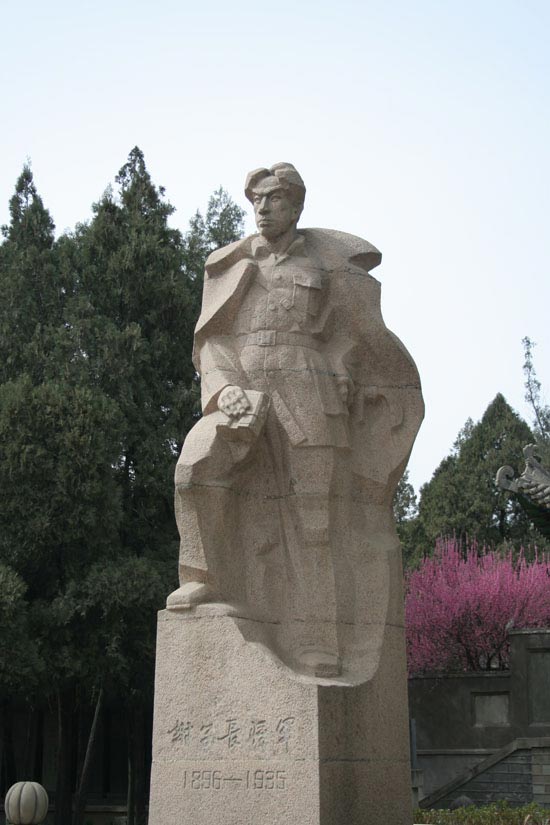
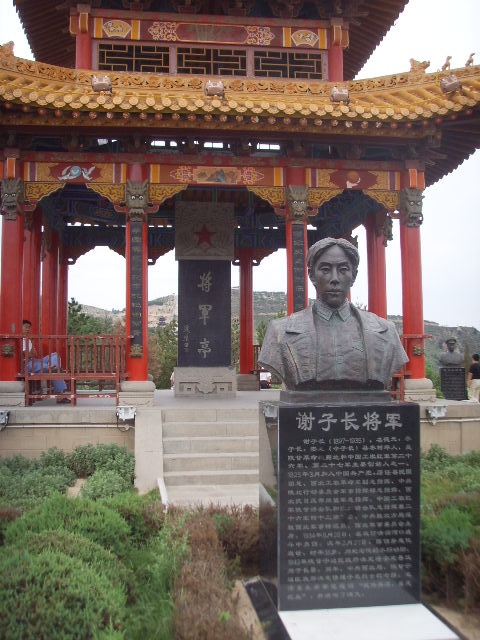
To honour his lasting contribution to the revolutionary cause and to carry forward his spirit, the Communist Party of China decided in 1935 to rename Anding County as Zichang County. In July 2019, with approval from the State Council, Zichang County was abolished and Zichang City was established as a county-level city under Yan’an.
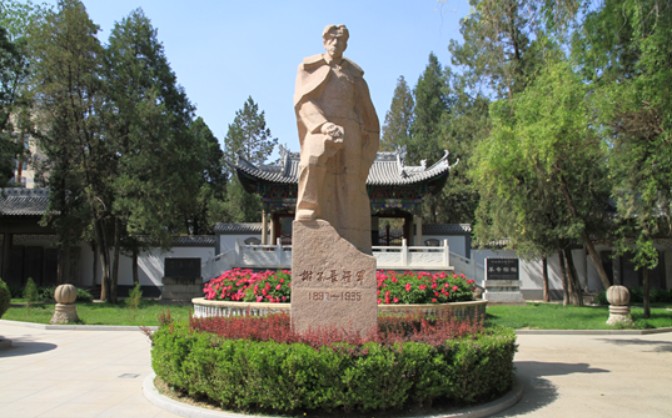
Today, the spirit of Xie Zichang is remembered in Zichang City. The Xie Zichang Martyrs Memorial Hall in Wayaobao holds his remains and presents his revolutionary story. In 1946, when his remains were reburied, Mao Zedong and other Communist leaders wrote inscriptions in mourning. This showed his respected status in the Chinese Revolution. In 2009, he was chosen as one of the “100 Heroic Role Models Who Made Outstanding Contributions to the Founding of New China”.
Conclusion
Xie Zichang devoted his youth and his life to the Chinese Revolution. His spirit has been passed down in Zichang City from generation to generation.
YPT’s China Revolutionary Red Base Tour takes visitors to Zichang and other places in the Yan’an region. It provides a full introduction to the history of the Chinese revolution. It is also the only tour that offers a complete English language service in this region.
Click to read more about YPT‘s China Revolutionary Red Base Tour and our other China tours.
About Post Author