Talking about money in Cameroon is not like talking about cash in London or Paris. It is a mix of colonial history, daily survival, and practical life. If you are in Yaoundé, Douala, or a small town, you quickly learn that cash matters. Not just any cash, but the currency of Cameroon carries history, identity, and control over everyday transactions. Bills and coins are more than tools for buying food or transport. They are symbols of economics, independence, and practicality.
Today the money used in Cameroon is the Central African franc. It is shared with Gabon, Equatorial Guinea, Chad, and the Central African Republic. This is the cash people carry in markets, taxis, restaurants, and shops. Understanding the history of Cameroon money helps explain how the nation manages cash, trade, and daily life.
Table of Contents
Colonial History and Early Currency
Before independence, Cameroon was divided between French and British administration. The French zone used the French colonial franc while the British part used the West African pound. When Cameroon gained independence in 1960 and 1961, the country needed a unified currency for practical governance and trade. The Central African franc, already used in other regional countries, was extended to Cameroon to simplify cross-border trade and maintain stability.
The Central African franc became the official currency of Cameroon and has remained the standard ever since. The franc is pegged to the euro, which ensures relative stability and low inflation compared to other regional currencies.

Coins and Banknotes of Cameroon
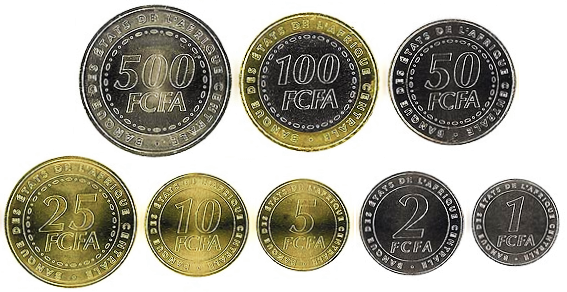
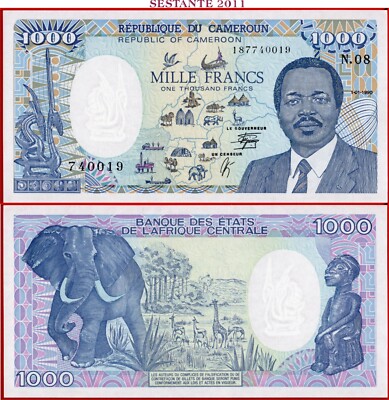
The physical Cameroon money in circulation today is part of the Central African franc zone. Banknotes are issued in denominations of five hundred, one thousand, two thousand, five thousand, and ten thousand francs. Coins include one, two, five, ten, twenty-five, fifty, one hundred, and five hundred francs. The coins are practical for everyday purchases, while the banknotes handle larger transactions.
Older Cameroon banknotes are sometimes collected by numismatists because they reflect historical designs, political symbols, and national figures. Older coins are rare but may still appear in circulation in small towns or markets.
Using Cameroon Money Daily
In Cameroon, cash is king. Most transactions in shops, markets, and taxis are made with Cameroon coins and banknotes. ATMs are available in larger cities like Douala and Yaoundé but they can run out of cash or fail unexpectedly. Credit cards are not widely accepted, even in hotels or restaurants. Travelers should rely primarily on Cameroon money in the form of Central African francs.
Large bills can be difficult to break in small markets, so carrying smaller denominations is practical. Coins are important for street vendors, public transport, and small purchases.
Changing Money in Cameroon
For travelers, exchanging foreign currency into Cameroon money is necessary. Banks and official money changers in Yaoundé, Douala, and other major cities will exchange euros or US dollars. Outside major urban centers, it is harder to find reliable money changers. The Central African franc is pegged to the euro, so exchange rates are predictable and stable.
Changing money on the street or with unofficial vendors is risky because counterfeit notes exist and rates are often worse than official exchanges. Planning ahead and carrying the right denominations of Cameroon banknotes and coins makes transactions smoother.
Using Credit Cards in Cameroon
Credit cards are not widely used in Cameroon. Some large hotels and international businesses may accept Visa or Mastercard, but this is rare. Most purchases, even in restaurants or tourist areas, require cash. Travelers must carry Cameroon money and understand that coins and small notes are essential for daily life. Relying on credit cards alone is impractical. ATMs exist but can be unreliable and withdrawals are often limited. Always have enough cash to cover transport, meals, and minor expenses.
Practical Tips for Travelers in Cameroon
Understanding money in Cameroon is essential for smooth travel. Carry small denominations of Central African francs for everyday purchases. Keep larger bills for hotels, restaurants, or significant purchases. Avoid exchanging money on the street. Use official banks or reputable money changers. Familiarize yourself with the look of Cameroon banknotes and coins to spot counterfeits.
The franc peg provides stability, so travelers can predict how much they will get when exchanging euros or dollars. Local vendors expect cash, so be prepared to rely on Cameroon money for most transactions.
Its all about the money….
Talking about money in Cameroon is not just about banknotes and coins. It is about history, independence, trade, and daily survival. The evolution of Cameroon money reflects colonial legacies, regional cooperation, and practical economics. Bills and coins are essential for life in Yaoundé, Douala, and rural areas. They show how people adapt to economic realities and ensure trade keeps moving.
For collectors, old Cameroon banknotes and coins offer a glimpse into the past. For travelers, understanding cash is practical and essential. For locals, money is a tool, a symbol, and a necessity. Observing how people use coins and banknotes provides insight into life in a country where cash still rules.
Click to check our Cameroon Tours.
About Post Author