Where exactly is Bhutan on a map? If you’ve ever wondered about this mysterious Himalayan kingdom, you’re in the right place. Bhutan is one of the most intriguing countries on the planet, a place that seems to exist in its own little time capsule.
From carefully controlling tourist numbers to measuring Gross National Happiness instead of GDP (or rather as well as), and from being one of the last absolute monarchies to its breathtaking mountain landscapes,
Bhutan is a travel destination like no other. This Bhutan map guide will show you exactly where it is, how it fits into the region, and what you need to know before exploring.
Table of Contents
What is Bhutan?
The Kingdom of Bhutan is often shrouded in mystery, even for experienced travelers. It is a small, landlocked nation tucked between two of Asia’s giants—India and China. Despite its size, Bhutan has a personality all its own. Its approach to governance, culture, and tourism is unlike anywhere else. Unlike Nepal, which opened up to mass tourism decades ago, Bhutan carefully regulates how many people can enter each year. Visitors must book through licensed tour operators, pay daily tariffs, and respect strict cultural and environmental guidelines.
Bhutan is also famous for its Gross National Happiness index, which prioritizes well-being, culture, and environment over raw economic growth. Although is to a degree a bit of a myth too.
For decades, it remained one of the last absolute monarchies in the world, only gradually transitioning to a parliamentary democracy in 2008. All this adds to its mystique, making Bhutan feel like a place that has largely resisted the pressures of modernity.
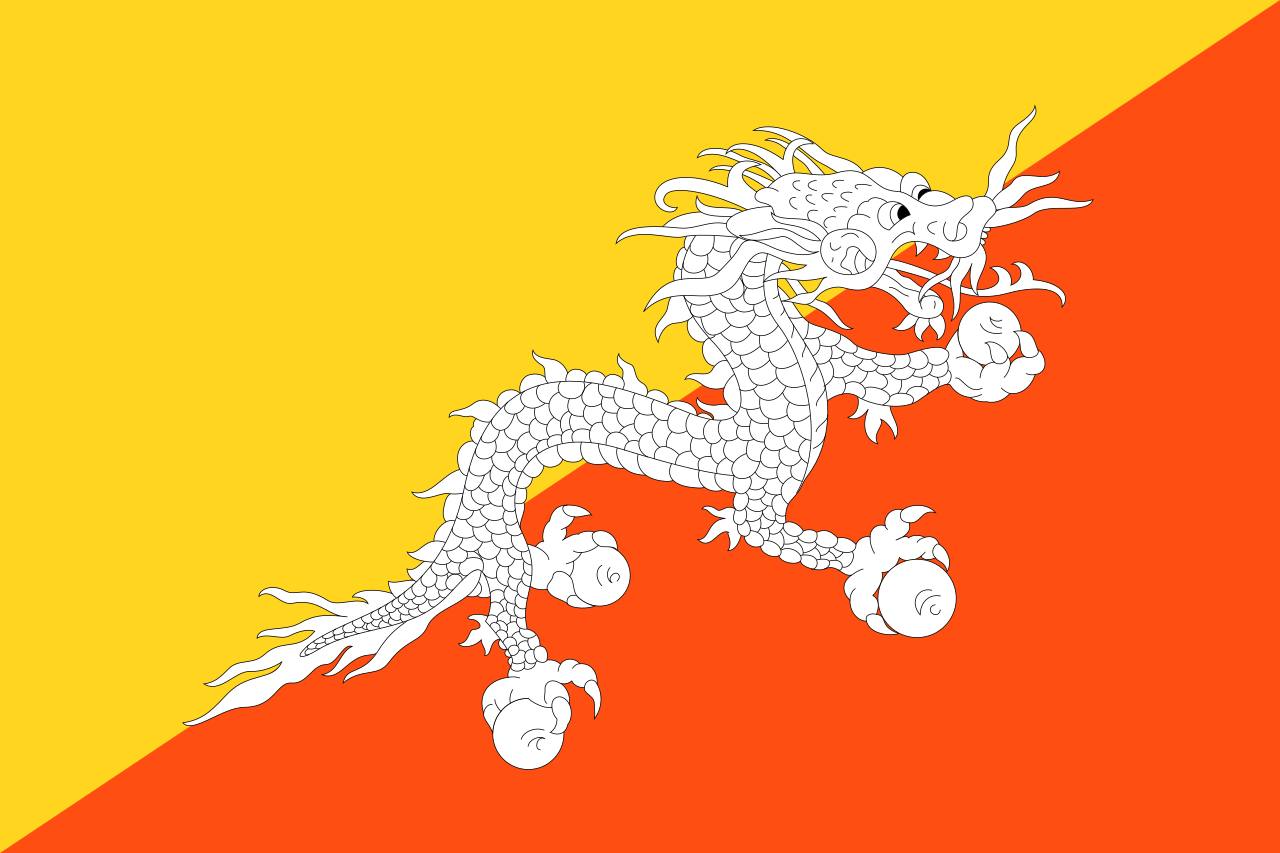
Where is Bhutan on a Map?
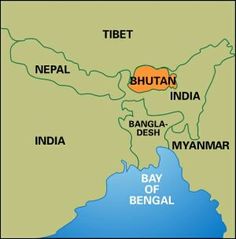
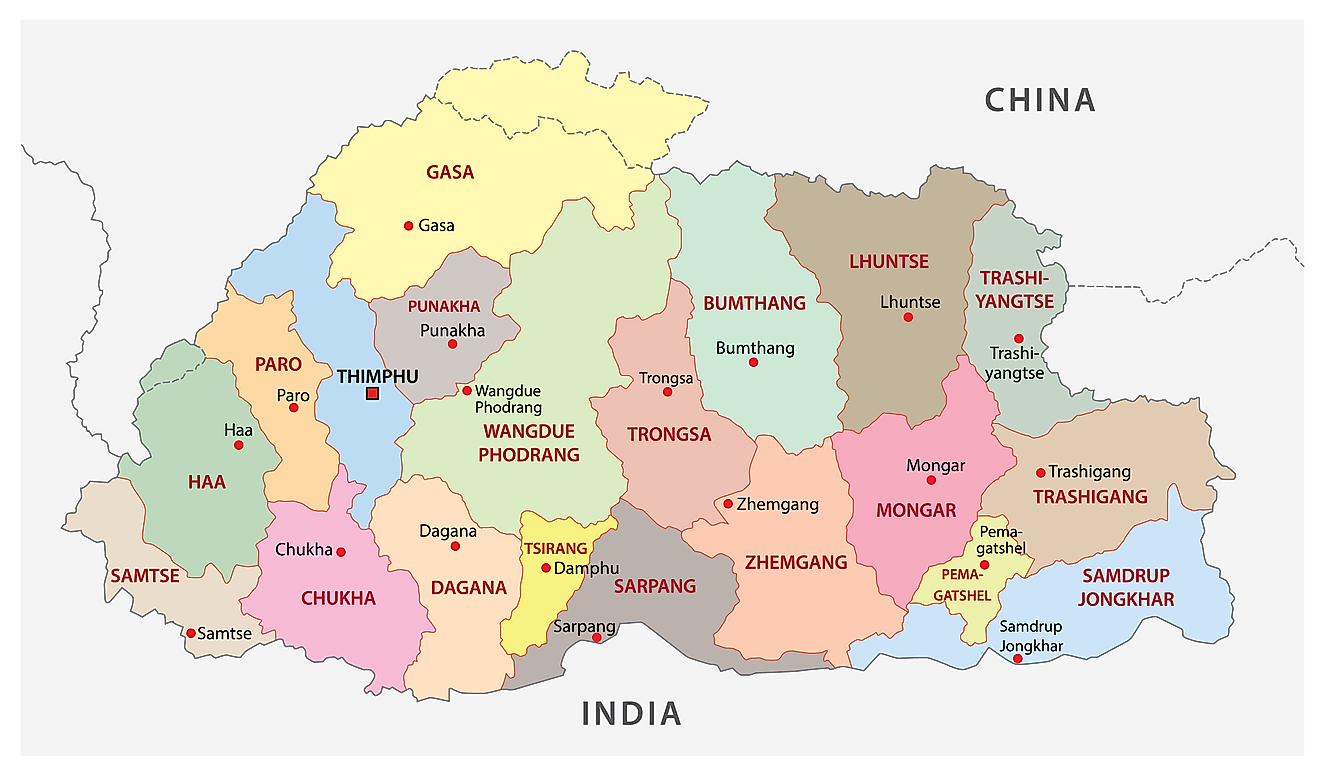
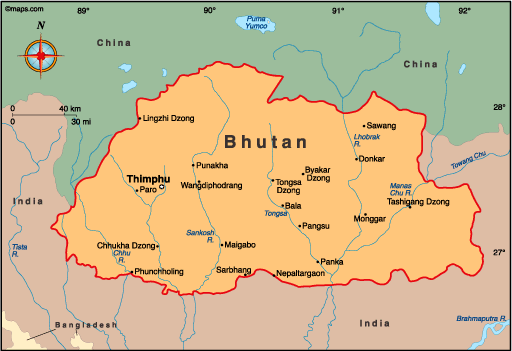
Bhutan sits in the eastern Himalayas of South Asia. It is entirely landlocked, sharing borders with India to the south, east, and west, and China (specifically the Tibet Autonomous Region) to the north. Its southern neighbors include the Indian states of Assam, Arunachal Pradesh, and Sikkim. To the north, the landscape becomes rugged and mountainous, with the towering peaks of the Himalayas forming a natural barrier between Bhutan and Tibet.
Despite being so small, Bhutan occupies a strategic and beautiful position. To its southeast, Bangladesh is separated only by a thin sliver of Indian territory, while Myanmar lies beyond India’s northeastern corridor. This compact location has kept Bhutan relatively isolated, which is part of why its culture has remained so intact compared to other Himalayan nations.
How Big is Bhutan?
Bhutan covers roughly 38,394 square kilometers, making it smaller than its neighbor Nepal. Many sources mistakenly claim Bhutan is the second least populated country in the world, but this is inaccurate. Bhutan is actually one of the least densely populated countries, which means the population is spread thinly across the mountains and valleys.
The capital city, Thimphu, sits in the western part of the country along the Wang Chhu River and is home to most of the nation’s administrative and commercial activity. The border with India stretches for about 659 kilometers, linking Bhutan with Assam to the south, Arunachal Pradesh to the east, and Sikkim to the west. These borders are relatively porous in rural areas, though mountain passes in the north limit movement toward Tibet.
Cities in Bhutan
When it comes to Bhutan maps, there are only a few cities you need to know, but each is rich in history and culture.
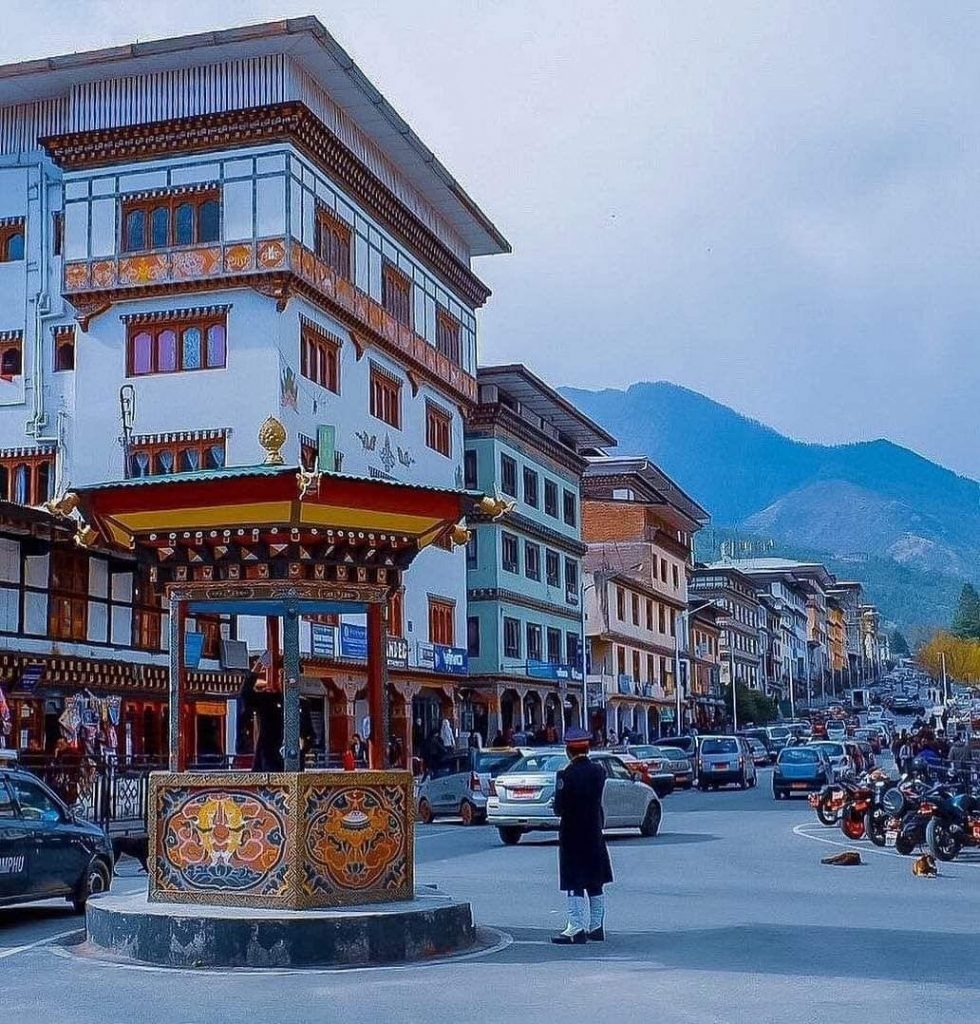
Thimphu – The capital city of Bhutan, Thimphu is the hub for tourists and the seat of government. It’s where Thimphu International Airport is located, making it the main entry point for travelers. Direct flights connect Thimphu with cities in India, Nepal, Singapore, and Thailand. The city itself blends tradition and modernity, with Dzongs (fortress-monasteries), bustling markets, and government offices all nestled in a scenic valley surrounded by mountains.
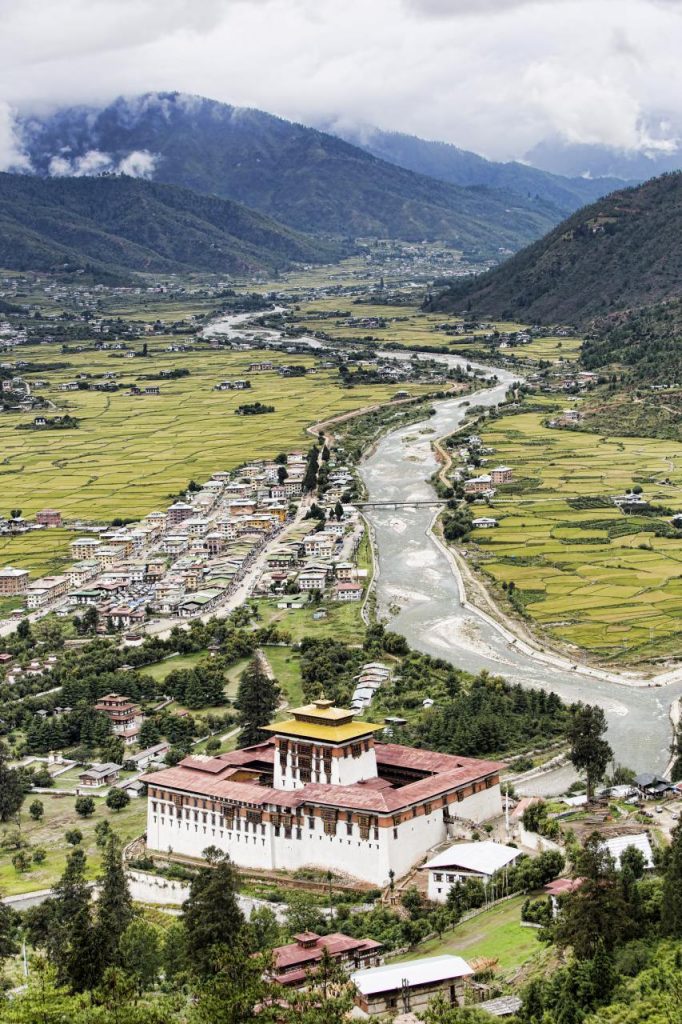
Paro – Just a short drive from Thimphu, Paro is famous for its airport and as the location of many iconic Bhutanese landmarks, including the world-famous Paro Taktsang, or Tiger’s Nest Monastery, clinging to a cliffside. Paro was the former capital and remains a key cultural center. Most tours of Bhutan include Paro because of its historical significance and easy access.
Other notable towns include Punakha, with its stunning Punakha Dzong, and Phuentsholing, which sits on the Indian border and acts as a gateway for goods and travelers entering from the south. Bhutan’s cities are small by international standards, but they are vibrant and full of life, offering glimpses into a society that has carefully preserved its heritage while cautiously embracing modernity.
Borders and Geography
Bhutan’s northern border with China is marked by some of the most rugged Himalayan terrain in the world. Here, glaciers and high peaks form a natural divide that has helped maintain Bhutanese independence for centuries. To the south, India acts as both a buffer and a partner, providing economic, political, and military support. Sikkim, which shares cultural and historical ties with Bhutan and Nepal, lies just to the west and became an Indian state in the 1970s after its own period of independence.
Despite its small size, Bhutan’s topography is incredibly varied. From subtropical plains in the south to temperate valleys and high alpine mountains in the north, the landscape is diverse and breathtaking. It is this dramatic terrain that gives Bhutan its reputation as a paradise for hikers, photographers, and anyone looking for a Himalayan adventure.
Visiting Bhutan
If you want to experience Bhutan for yourself, the main points of entry are Paro Airport and overland from India via Phuentsholing. Tours are mandatory for most travelers, and packages typically include accommodation, meals, guides, and transportation. While this might sound restrictive, it actually helps preserve Bhutan’s culture and environment, making it a unique destination compared to the crowded tourist hubs of Asia.
Bhutan is not just a country on a map; it’s an experience. The mix of isolation, careful modernization, and dedication to happiness makes it unlike anywhere else in the world. Whether you’re flying into Thimphu, trekking to Tiger’s Nest, or exploring remote valleys, Bhutan is a place where the mountains, culture, and people remain astonishingly intact.
So if you’re looking at a map and wondering, “Where is Bhutan?” now you know. And now that you do know why not join us on a Bhutanese Tour.
About Post Author