Introduction
Laos is a small, landlocked country in Southeast Asia, bordered by Thailand, Vietnam, Cambodia, China, and Myanmar.
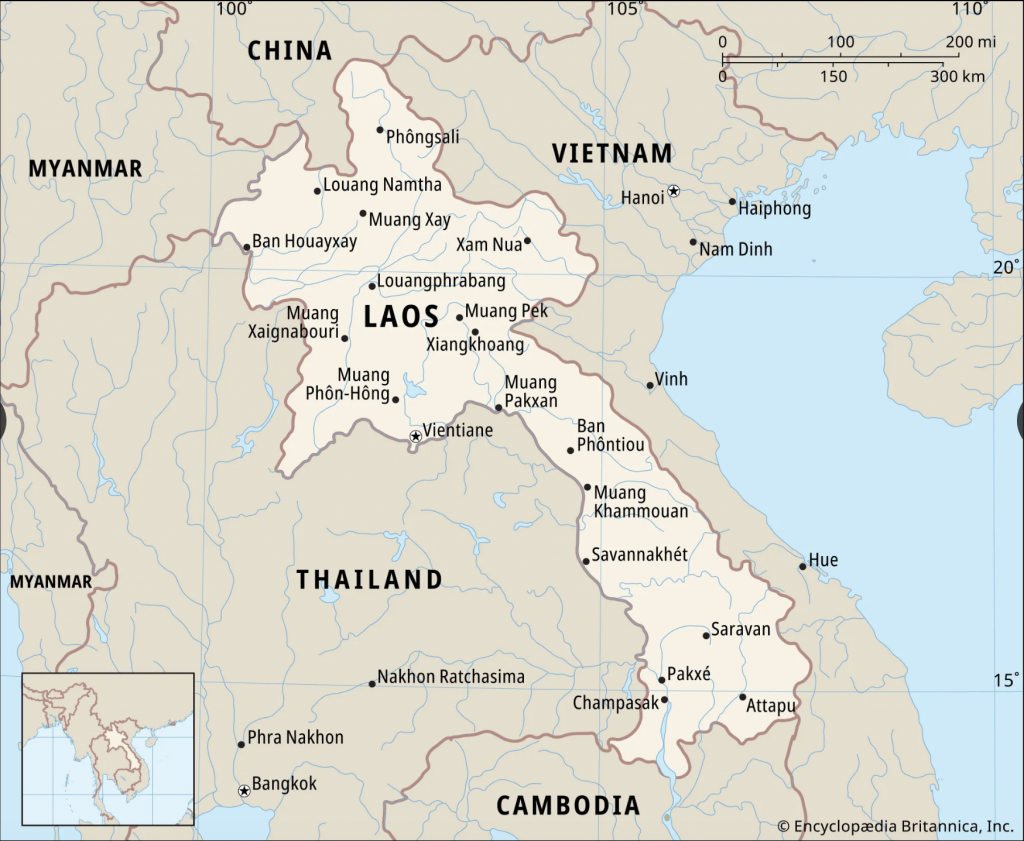
It was once part of French Indochina, a region comprising five countries: Cambodia, Laos, Myanmar, Thailand, and Vietnam. These countries are closely connected through history, culture, and economy, with the Mekong River running through the heart of the region, providing resources and transportation.
After World War II, Laos moved toward independence and officially became an independent kingdom in 1953. Much of its modern history has been shaped by the Vietnam War and the bombing campaigns it endured.
Table of Contents
The Bombing
Between 1964 and 1973, Laos became the most heavily bombed country in history.
During the Vietnam War, the United States conducted a secret operation called the “Secret War” in Laos. The CIA supported anti-communist forces against the Pathet Lao, a communist movement allied with North Vietnam. The CIA had an Air base in Long Tieng, located in the northern part of the country, which was a central hub for these military operations.
The U.S. dropped tons of bombs on Laos, more than were dropped on Germany and Japan combined during World War II. Bombings targeted roads, supply routes, and villages near the Ho Chi Minh Trail, which North Vietnam used to move troops and supplies.
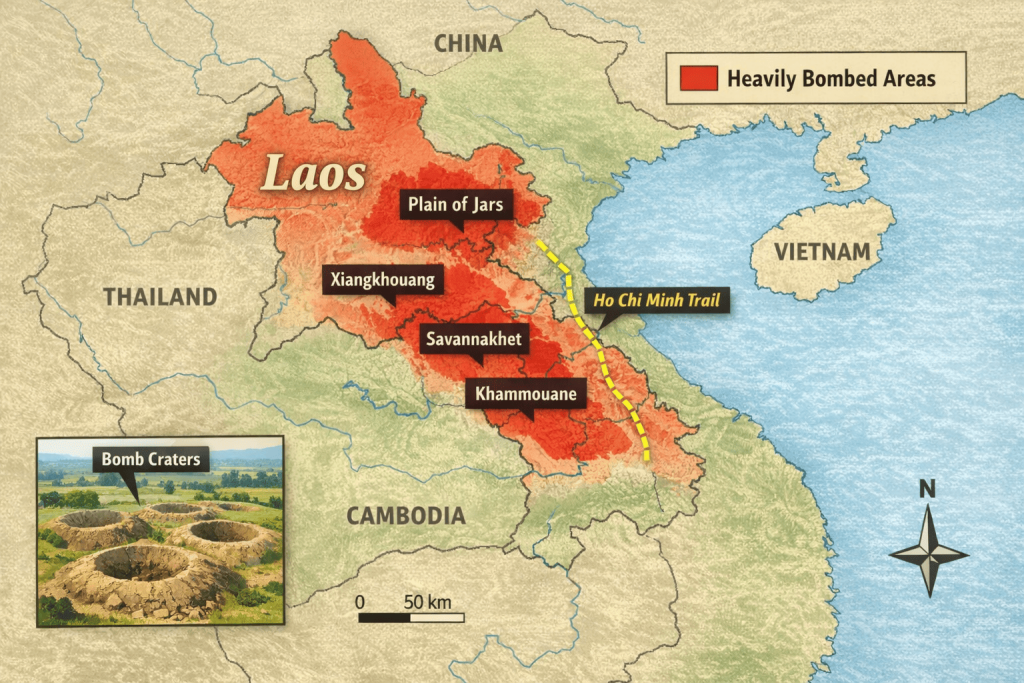
The impact was concentrated in certain provinces, like the Plain of Jars, Xiangkhouang, Savannakhet, and Khammouane.
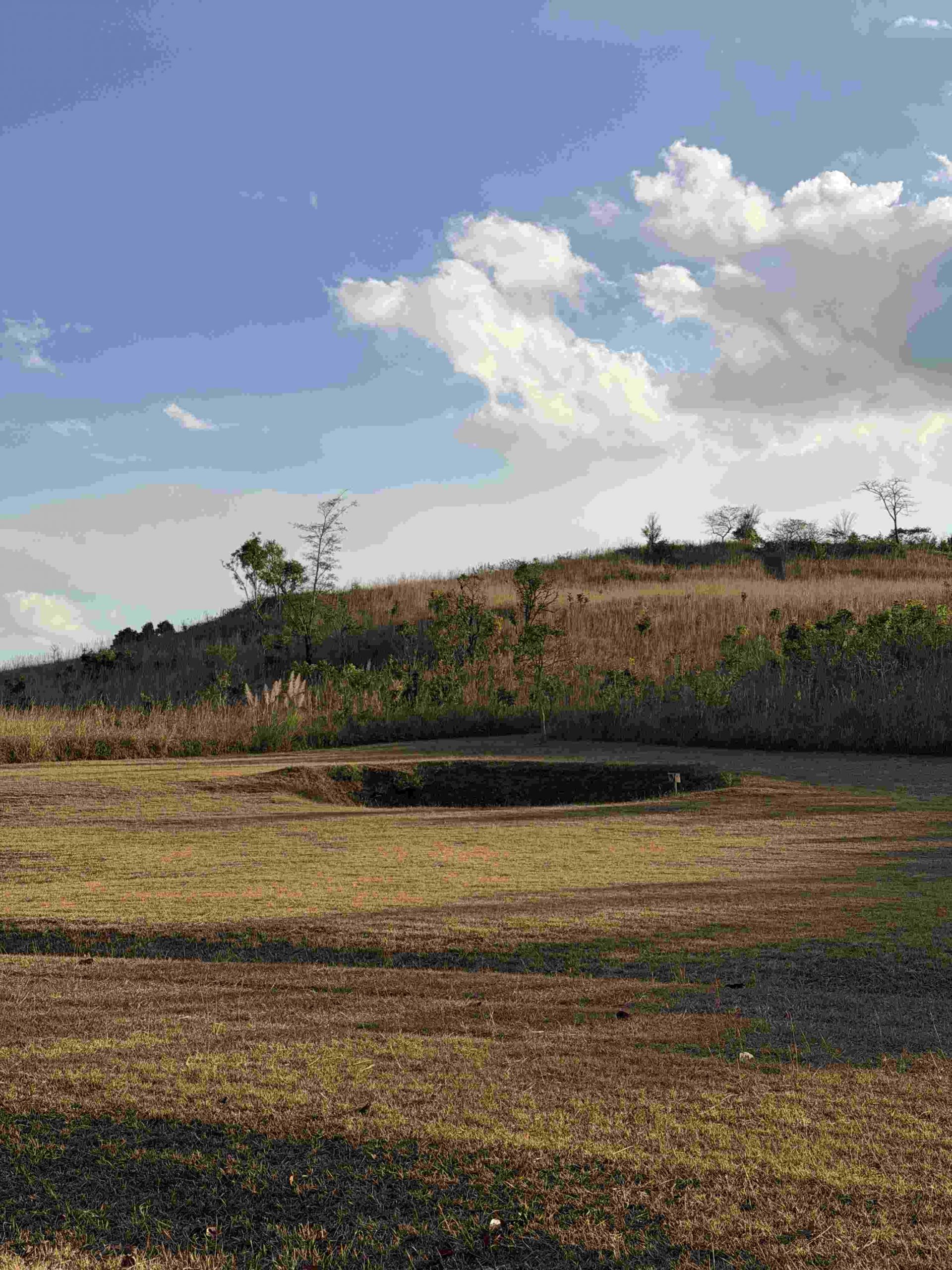
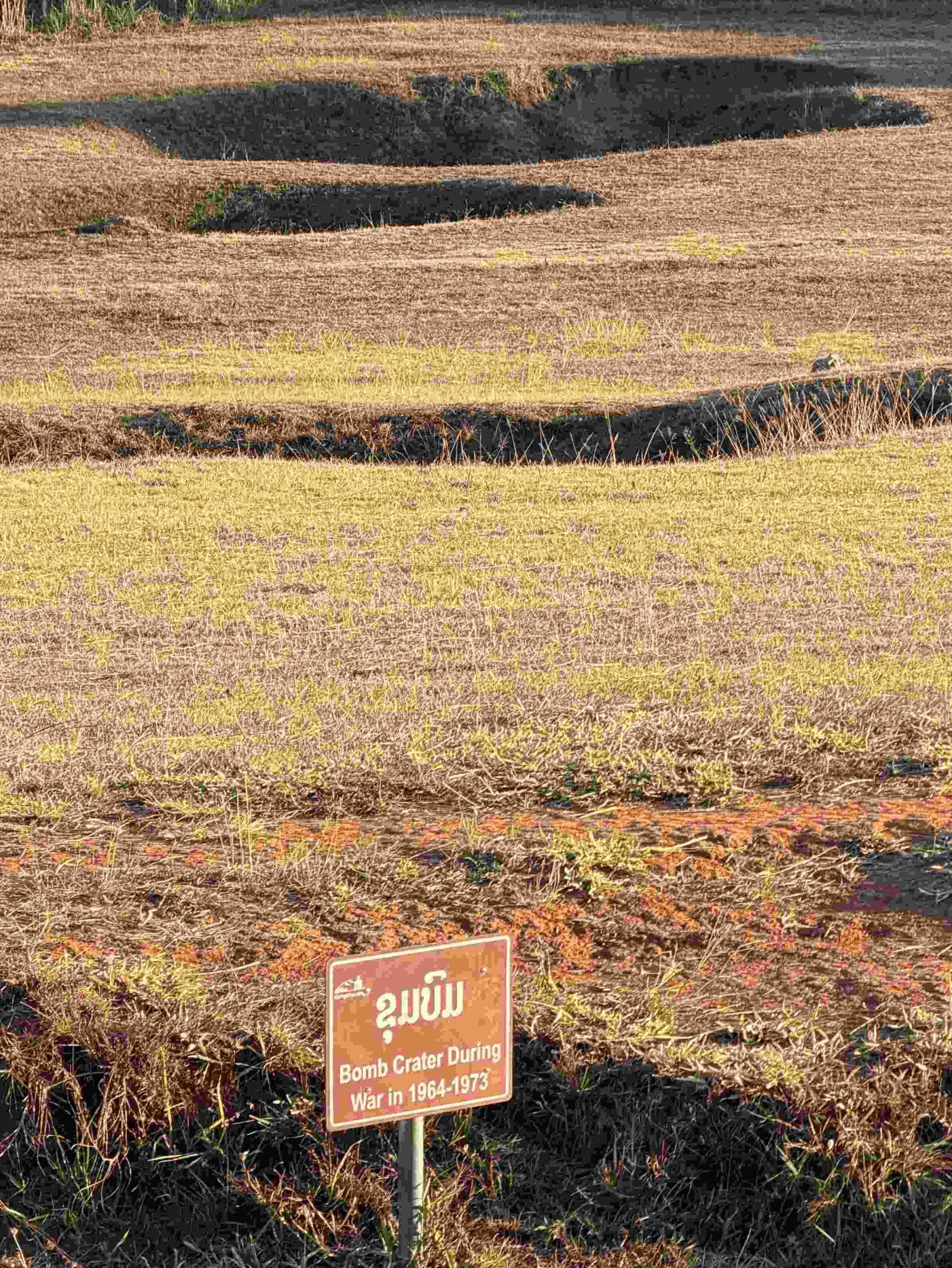
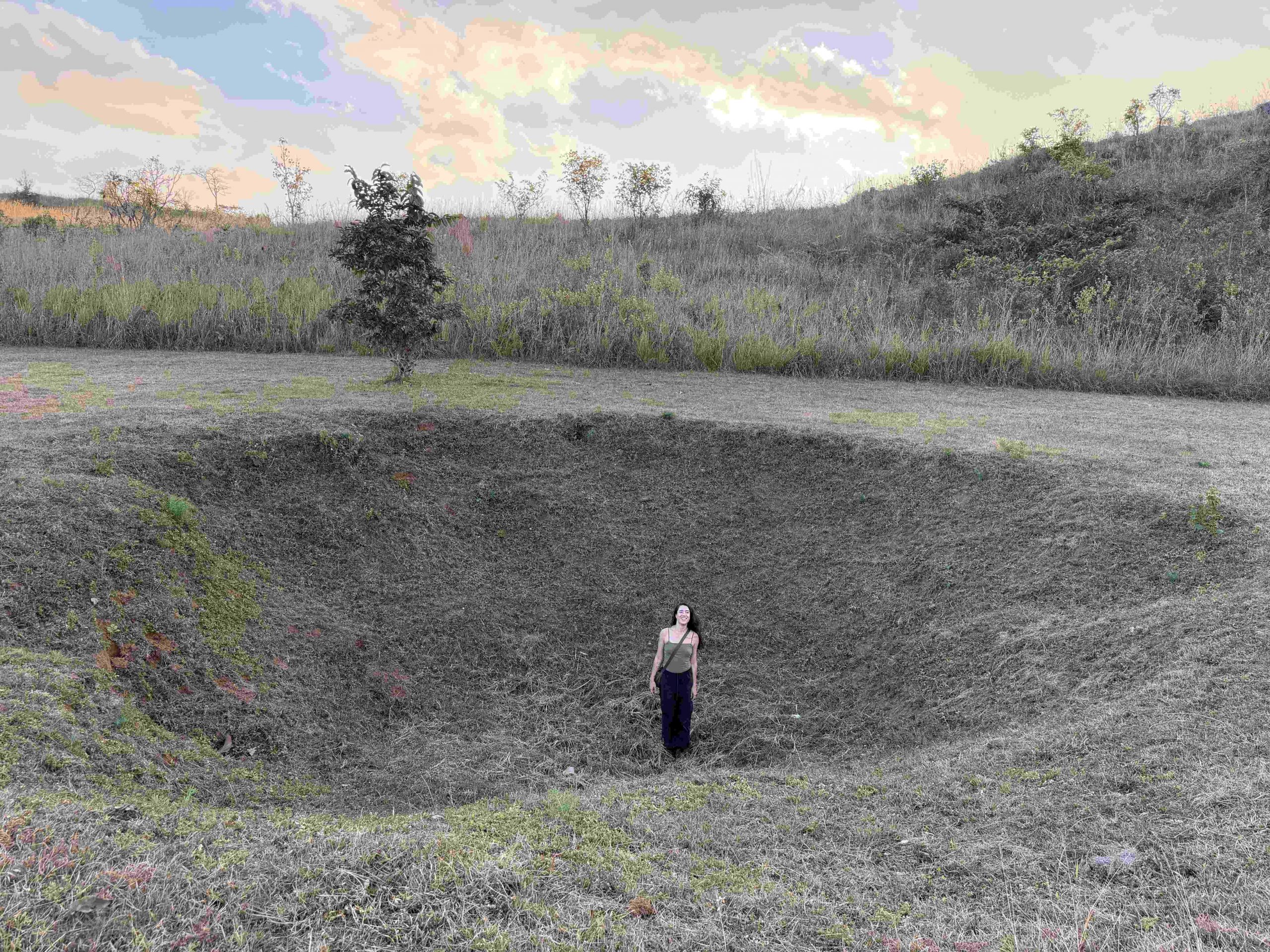
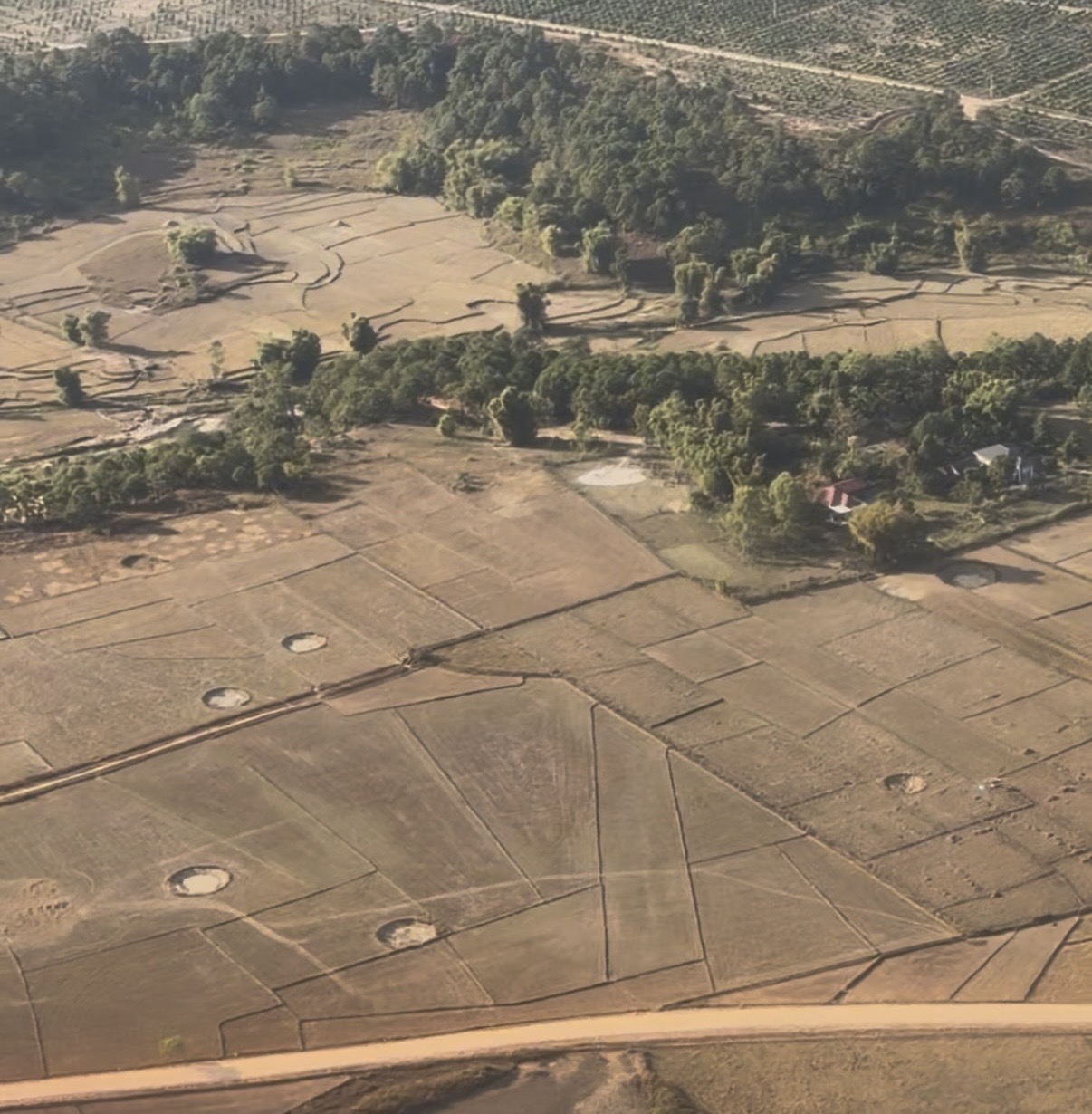
The Plain of Jars, in particular, experienced heavy attacks due to its strategic location. Even today, you can see the remnants of these bombings. From the air, craters dot the landscape like giant scars, and some are large enough to walk inside.
UXO (Unexploded Ordnance)
Cluster bombs were widely used in Laos because they could cover large areas quickly and affect both military and civilian targets. Each bomb contains dozens of smaller bomblets, which spread out when released.
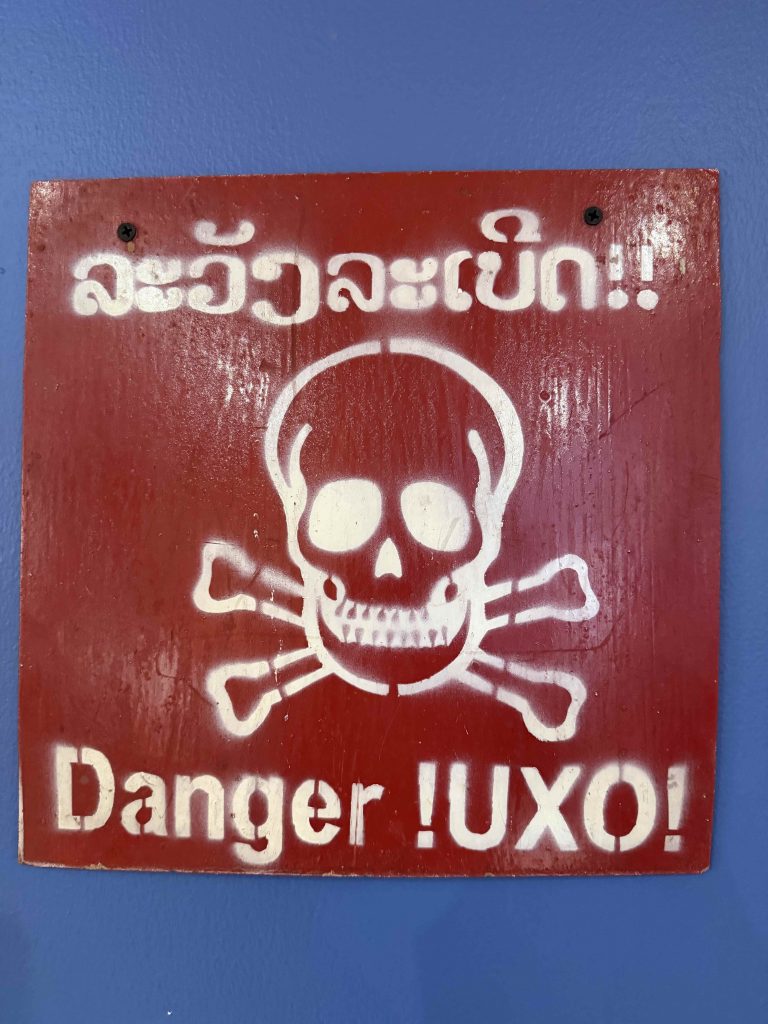
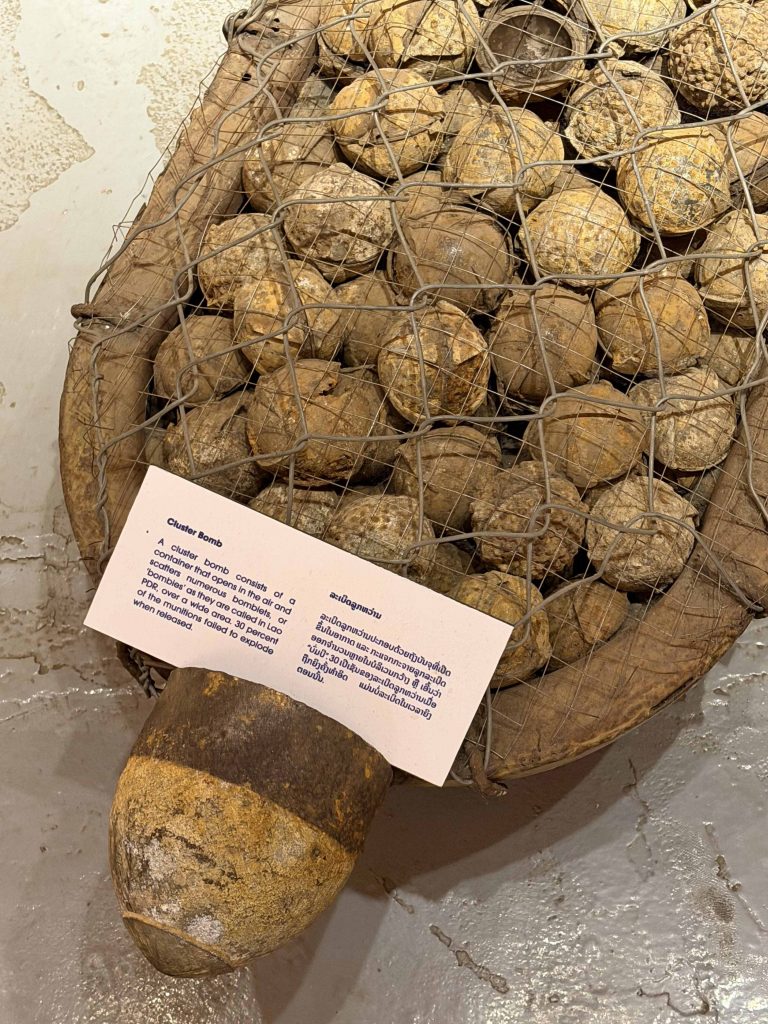
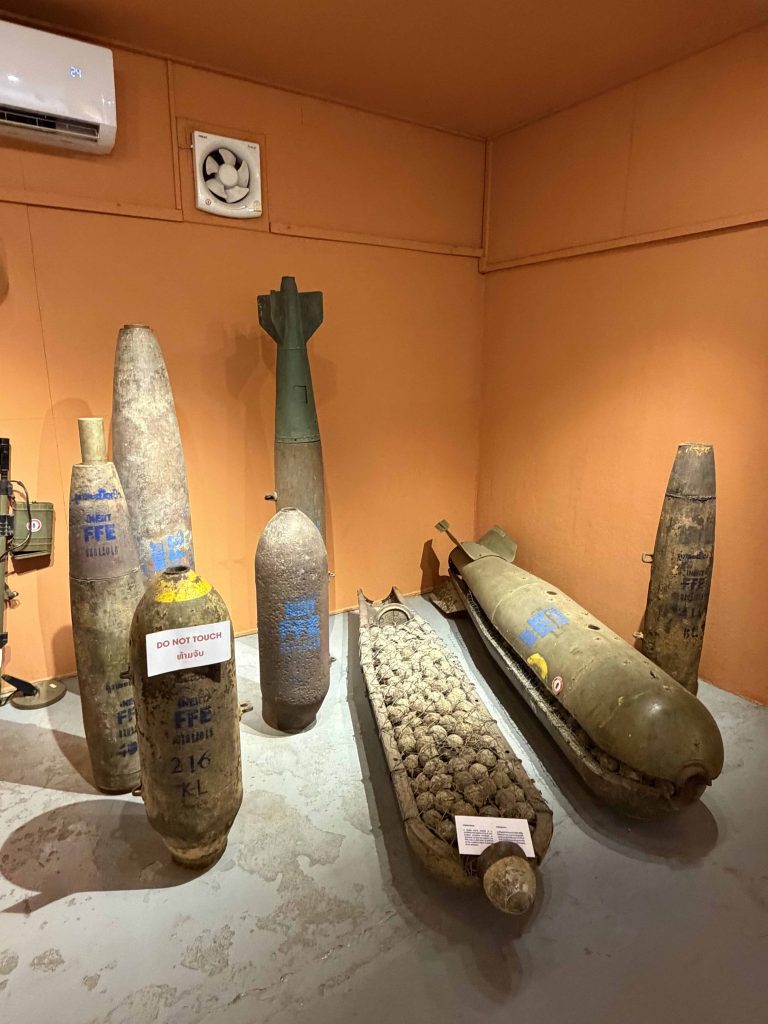
Many of these bomblets fail to detonate on impact, becoming unexploded ordnance (UXO).
These hidden explosives can remain dangerous for decades, even if they appear harmless. They are small, sometimes resembling scrap metal or household objects, which makes them particularly risky for farmers and children.
UXOs are unpredictable; touching, moving, or even stepping near one can trigger an explosion.
The Effects of the Bombs Today
The U.S. dropped over 2 million tons of explosives on Laos, and about 30% of these bombs did not explode.
Many areas still face serious problems because of hidden bombs; some families have lost their way of living entirely, as repeated accidents have made farming too dangerous.
Walking around villages, you can see the remnants of bombs near homes, cafes, small shops, and even a small gas station. Signs are placed throughout the villages explaining the dangers of UXO and what to do if one is found.
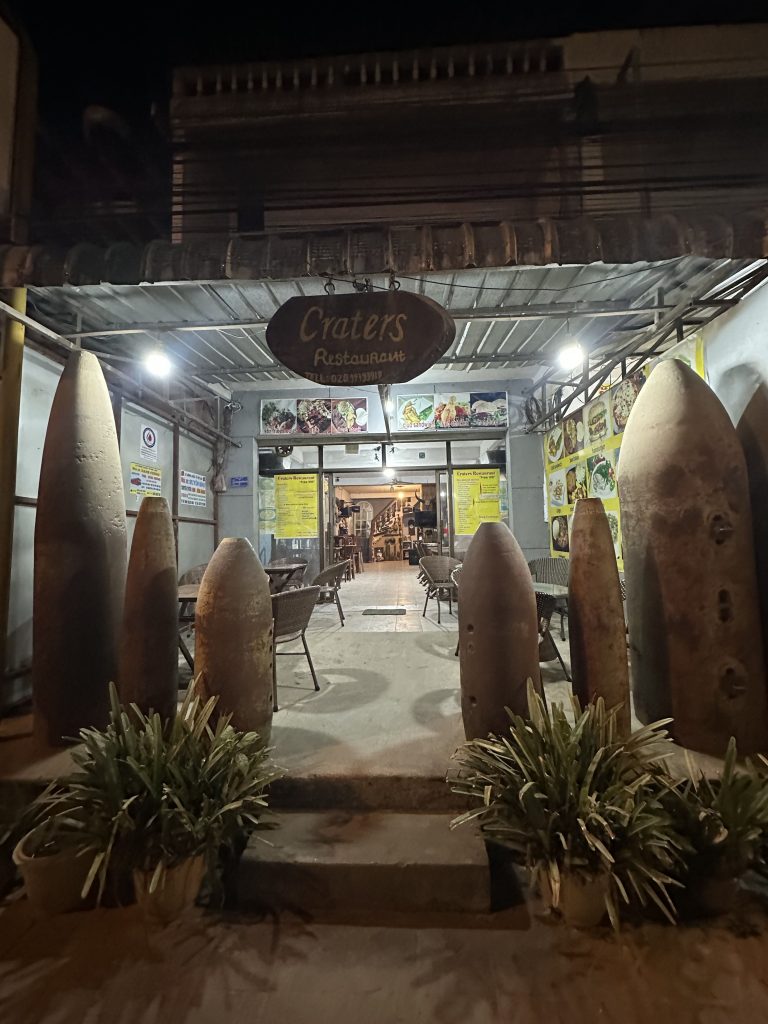
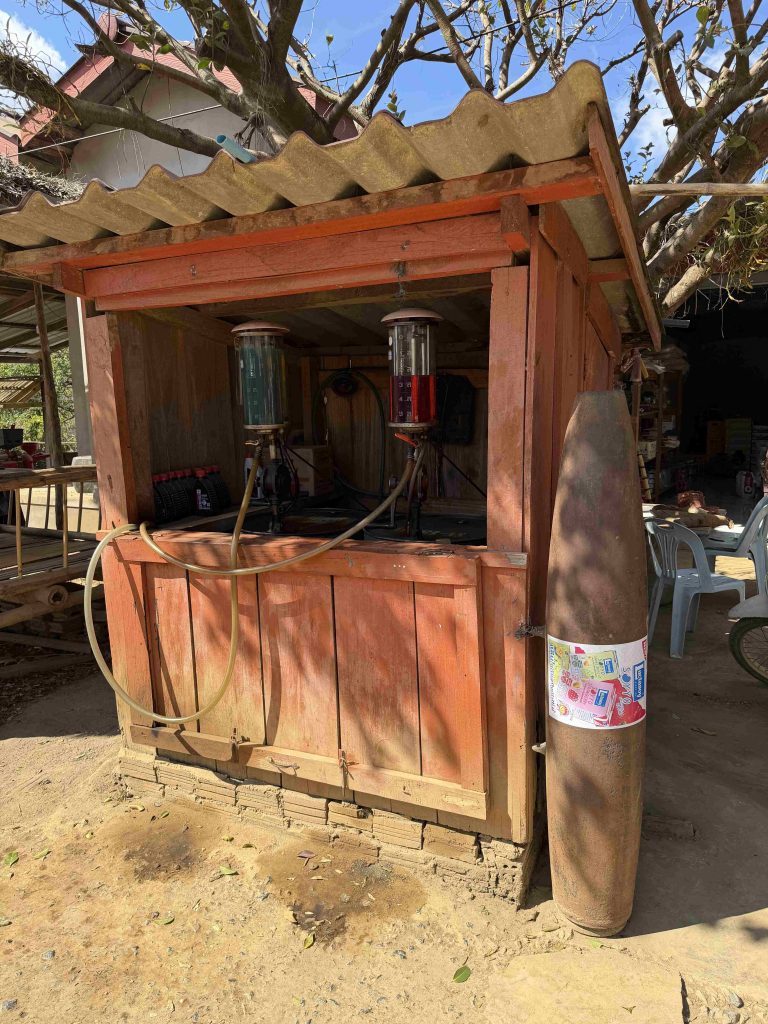
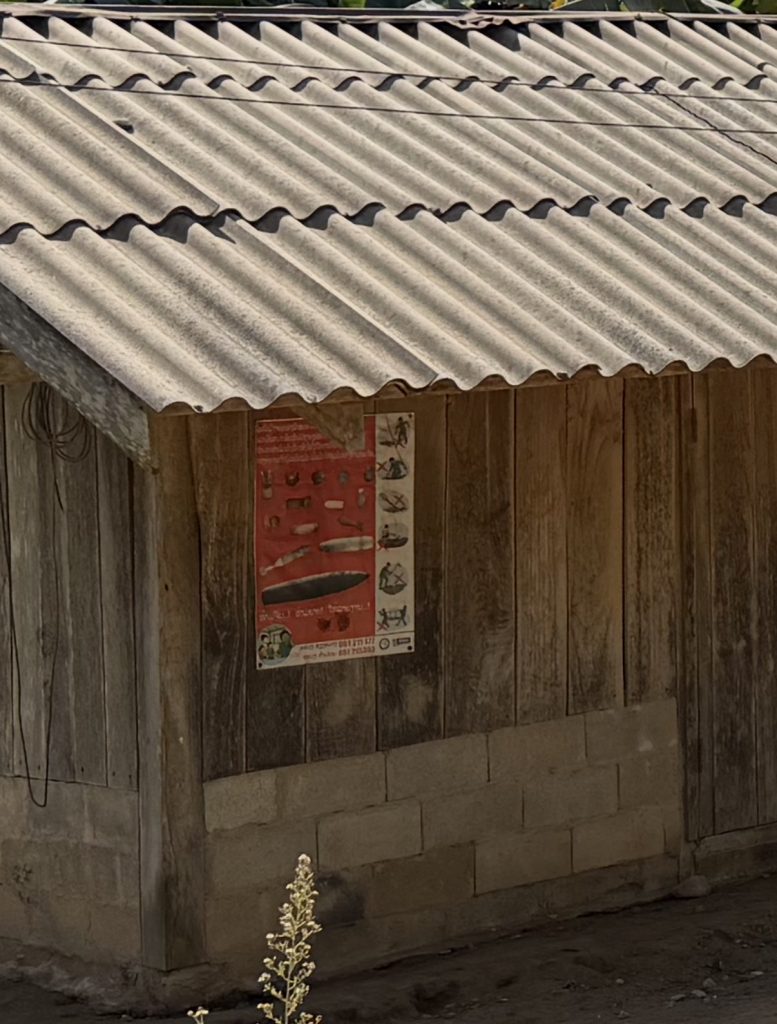
Despite awareness efforts, many people are severely injured every day due to these explosions, and the country is still dealing with the long-term impact on daily life and development.
Efforts to Remove the Bombs
Efforts to remove unexploded bombs in Laos have been ongoing for decades, but it is estimated that it will take another 30–40 years before the country is safe to farm and live normally again.
Organizations like UXO Lao work closely with the Lao government, and other countries provide funding, supplies, and personnel to help with clearing operations.
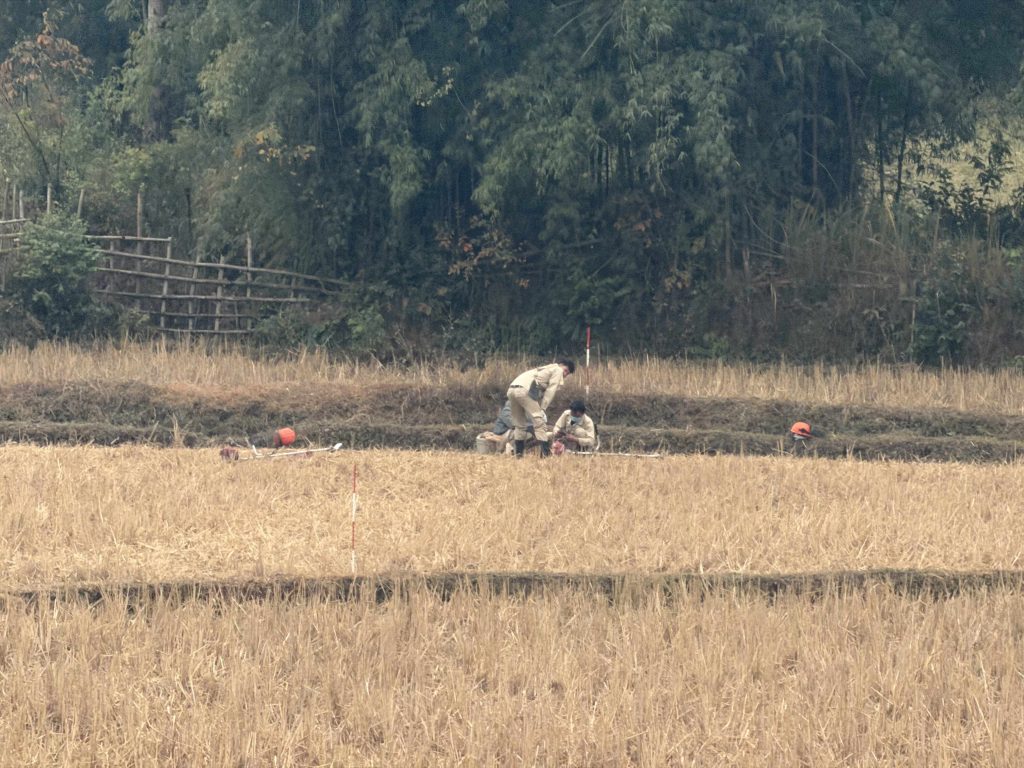
These combined efforts have made progress, but the scale of the problem is enormous, and work continues every day to make communities safer.
Visiting the UXO Lao Visitor Center and COPE
For those visiting Laos, there are two important places you should check out.
UXO Lao Visitor Center – Luang Prabang
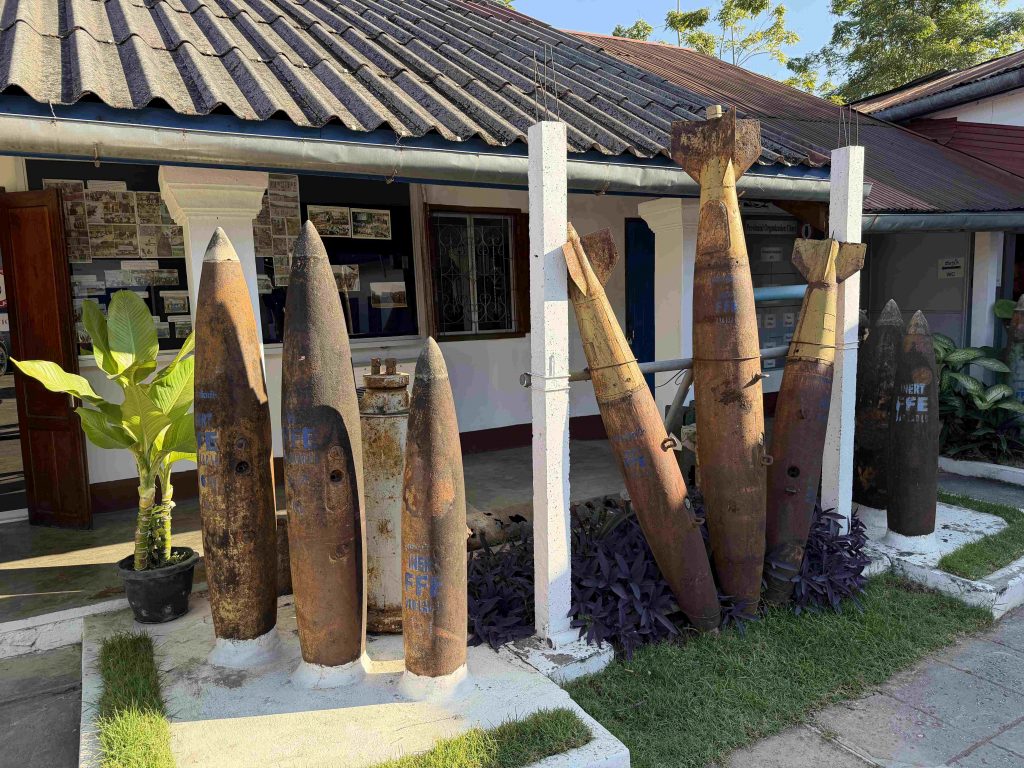
Located in Luang Prabang, the UXO Lao Center educates visitors about the ongoing dangers of unexploded bombs.
The center includes a short cinema where you can watch a film about the effects of UXO on local communities today.
You can also see examples of unexploded bombs and learn more about how they were used during the war, their size, and how dangerous they can be even decades later.
COPE Center – Vientiane
In Vientiane, the COPE Visitor Center focuses on the human consequences of UXO. Many people were injured by bombs, resulting in permanent disabilities.
COPE provides prosthetics, rehabilitation, and support programs to help people regain mobility and independence. The center shows how physically disabled individuals struggle in rural areas, where most of the population relies on farming for survival. Without formal education or alternative job opportunities, injuries caused by UXO can drastically affect a person’s ability to support themselves and their families.
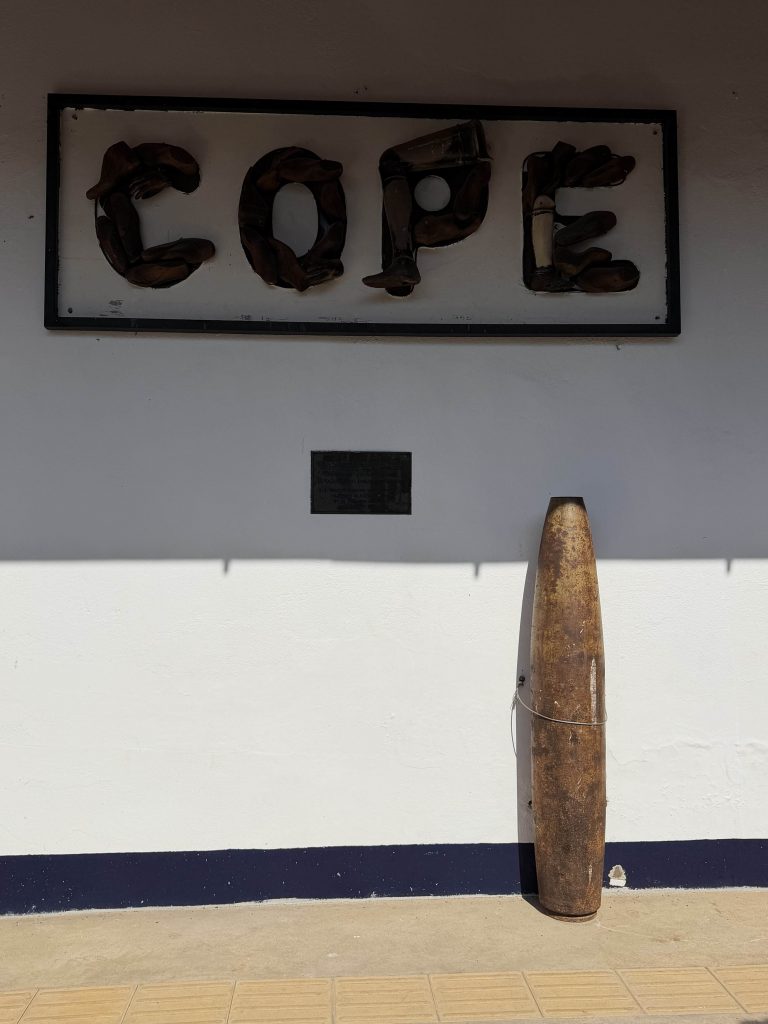
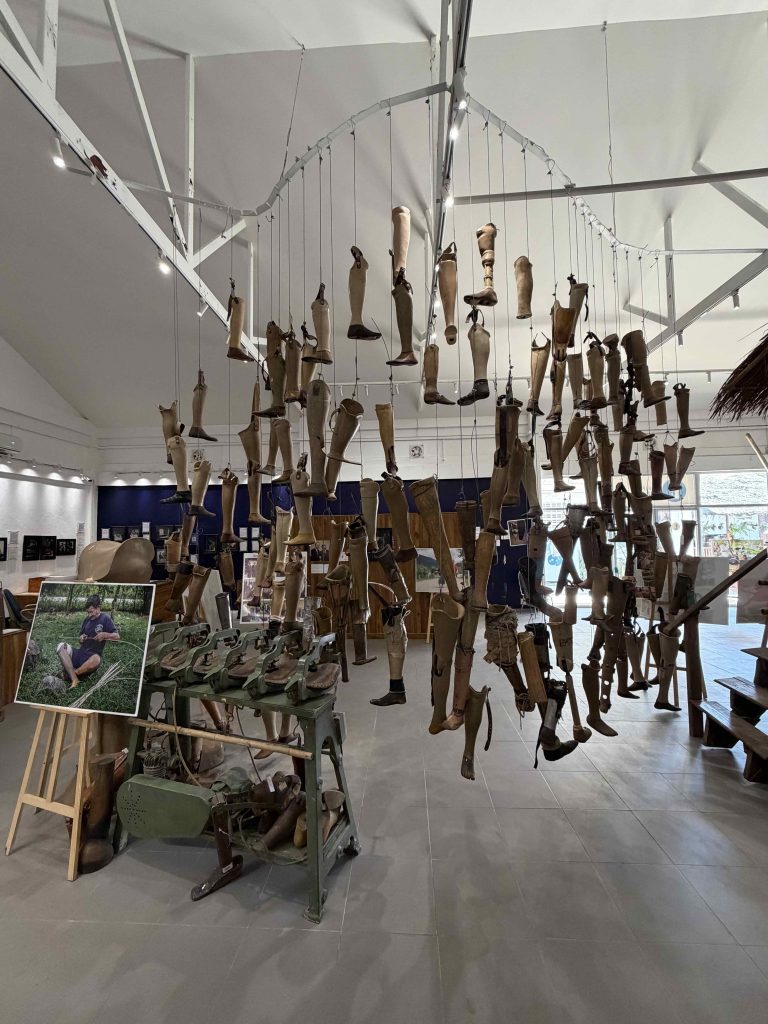
COPE demonstrates how international aid and local initiatives work together to improve lives and provide long-term support for affected communities.
Conclusion
Laos is often overlooked, while its neighbours get more attention. But its history, especially the bombing campaigns, is important to remember, because it helps explain the challenges many people still face today.
Visiting Laos allows you to see the impact of unexploded bombs, understand the struggles of local communities, and appreciate the resilience of its people.
Beyond its history, Laos offers beautiful landscapes, delicious food, and some of the friendliest people in Southeast Asia.
Join our Ultimate Southeast Asia Adventure.
About Post Author