Central Asia comes across to many as a wasteland almost devoid of life, yet while some of that reputation might be understandable, there’s more to it. In fact the region is one of extremes, which of course includes natural beauty and wildlife. This means that when it comes to the animals of Central Asia, there’s a lot more diversity that you might think.
Said animals of Central Asia are shaped by these extremes. Herds of antelope roam endless grasslands. Camels plod across barren deserts. Snow leopards stalk cliffs, and eagles circle above cliffs and plains. Migratory birds fill lakes and rivers, while foxes, pikas, and marmots scurry under rocks and shrubs. Every species here tells a story of survival, adaptation, and resilience. For travellers, researchers, or anyone curious about life in the wild, understanding the animals of Central Asia is both fascinating and essential.
Table of Contents
Saiga Antelope
The Saiga antelope is one of Central Asia’s most iconic species. Recognizable by its large, swollen nose, it filters dust in summer and warms cold winter air. Saiga herds once numbered in the millions, roaming the steppes of Kazakhstan, Mongolia, and Uzbekistan. Today, numbers are critically low due to poaching for horns and habitat loss caused by farming and road construction. These antelopes can sprint up to 80 kilometres per hour to evade wolves or human hunters.
They feed primarily on grasses and shrubs, often migrating long distances in search of fresh pastures. Herds move together in synchronised groups to confuse predators, a survival strategy perfected over millennia. Watching a Saiga herd on the open steppe is one of the purest examples of wild Central Asia. Conservation programmes are ongoing, but the species remains extremely vulnerable. The Saiga might not be the smartest of animals, nor the most pretty, but it functions and is a poster child for the backwards desolation of the region. Not to be confused with Saiga Tours of course!

Bactrian Camel
The wild Bactrian camel survives in the deserts of the Gobi, Taklamakan, and Karakum. Unlike domestic camels, wild Bactrians can endure extreme cold and heat and survive on salty, bitter water sources. Their two humps store fat for energy, allowing them to go weeks without food. They feed on sparse desert vegetation including shrubs, grasses, and sometimes thorny plants.
Wild populations are critically small, with fewer than 1,000 individuals left, mostly in remote desert areas of Mongolia and China. Observing them in the wild is challenging due to their remote habitats and skittish nature. These camels are among the hardiest animals on the planet and an enduring symbol of survival in Central Asia’s deserts.

Snow Leopard
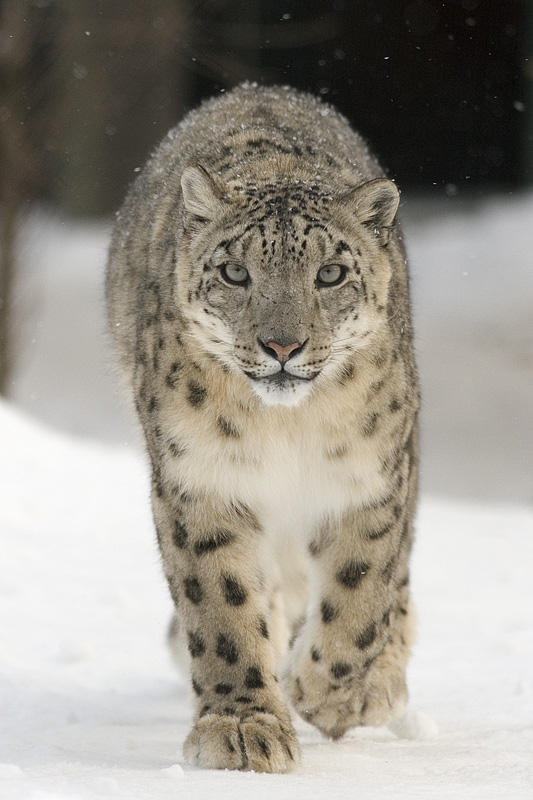
Snow leopards inhabit the high mountains of the Tien Shan, Pamirs, and Altai ranges. Their thick grey fur camouflages them perfectly against rocky cliffs. Snow leopards prey primarily on wild sheep like argali, ibex, and occasionally smaller mammals.
They are solitary and territorial, moving across vast altitudes to hunt and breed. Long, thick tails help them balance on cliffs and keep warm when wrapped around their bodies. Snow leopards are extremely elusive, making sightings rare and prized among travellers and researchers. Poaching, livestock conflict, and habitat destruction have made them endangered, but ongoing conservation work in Kazakhstan, Kyrgyzstan, and Tajikistan is helping protect their fragile populations.
Pallas’s Cat
The Pallas’s cat, or manul, is a squat, fluffy wildcat found in rocky steppe and grasslands. Its flattened face and short legs give it a permanent grumpy expression, but it is an expert hunter of small rodents, birds, and insects. Pallas’s cats are solitary and mainly nocturnal, spending daylight hours in burrows or rocky crevices.
Thick fur allows them to survive extreme winters in Mongolia, Kazakhstan, and the Tien Shan. Population data is sparse, but habitat fragmentation and hunting have reduced numbers in some areas. Despite its size, the Pallas’s cat plays a key role in the ecosystem by controlling rodent populations.

Goitered Gazelle
Goitered gazelles roam the open steppe and semi-arid deserts of Central Asia. They are built for speed, able to run for kilometres to escape predators like wolves. They feed on grasses and shrubs, often grazing in loose groups rather than dense herds. Human hunting and competition with livestock have caused declines in some regions, particularly in Uzbekistan and Turkmenistan. Unlike the Saiga, their noses are normal-shaped, and they are much less ugly and useless.

Tibetan Argali
Tibetan argali are massive mountain sheep found in the Pamir, Tien Shan, and Altai ranges. Males can weigh up to 150 kilograms, with enormous spiraled horns used for fighting rivals during mating season. Argali navigate steep cliffs and high-altitude terrain with remarkable agility. Snow leopards rely on them as a primary prey source.
Argali graze on alpine grasses and shrubs, often in small herds to reduce predation risk. Populations are fragmented due to hunting and habitat loss. Conservation efforts in Kyrgyzstan and Mongolia aim to protect key habitats and reduce poaching.

Other Animals of Central Asia
Beyond the big six, Central Asia hosts an astonishing variety of species. Wolves roam the steppes and mountains, hunting in packs. Brown bears inhabit forested mountain zones in Altai, Tien Shan, and Pamir, hibernating during harsh winters and emerging to feed on roots, insects, and small mammals. Eurasian lynx are solitary hunters, stalking wild goats, sheep, and smaller prey in forests and highlands.
Deserts contain foxes such as corsac and red foxes, hunting rodents, insects, and eggs. Marmots and pikas burrow in rocky steppe and alpine zones, providing food for snow leopards, eagles, and foxes. Steppe hedgehogs and jerboas are nocturnal desert survivors, adapted to heat and scarcity of water.
Central Asia’s rivers, lakes, and wetlands are home to sturgeon, carp, and other freshwater fish. Flamingos, pelicans, herons, and ducks use lakes like Balkhash, Issyk-Kul, and the Amu Darya as critical stopovers during migration. Raptors dominate the skies: golden eagles, steppe eagles, and lammergeiers hunt cliffs and plains, while smaller falcons and kestrels patrol deserts and grasslands.
Even small insects, reptiles, and amphibians are integral. Desert vipers and lizards thrive in sandy dunes, while grasshopper populations sustain insectivores. Every layer of life, from predator to prey, is finely tuned to the extreme conditions. Human activity, climate change, and poaching threaten many species, but Central Asia remains a place where wildlife is tough, unique, and unforgettable.

Conclusions
So, from the Saiga to the snow leopard you might not see absolutely every animal of Central Asia, but there should at least be a few when you traverse the region with us.
Click to check our Central Asia Tours.
About Post Author