Indonesia is often treated by outsiders as a single place. One big tropical country somewhere between Asia and Australia where people eat nasi goreng, dive with manta rays and take photos in Bali. In reality the place is an absolute geopolitical Frankenstein.
This means that the provinces of Indonesia are not some hegemonic and cultural continuum, but actually a hotch patch of people who do not all necessarily consider themselves “Indonesian”. Some even call this Javanese imperialism.
The federal subjects of Indonesia are not technically “states” like in India or the United States. Indonesia is officially a unitary republic (although it was once the United States of Indonesia). Yet in practice the provinces function as semi distinct political and cultural regions, some with special autonomy and some with histories that look suspiciously like annexations.
There are currently 38 provinces across the archipelago, stretching from the Indian Ocean all the way to the edge of the Pacific. Understanding how these places came together is essential to understanding Indonesia itself.
Table of Contents
Former Countries Incorporated Into Indonesia
Aceh
One of the most rebellious regions in Indonesia is Aceh, located on the northern tip of Sumatra. Historically Aceh was not just another province but a powerful Islamic sultanate that controlled trade routes through the Malacca Strait for centuries.
The Aceh Sultanate fought a brutal war against the Dutch during the Aceh War from 1873 to 1904, one of the longest and bloodiest colonial conflicts in Southeast Asia. Even after the Dutch claimed victory the region remained fiercely independent in spirit.
After Indonesian independence in 1945 Aceh was absorbed into the new republic, but the relationship was never smooth. For decades the Free Aceh Movement fought a separatist insurgency against Jakarta. The conflict finally ended in 2005 after a peace agreement that granted Aceh special autonomy and the right to implement Islamic law.
Today Aceh remains culturally distinct from the rest of Indonesia and is one of the only places in Southeast Asia where Sharia law is enforced. Click to see our Banda Aceh Tour.
Yogyakarta
Unlike most provinces, Yogyakarta was not simply folded into Indonesia after independence. It voluntarily joined the new republic while retaining its royal leadership.
The Sultanate of Yogyakarta had been a semi independent kingdom under Dutch colonial rule. When Indonesia declared independence in 1945, the Sultan backed the republican movement and allowed the city to serve as the temporary capital during the independence struggle.
As a reward for that loyalty the region was granted special status. To this day the Sultan of Yogyakarta automatically serves as the governor of the province. It is one of the last functioning monarchies within a modern republic anywhere in the world.
West Papua
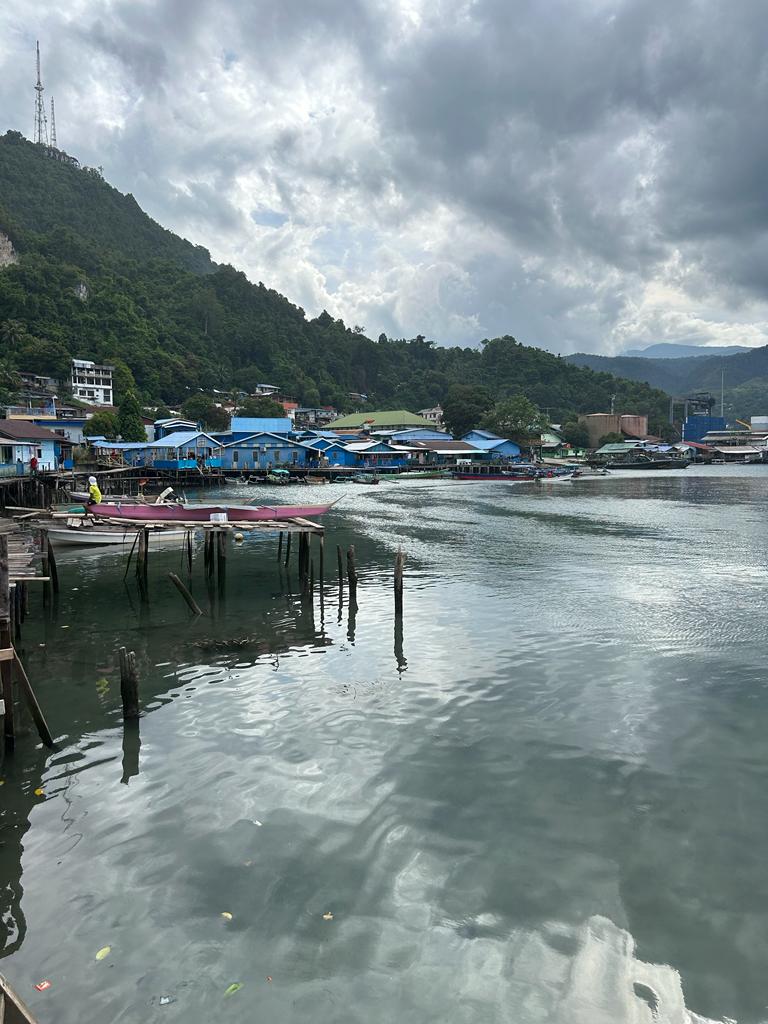
West Papua has one of the most controversial stories in modern Southeast Asian geopolitics.
The western half of the island of New Guinea was originally part of the Dutch East Indies but remained under Dutch control after Indonesian independence. The Netherlands prepared the territory for eventual independence under the name West New Guinea.
Indonesia strongly opposed this and claimed the region as part of its national territory. In 1969 the controversial “Act of Free Choice” was held under heavy Indonesian military supervision. A handpicked group of tribal representatives voted unanimously to join Indonesia.
Many Papuans and international observers consider the vote illegitimate. A low level independence insurgency has continued ever since and the region remains heavily militarized.
The Moluccan Republic
The Moluccas, now split into the provinces of Maluku and North Maluku, were historically home to powerful spice trading states like the Sultanates of Ternate and Tidore.
These islands were at the centre of the global clove and nutmeg trade, which attracted European powers from the 16th century onward. The Dutch eventually imposed a monopoly through the Dutch East India Company.
When the Dutch finally left Indonesia after World War II, parts of the Moluccas attempted to break away. In 1950 local leaders proclaimed the Republic of South Maluku, hoping to remain independent rather than join Indonesia.
Jakarta responded quickly. Indonesian troops invaded the islands and crushed the rebellion within months. Many supporters fled to the Netherlands, where a government in exile still exists today.
While the republic disappeared on the ground, the independence issue has never completely vanished and remains part of the political history of the Moluccan islands.

East Timor
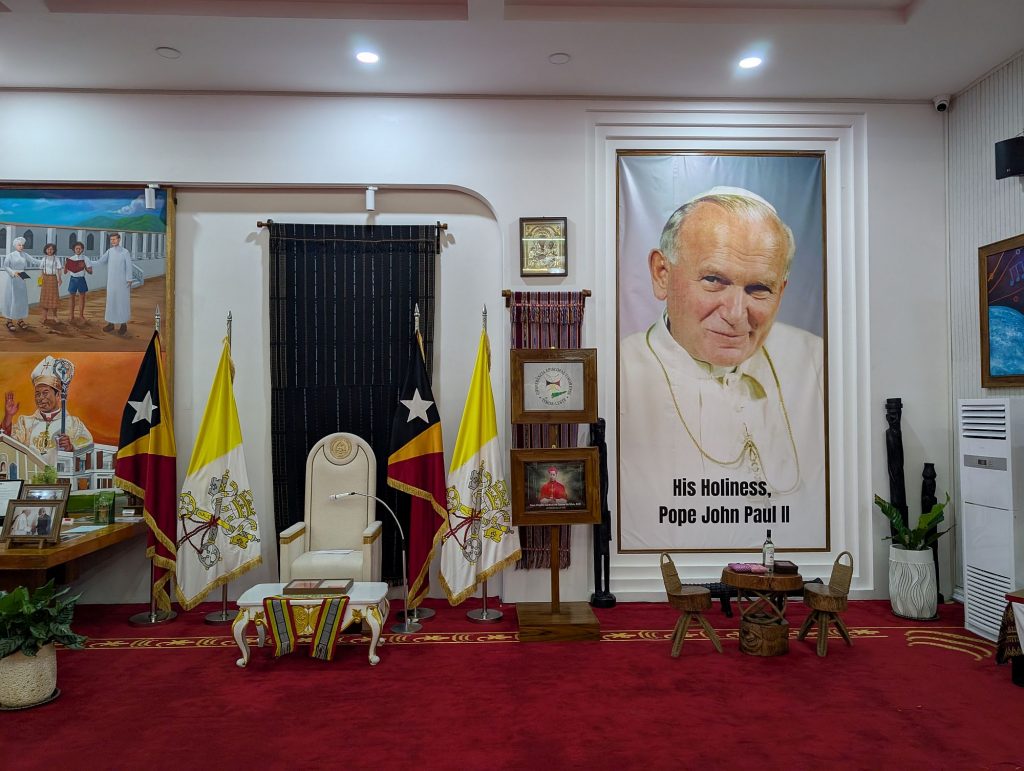
East Timor was once technically part of the Indonesian system, although not a province in the modern sense.
The territory had been a Portuguese colony for centuries before declaring independence in 1975. Within days Indonesia invaded and annexed the territory, declaring it the province of Timor Timur.
The occupation lasted for nearly 25 years and was marked by conflict and international criticism. After the fall of Suharto, a UN backed referendum was held in 1999. The population voted overwhelmingly for independence.
East Timor became the independent nation of Timor Leste in 2002, making it one of the few regions ever to successfully leave the Indonesian state.
Former Colonial Territories Now Part of Indonesia
Dutch East Indies Regions
Most of modern Indonesia comes from the old Dutch East Indies colony. The Netherlands controlled much of the archipelago for over 300 years, ruling indirectly through local kings and sultans while dominating trade and resources.
When Indonesia declared independence in 1945 the Dutch attempted to reassert colonial authority. This led to a four year independence war that ended in 1949 when the Netherlands formally recognized Indonesian sovereignty.
The provinces we know today such as Java, Sumatra, Kalimantan and Sulawesi largely evolved from these colonial administrative regions combined with older traditional kingdoms.

Western New Guinea
The last piece of the Dutch empire in Southeast Asia was Western New Guinea. The Netherlands held onto the territory until 1962 when international pressure and Cold War politics pushed them to transfer it to temporary United Nations administration.
Shortly afterwards control passed to Indonesia, leading to the controversial Act of Free Choice mentioned earlier. Today the territory is divided into several provinces including Papua, West Papua, Central Papua and Highland Papua.

Special Administrative Regions
Indonesia is officially a unitary state, but several provinces enjoy special autonomy for historical or cultural reasons.
Aceh
Aceh has the right to enforce Islamic law and maintain local political parties. This is unique within Indonesia and was part of the peace agreement that ended the separatist war.

Yogyakarta
Yogyakarta remains a hereditary sultanate integrated into the republic. The Sultan automatically becomes governor, making it one of the most unusual political arrangements in modern Asia.

Jakarta
Jakarta is not technically a province in the traditional sense but a special capital region. The city functions as Indonesia’s political and economic centre and has a unique administrative structure compared with other provinces.

Full List of Provinces of Indonesia
Indonesia currently has 38 provinces.
Indonesia currently has 38 provinces.
- Aceh
North Sumatra
West Sumatra
Riau
Riau Islands
Jambi
Bengkulu
South Sumatra
Lampung
Bangka Belitung Islands - Jakarta Special Capital Region
Banten
West Java
Central Java
Yogyakarta Special Region
East Java - Bali
West Nusa Tenggara
East Nusa Tenggara - West Kalimantan
Central Kalimantan
South Kalimantan
East Kalimantan
North Kalimantan - North Sulawesi
Central Sulawesi
South Sulawesi
Southeast Sulawesi
Gorontalo
West Sulawesi - Maluku
North Maluku - Papua
West Papua
Central Papua
Highland Papua
South Papua
Southwest Papua
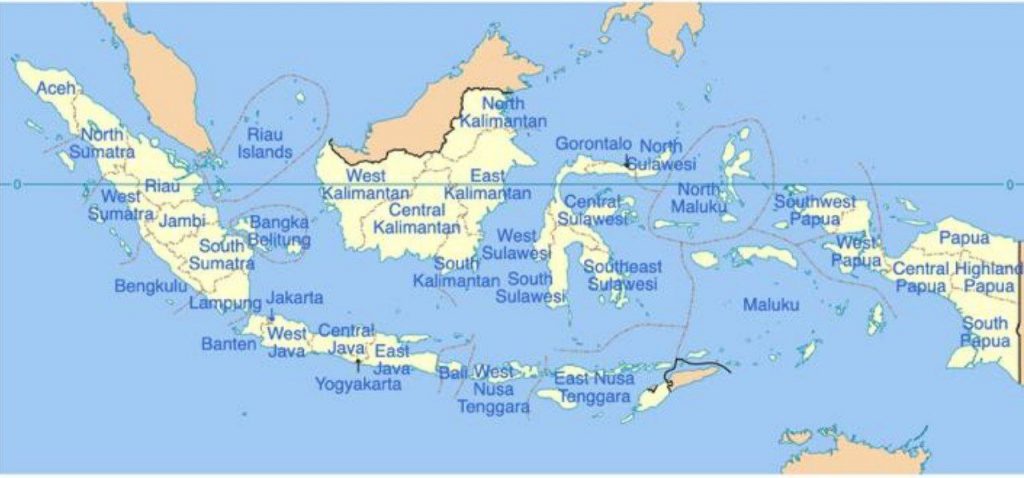
Conclusion
Indonesia is the fourth most populous country on earth and one of the most geographically fragmented. More than 17,000 islands stretch across thousands of kilometres of ocean, containing hundreds of ethnic groups and languages.
And while this geographical and some might say colonial split is not without controversy, it does explain a lot of how things work here. Understanding the provinces of Indonesia is essential if you do want to traverse the universe that is Indonesia.
Click to read about Indonesian Tours.
About Post Author