Ghana‘s hand-painted movie posters are at once commercial tools, folk art, cinema history and social commentary. Today, much of this legacy is preserved and promoted through the work of the Deadly Prey Gallery, which collaborates directly with Ghanaian artists and has helped bring global attention to one of West Africa’s most distinctive visual traditions.
Table of Contents
For travellers joining Young Pioneer Tours in Accra, understanding Ghana’s hand-painted movie posters adds depth to the experience. They are artefacts of an entire parallel film economy that flourished during a specific technological moment in Ghana’s history.
The Rise of Mobile Cinema in Ghana
The story begins in the 1980s and 1990s. As VHS technology became accessible, entrepreneurial Ghanaians created “mobile cinema” operations. Equipped with a television, a video player, speakers and often a petrol generator, operators travelled between towns and villages screening action films, horror, martial arts epics and local productions.
“They would rent spaces like halls, social centers, etc., for a week or a month, and would show the movies there”, Robert Kofi explained to YPT during our last visit in Ghana. Robert Kofi is the manager of the Deadly Prey Gallery in Accra, preserving those movie posters. “In some of the villages, the chiefs liked the idea so they wouldn’t even rent the places, they would get it for free as they were bringing generators. Imagine: some of those people hadn’t seen electricity before, so those movies would attract a lot of people.”
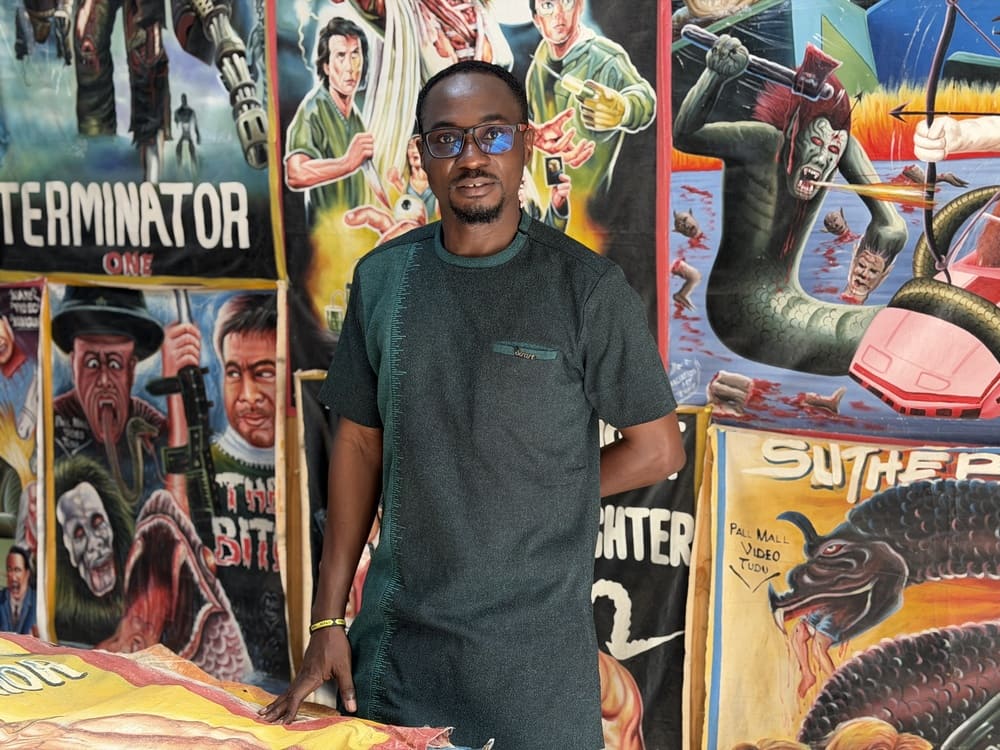
There were few conventional cinemas outside major urban centres, and printed promotional materials were scarce or expensive. To draw a crowd, operators needed something bold, durable and transportable. The solution was simple and ingenious: commission local artists to paint large posters advertising the night’s film.
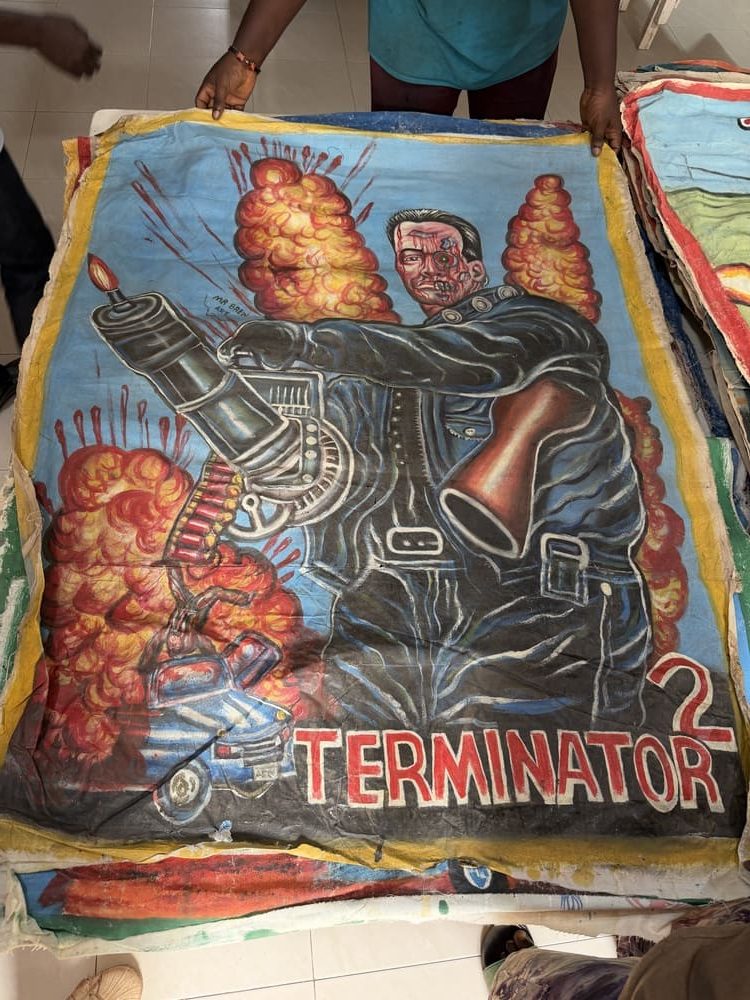
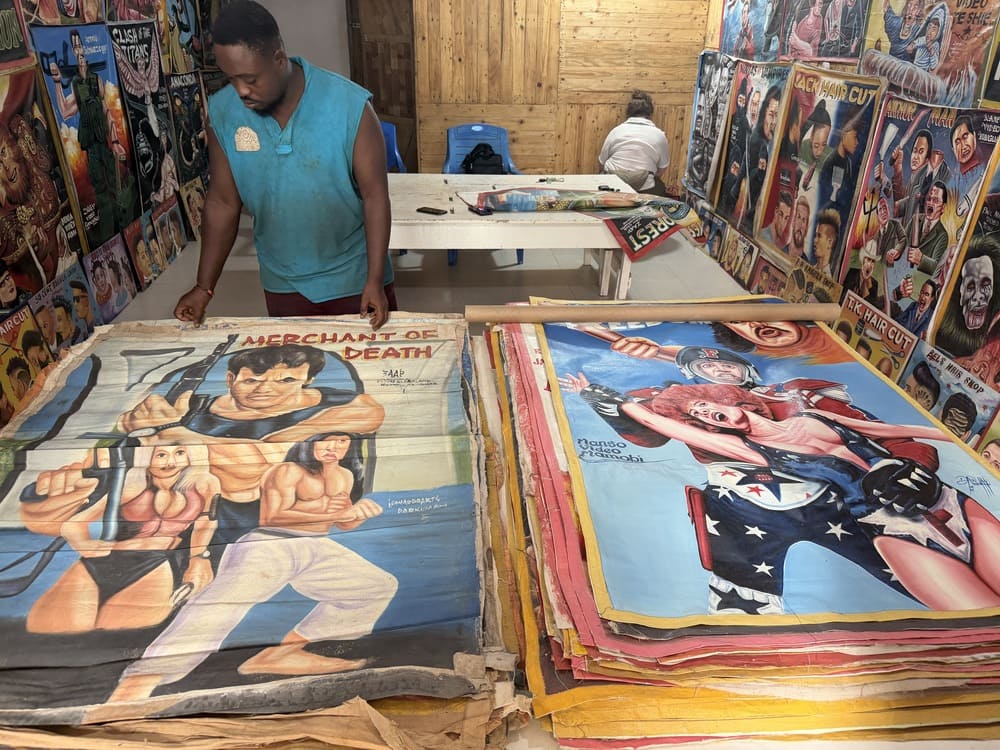
These were not printed reproductions. They were entirely hand-painted, usually on recycled flour sacks stitched together to create a workable surface. Oil or enamel paints were used because they were cheap, vivid and weather-resistant. The finished posters were rolled up, strapped to motorbikes or buses, and displayed wherever the screening would take place, often tied to walls, trees or makeshift wooden frames.
Imagination Over Accuracy
What makes Ghana’s hand-painted movie posters so compelling is their interpretive freedom.
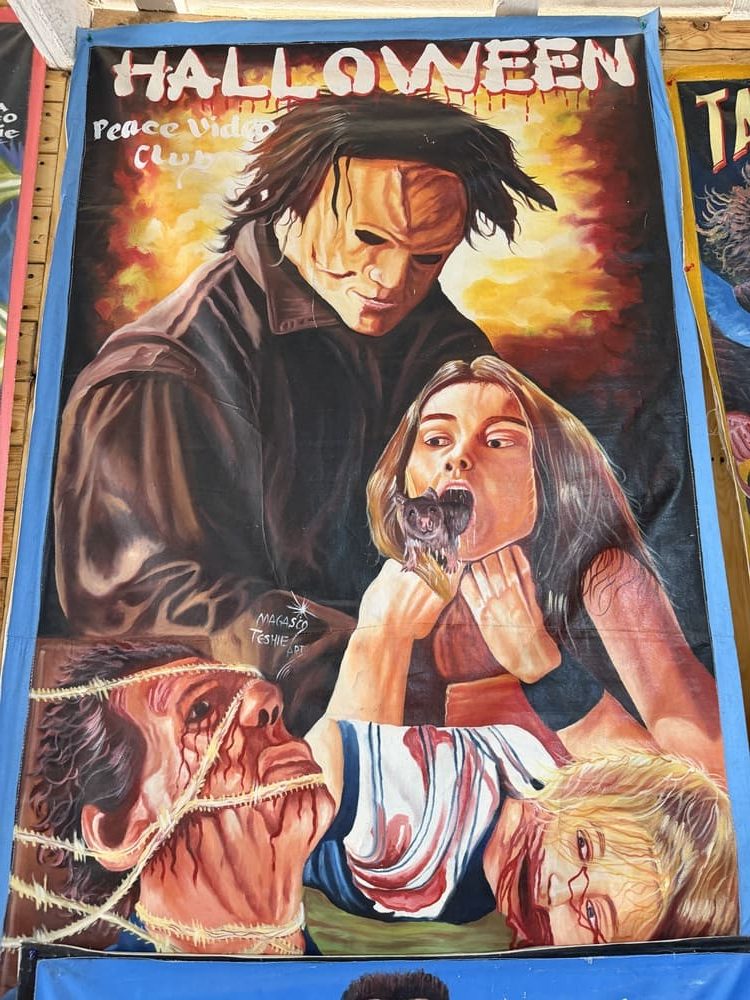
Most artists had limited access to reference images. They might watch the film once, be told a rough summary, or rely on a brief description from the video operator. As a result, strict fidelity to the original plot was rarely the goal. The objective was to attract attention and sell tickets.
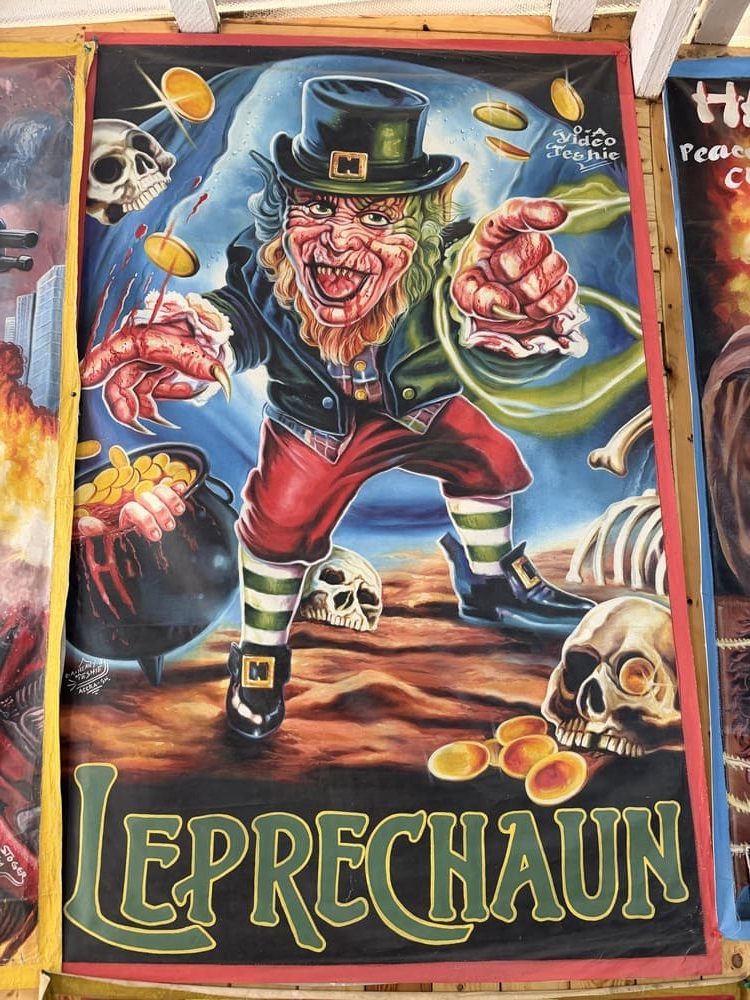
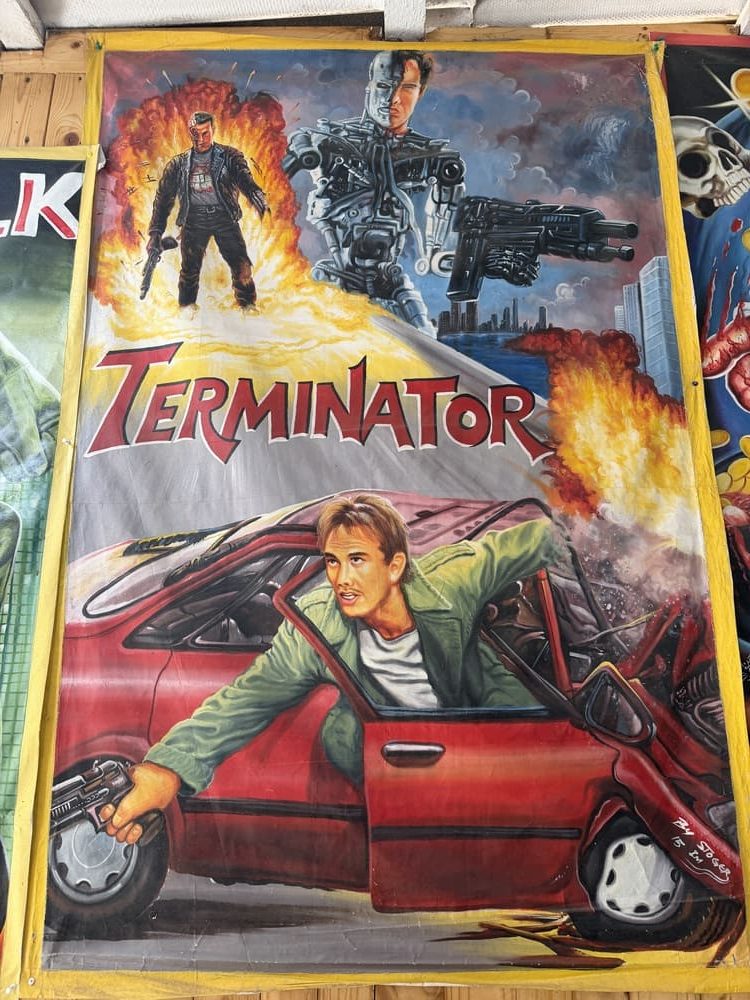
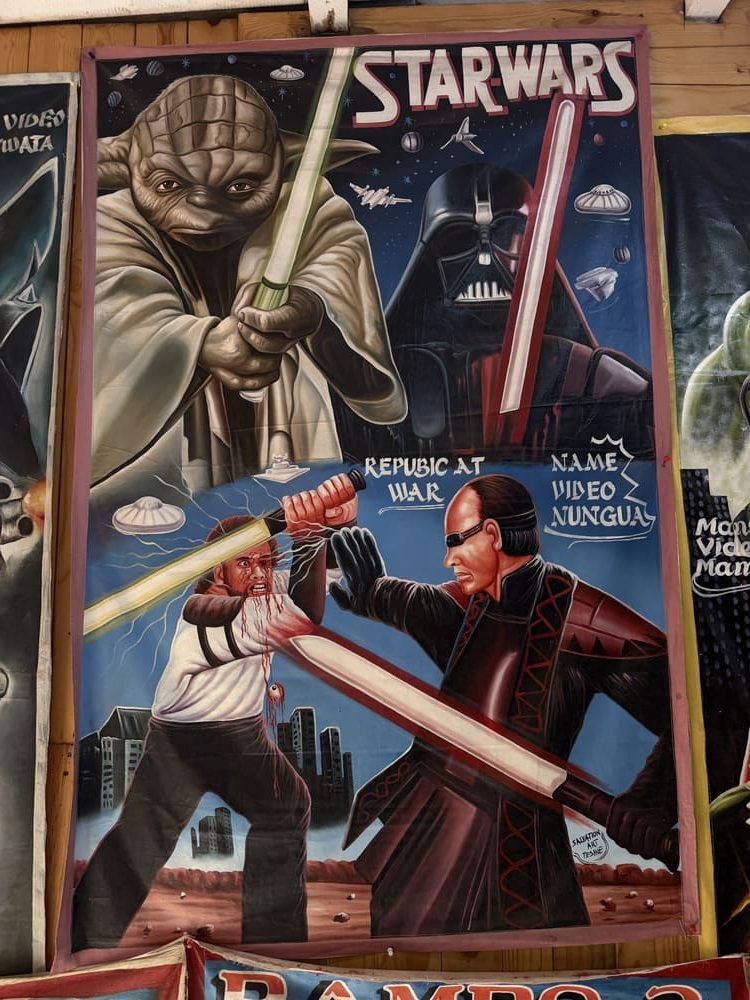
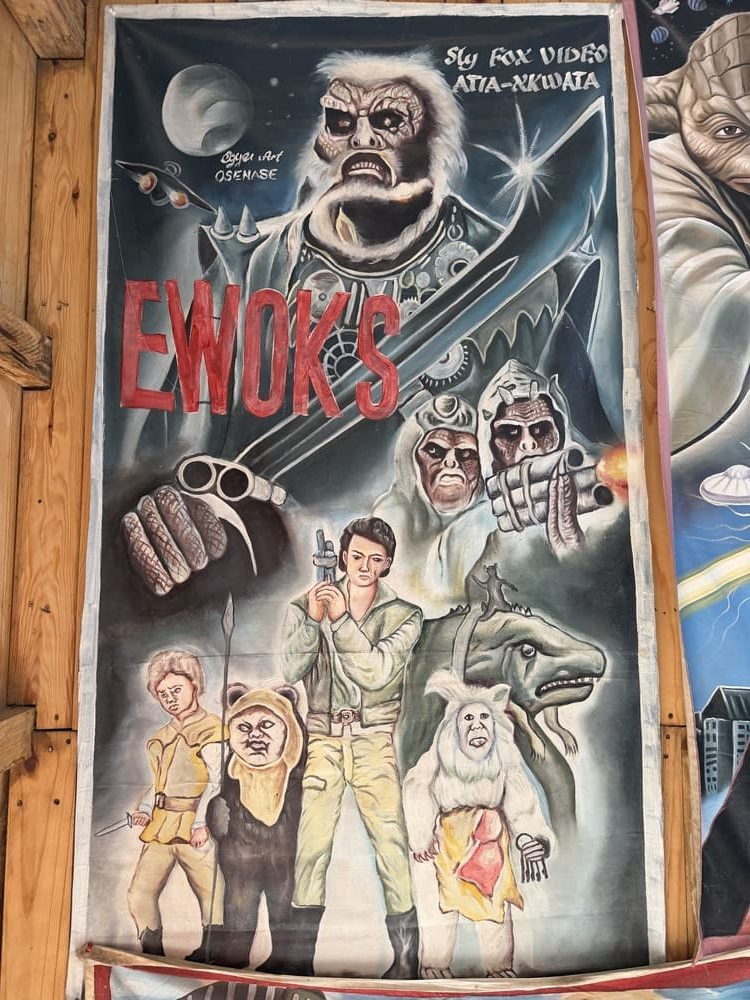
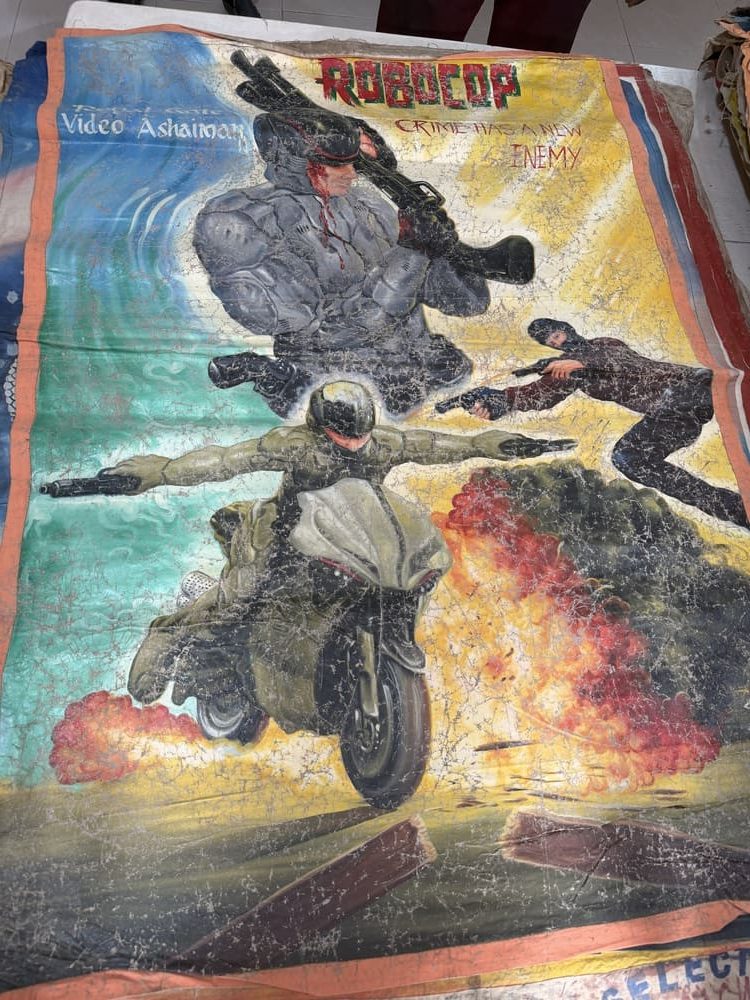
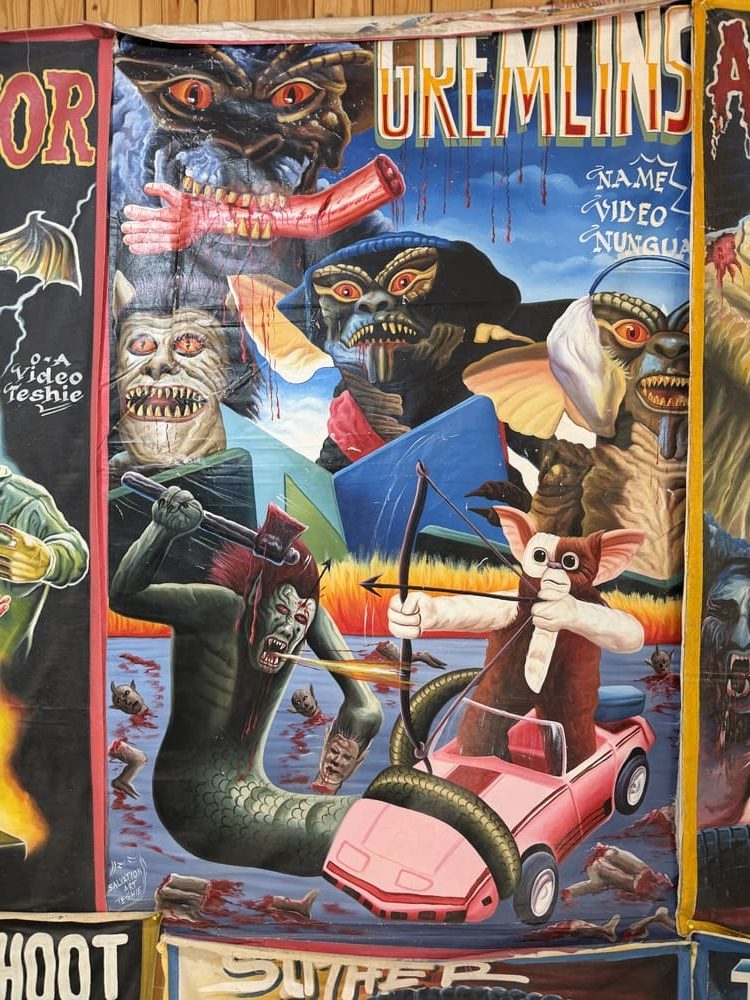
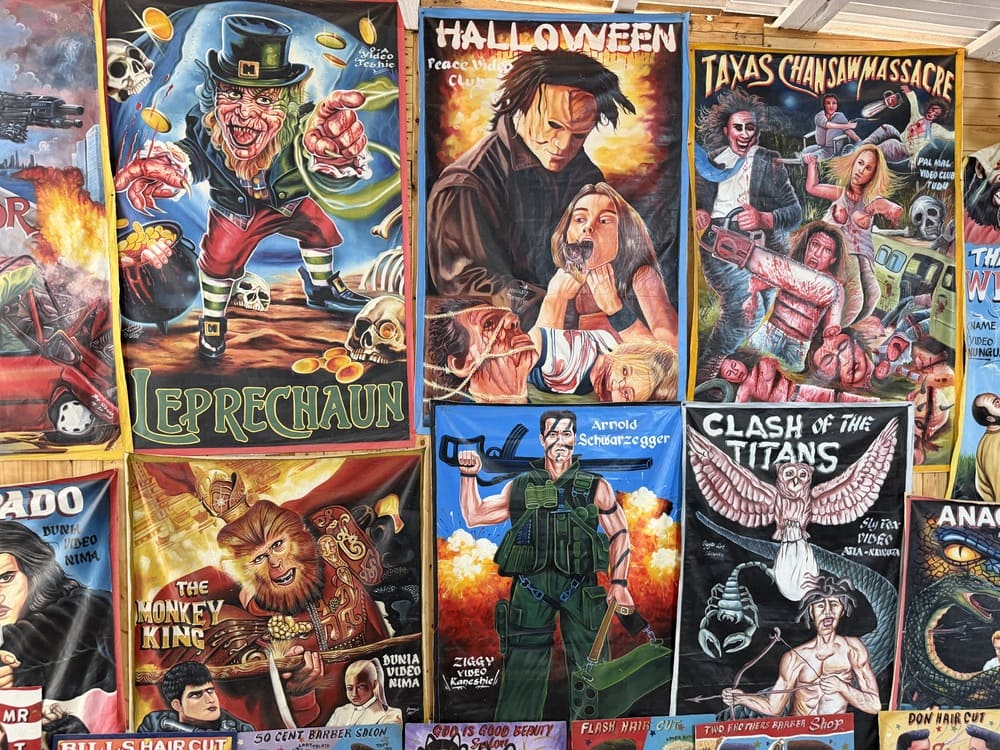
A Hollywood action film could be transformed into a riot of exaggerated muscles, exploding weapons and surreal creatures. Horror films were intensified with additional monsters, extra blood and sometimes entirely invented scenes. Martial arts heroes grew larger than life. Even romantic dramas could gain dramatic tension in paint that exceeded what appeared on screen. “Whatever could draw the people to watch the movies”, Robert Kofi says.
This hyperbole was a marketing strategy. Competition between mobile cinemas was fierce. The most dramatic poster often won the biggest audience. “But sometimes, the audience would question the operators of the cinemas: you took our money, but we didn’t see the action depicted on the posters!”
A Distinct Aesthetic Language
Over time, a recognisable visual vocabulary emerged.
Bold, saturated colours dominated, especially reds, yellows and greens. Hands, eyes and weapons were frequently enlarged to amplify emotion and threat. Compositions leaned into diagonal movement to suggest action and impact. Violence was often graphic, occasionally far beyond the film’s content. Typography was hand-lettered and unique to each artist.
The style is often compared to pop art, but it evolved independently, shaped by economic necessity and local taste rather than Western gallery movements. It reflects a Ghanaian reinterpretation of global cinema, filtered through local sensibilities and practical commercial needs.
Artists such as Leonardo, Heavy J and Salvation developed individual reputations within this niche scene. Some specialised in horror; others became known for explosive action imagery. Ghana’s hand-painted movie posters travelled across rural Ghana long before they travelled internationally.
Decline and Rediscovery
By the mid-2000s, the ecosystem that sustained hand-painted posters began to fade. Cheap printed posters became easier to obtain. DVDs replaced VHS tapes. Television ownership increased. The economics of mobile cinema shifted.
Many original Ghana’s hand-painted movie posters were discarded after heavy use. Exposed to rain and sun, they deteriorated quickly. What had been everyday advertising material was rarely treated as collectible art.
International interest, however, was already growing. Researchers, collectors and curators began to recognise the cultural significance of these works. Exhibitions abroad reframed them not as curiosities but as serious folk art connected to global film history and African popular culture.
The Role of Deadly Prey Gallery
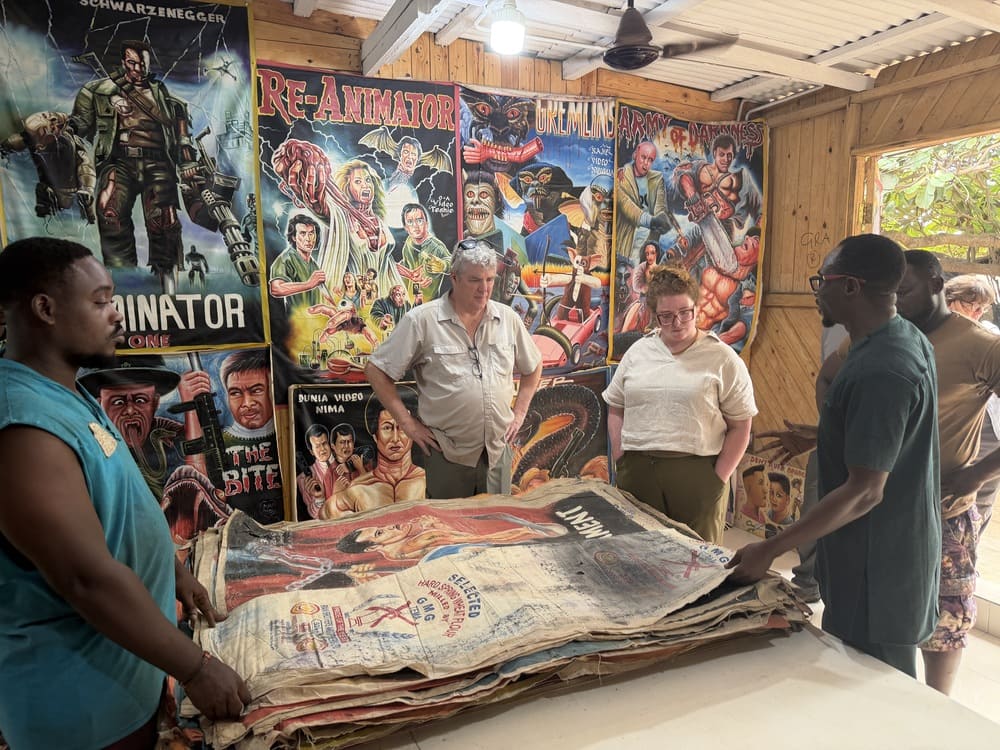
This is where the Deadly Prey Gallery enters the story. Founded in 2012 by American film enthusiast Brian Chankin alongside Ghanaian collaborators, the gallery began as a passion project and evolved into one of the primary platforms dedicated to preserving, archiving and commissioning Ghana’s hand-painted movie posters.
Rather than treating the posters as relics of a vanished era, the gallery works directly with artists in and around Accra. New posters are still commissioned today, sometimes based on contemporary films, sometimes reinterpreting classics and sometimes created entirely on commission for collectors.
This model ensures that income flows back to the artists themselves. What was once a precarious rural advertising practice now has a sustainable international audience. The gallery has amassed a large archive of original works and has organised exhibitions that introduce these paintings to collectors and institutions worldwide.
For visitors in Accra, engaging with this network, whether through exhibitions, studio visits or conversations with artists, offers rare insight into how grassroots creativity can adapt to changing markets without losing its character.
Why we include Ghana’s hand-painted movie posters on our tours
For a Young Pioneer Tours itinerary in Ghana, the history of movie posters connects to broader themes that shape the country.
Mobile cinema emerged in response to limited infrastructure and became a cultural institution. Globalisation from below is another theme. Hollywood, Hong Kong martial arts films and local productions were reinterpreted locally, not passively consumed. Material ingenuity is evident in the transformation of flour sacks and house paint into cinematic myth-making tools. Cultural preservation also plays a role, as what was once ephemeral is now recognised as part of Ghana’s artistic heritage.
When exploring Accra’s creative scene, these posters sit alongside contemporary galleries, street murals and traditional crafts. They provide context for understanding how art circulates outside formal institutions and how popular culture leaves tangible traces.
A Living Tradition
Although the golden age of VHS mobile cinemas has passed, the artform survives. New works continue to be produced. Younger artists learn techniques from veterans. International exhibitions keep the aesthetic visible and relevant.
In an era dominated by digital marketing and algorithm-driven promotion, Ghana’s hand-painted movie posters remind us of a time when advertising required brushstrokes, imagination and physical presence. They are tactile, imperfect and unapologetically dramatic.
For those travelling through Accra with Young Pioneer Tours, taking time to understand this tradition transforms what might appear as colourful curiosities into something more substantial: a chapter of cinematic history written in oil paint on flour sacks, born in village squares and now hanging in collections around the world.
About Post Author