Few things say “Iran” quite like its carpets. For over 2,500 years, Persians haven’t just been weaving rugs — they’ve been weaving stories. A Persian carpet isn’t just something under your feet; it’s something you experience. Every knot reflects the country’s land, history, and imagination — from the elegant studios of Isfahan to the tents of nomadic tribes. If you want to understand Iran, start with its carpets.
City Carpets: Elegance and Detail
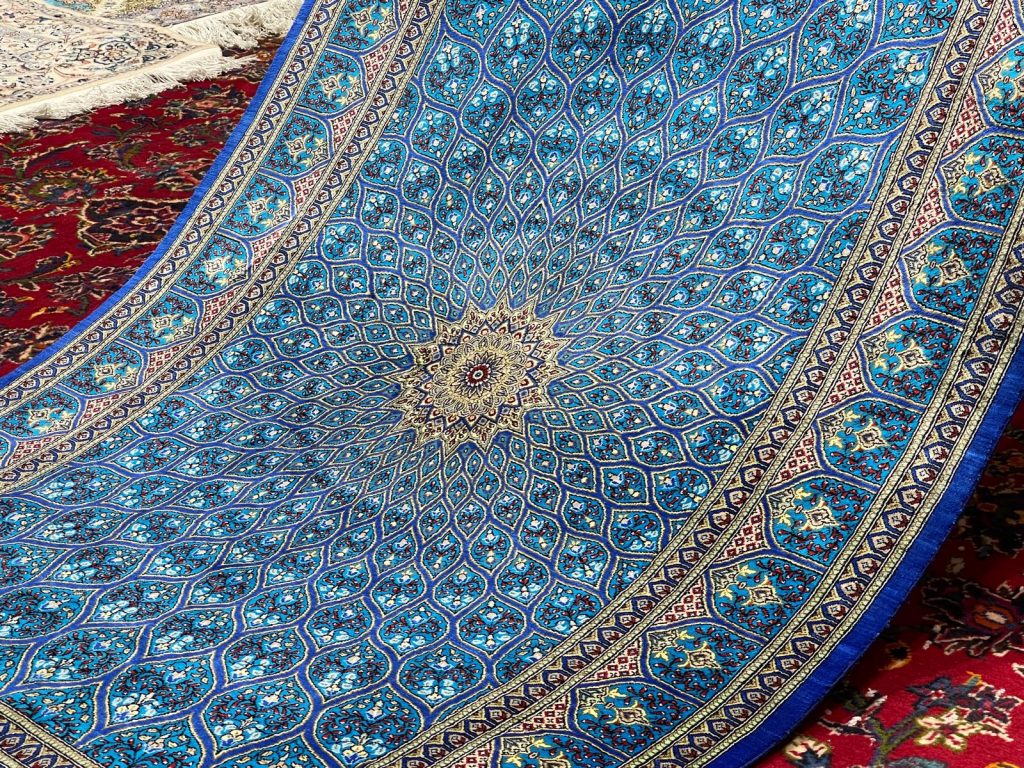
In Iran’s big cities, carpet weaving is almost like architecture — carefully planned and incredibly precise. These workshop carpets are made using detailed design maps called naqshas, and skilled weavers follow them knot by knot. Some are so detailed they can have over a million knots in a single square meter.
Each city has its own style.
Isfahan carpets are graceful and refined, often made with silk and soft wool in shades of ivory, blue, and rose. Many feature large medallions that resemble mosque domes.
Tabriz is known for sharp detail and storytelling designs — from garden scenes to moments from Persian epics.
Kashan carpets are rich and luxurious, often with deep rose backgrounds and perfectly balanced patterns. In the 1800s, Kashan helped bring Persian carpets back to international fame.
Nain carpets are lighter and softer in tone — lots of ivory and pale blue — often highlighted with silk to give a subtle shimmer.
Nomadic Carpets: Full of Life
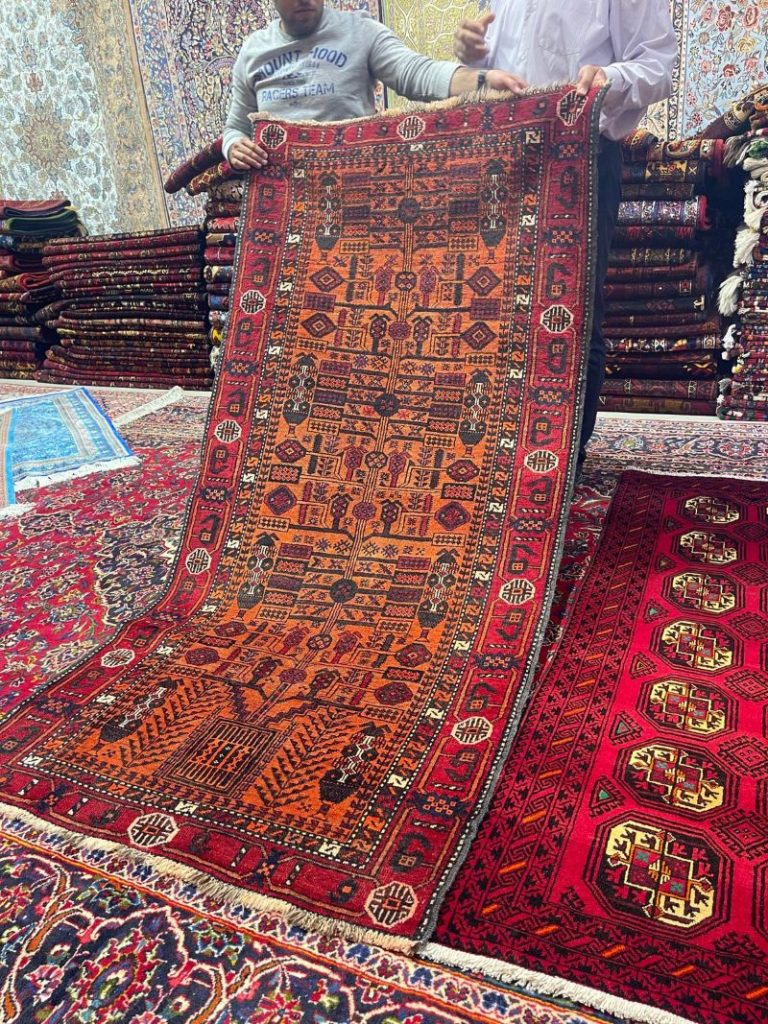
Now step away from the cities and into the open countryside. Nomadic tribes like the Qashqai, Bakhtiari, Luri, and Shahsavan weave rugs on portable looms that move with them. No drawn plans — just memory, tradition, and creativity passed down through generations.
These carpets are bold and expressive: deep reds, rich blues, bright yellows, and strong geometric shapes. You’ll see stars, animals, and protective symbols woven right in.
Qashqai rugs are known for their vibrant colors and lively designs. Bakhtiari weavers often create “garden” patterns, dividing the rug into panels filled with trees and flowers.
They may not be perfectly symmetrical, but that’s part of their charm. These rugs are made for daily life — to warm a tent, cushion a floor, and tell a family’s story.
Materials: Wool and Silk
The feel of a Persian carpet starts with its materials.
Wool is the most common. It’s durable, soft, and takes dye beautifully. High-quality wool — especially from mountain regions like Kerman or Kurdistan — contains natural oils that help colors stay rich over time. A good wool carpet actually looks better as it ages.
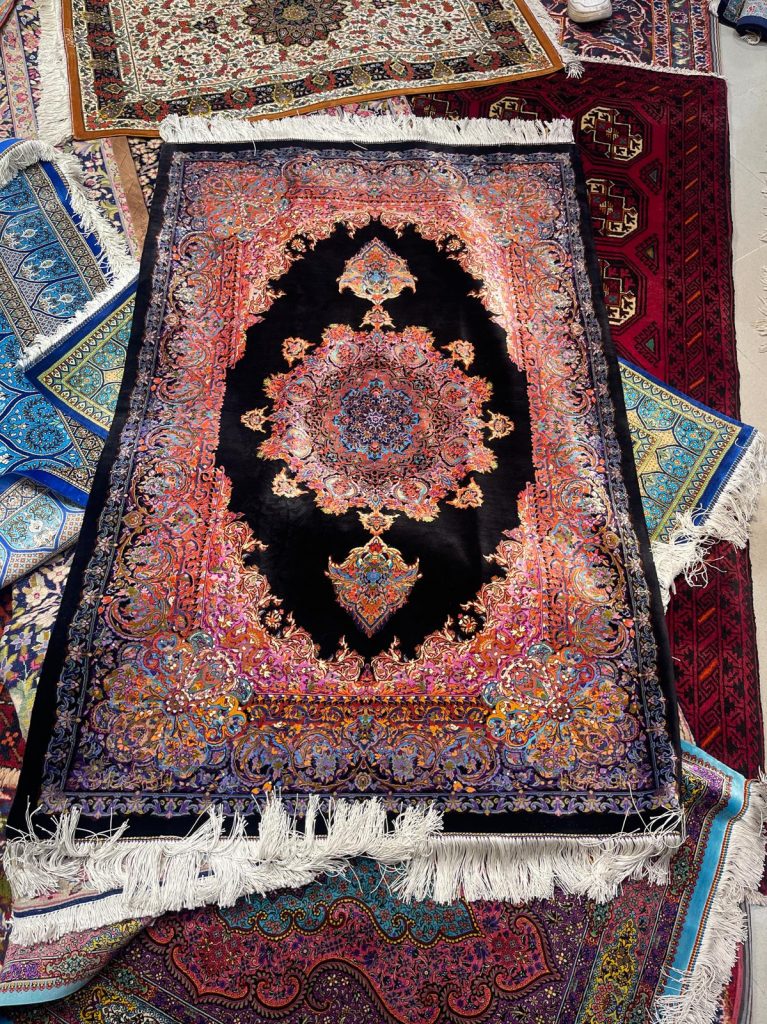
Silk is something else entirely. It’s smooth, shiny, and allows for incredibly fine detail. A pure silk carpet from Qom or Kashan seems to glow as the light hits it.
In a way, wool represents the practical, nomadic side of Iran, while silk reflects its refined, urban culture. Together, they tell the full story.
What Makes a Carpet Expensive?
So why are some carpets so valuable?
First, materials matter. Fine wool and pure silk cost more, especially when dyed using natural sources like madder root (red), indigo (blue), or pomegranate skin (yellow). Natural dyes don’t just fade — they develop depth over time.
Next is knot density. The more knots packed into each inch, the more detailed and time-consuming the rug is. Simple tribal rugs may have a few hundred knots per square inch, while fine silk carpets can have thousands. Some take years to complete.
Pile height also plays a role. Short, dense pile shows detail clearly. Longer pile feels plush but hides finer design work.
Finally, age and design count. A well-preserved older carpet with balanced colors and meaningful patterns can be incredibly valuable.
An expensive carpet isn’t just pricey — it represents patience, skill, and artistry.
The Magic Carpet
We all know the idea of the “magic carpet” from old Persian tales. But honestly, the real magic is in the craftsmanship.
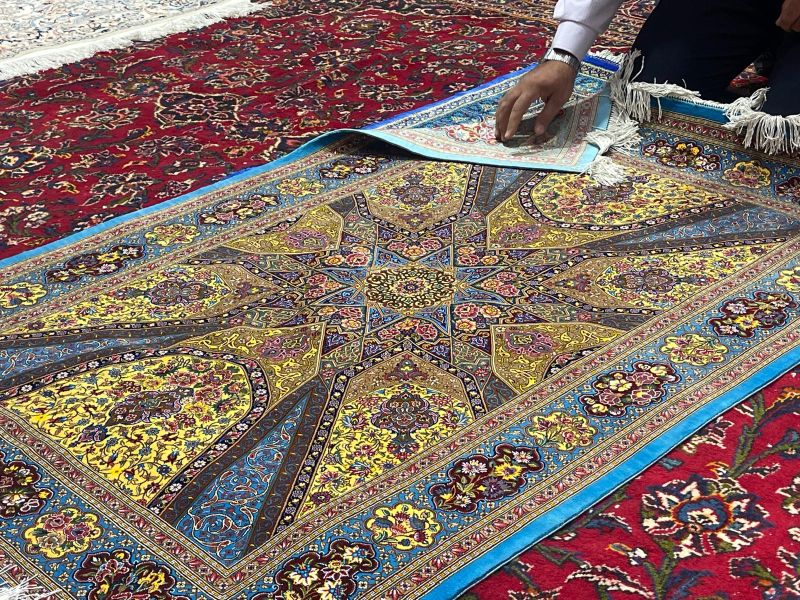
In cities like Qom and Kashan, some weavers create double-sided silk carpets that look perfect on both sides. Every knot is tied so precisely that you can flip it over and see the exact same design. These pieces are rare, museum-worthy, and a reminder of what human hands can do.
That’s magic enough.
Caspian Silk vs. Chinese Silk Carpets
In northern Iran near the Caspian Sea, weavers in Gilan and Mazandaran create silk carpets inspired by their lush, green surroundings. Expect soft blues, greens, and nature themes. The silk here tends to feel slightly thicker and warmer in tone.
Chinese silk carpets — especially from Suzhou — are known for their glossy finish and perfect symmetry. They’re elegant and polished.
The difference? Chinese silk carpets often focus on visual perfection. Persian silk carpets tend to focus on storytelling and atmosphere. One impresses the eye; the other connects with the heart.
Each region sounds a little different — but they all speak the same Persian language of design.
A Living Tradition — And Seeing It For Yourself
Carpet weaving in Iran isn’t history — it’s happening right now. Young artisans still learn from older masters, natural dyes are back, and handmade rugs remain prized worldwide.
Young Pioneer Tours (YPT) has been running affordable, in-depth Iran tours since 2010, usually twice a year. Iran is far more than headlines — it’s diverse, welcoming, and packed with history, art, and incredible landscapes.
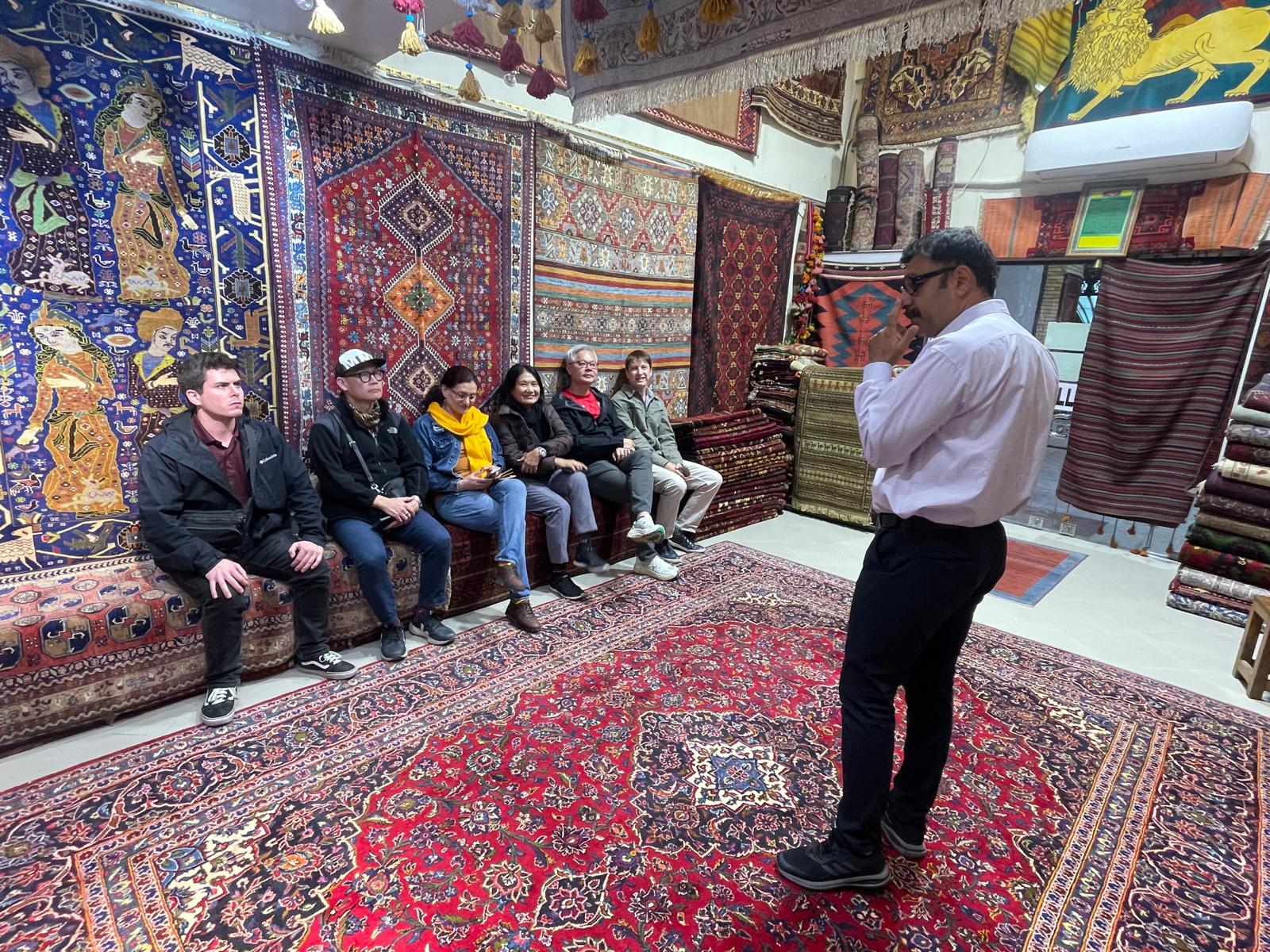
Walk the grand square of Isfahan, wander bazaars stacked with carpets, drink tea with local traders — and suddenly the patterns make sense.
If carpets tell Iran’s story, traveling there lets you step inside it.
About Post Author