Most people associate rats with fear or disgust. Very few know that in Cambodia, some of them are actually saving lives.
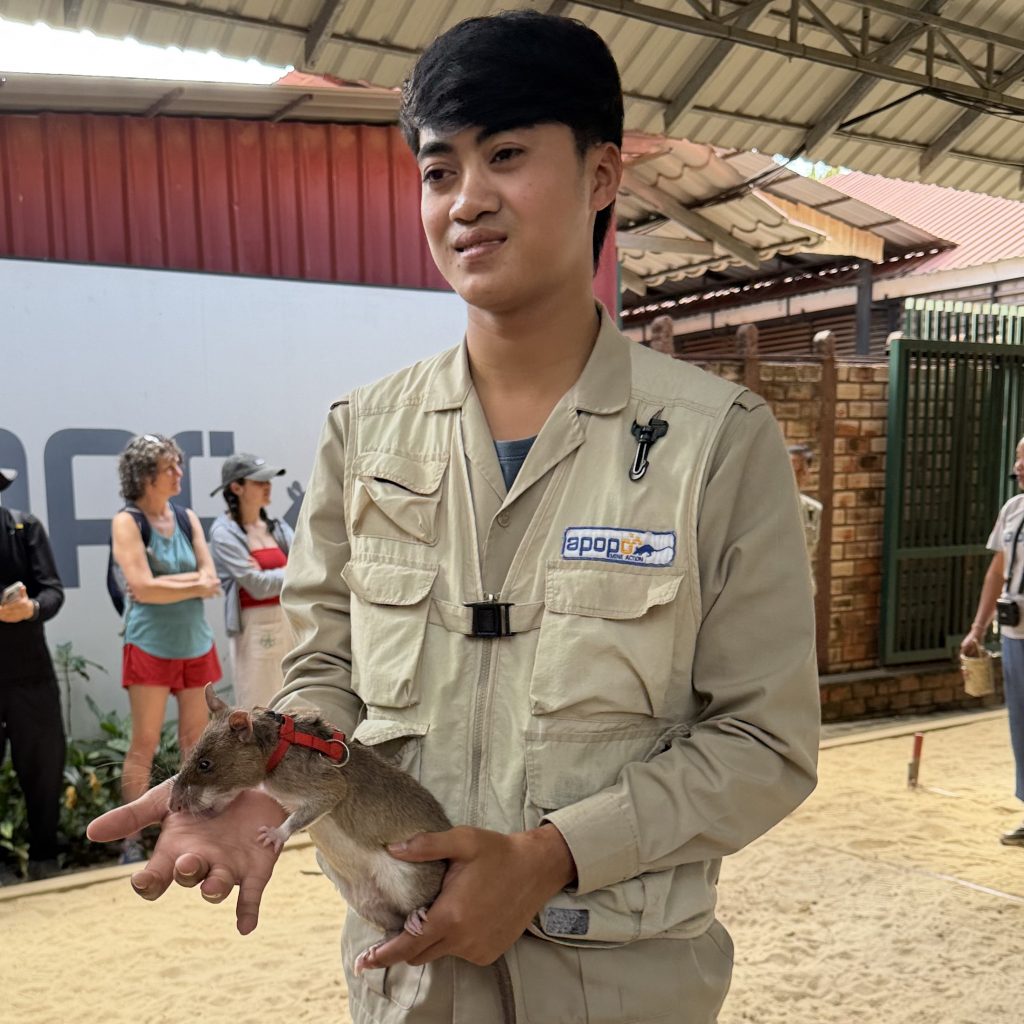
Since the Cambodian Civil War and the Khmer Rouge period, the country has been left with a deadly legacy: hidden landmines and unexploded ordnance. Even decades later, people are still losing their lives or becoming permanently disabled every year. This is especially devastating in rural communities, where many people rely solely on farming to survive. For someone who loses a limb or mobility, finding alternative work is almost impossible.
The challenge is enormous: how do you remove these landmines safely and give the land back to people so they can rebuild their lives? The surprising answer came from an unlikely source: rats. Tiny, nimble, and highly trainable.
Table of Contents
The Project: What Is APOPO?
When most people hear “rats,” they think of pests, but it’s quite the opposite for these. The project behind this unlikely hero team is called APOPO, a non-profit organization that trains African giant pouched rats to detect landmines.
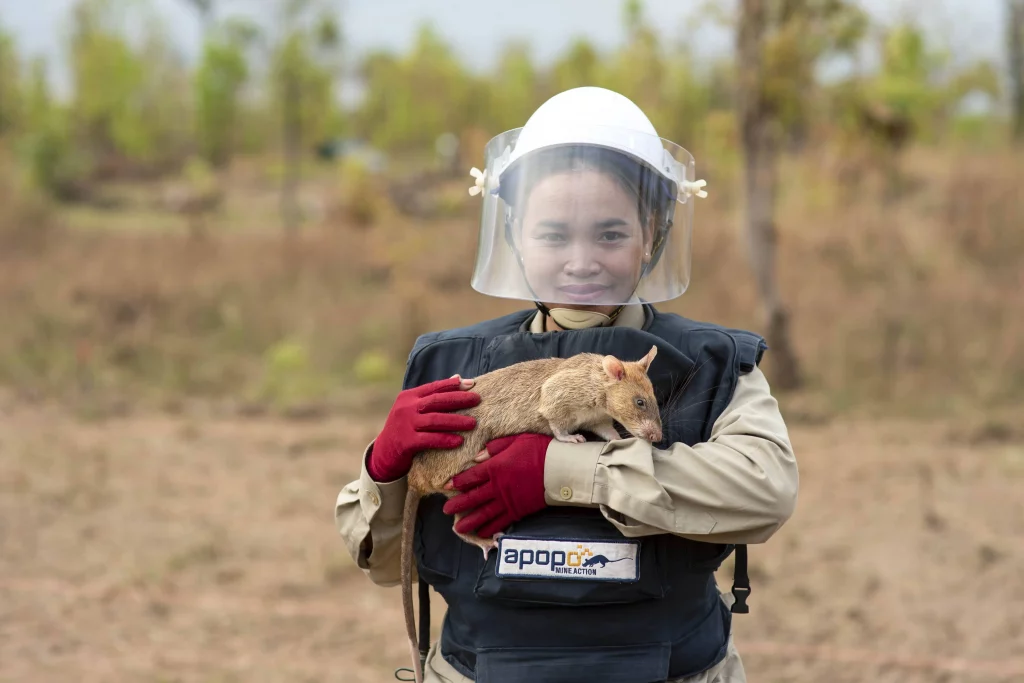
APOPO stands for Anti-Persoonsmijnen Product Ontwikkeling, which is Dutch for “Anti-Personnel Landmine Product Development.” It was founded in 1997 by Bart Weetjens, who had the idea to train rats after noticing their exceptional skills.
Why rats? They are light enough to walk over mines safely, have an incredible sense of smell, and can be trained to work quickly and efficiently. What would take humans or machines months to accomplish, these rats can do in a fraction of the time.
Since its founding, APOPO has helped clear millions of square meters of land, saving countless lives in Cambodia and other countries.
APOPO Around the World
Although APOPO is best known for its work in Cambodia, the organization started in Tanzania, where the first rats were trained to detect landmines. Over the years, the project expanded to other countries affected by war and unexploded ordnance, including Mozambique, Angola, Thailand, Zimbabwe, South Sudan, Azerbaijan, Türkiye, Senegal, Ukraine, and Ethiopia.
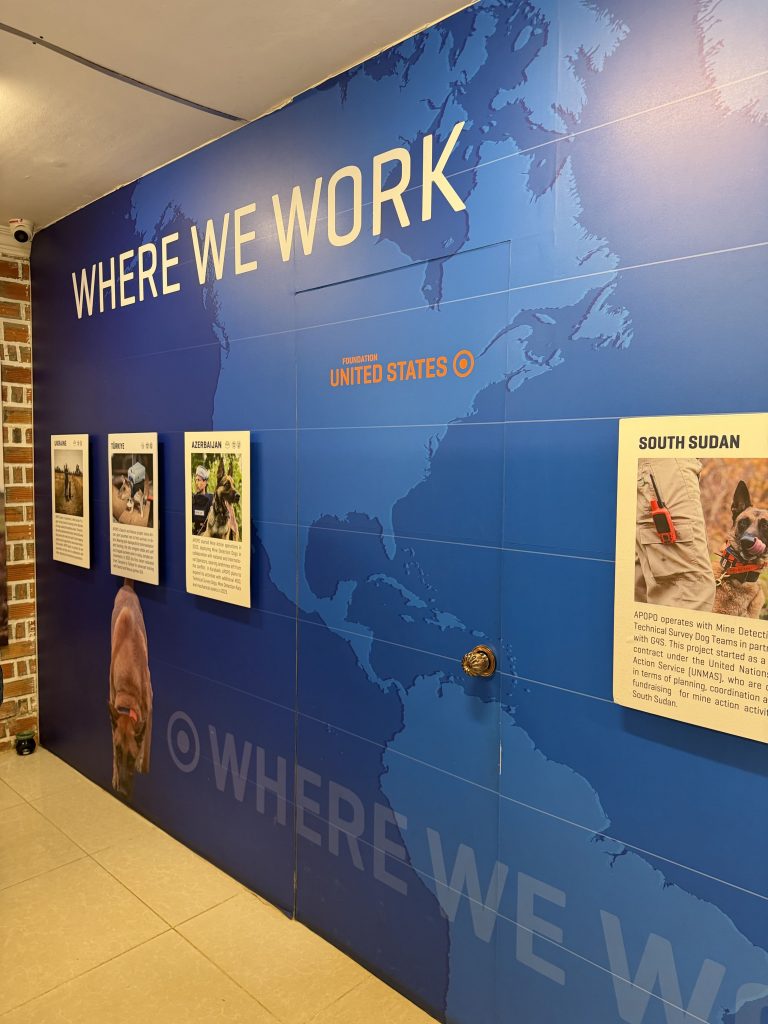
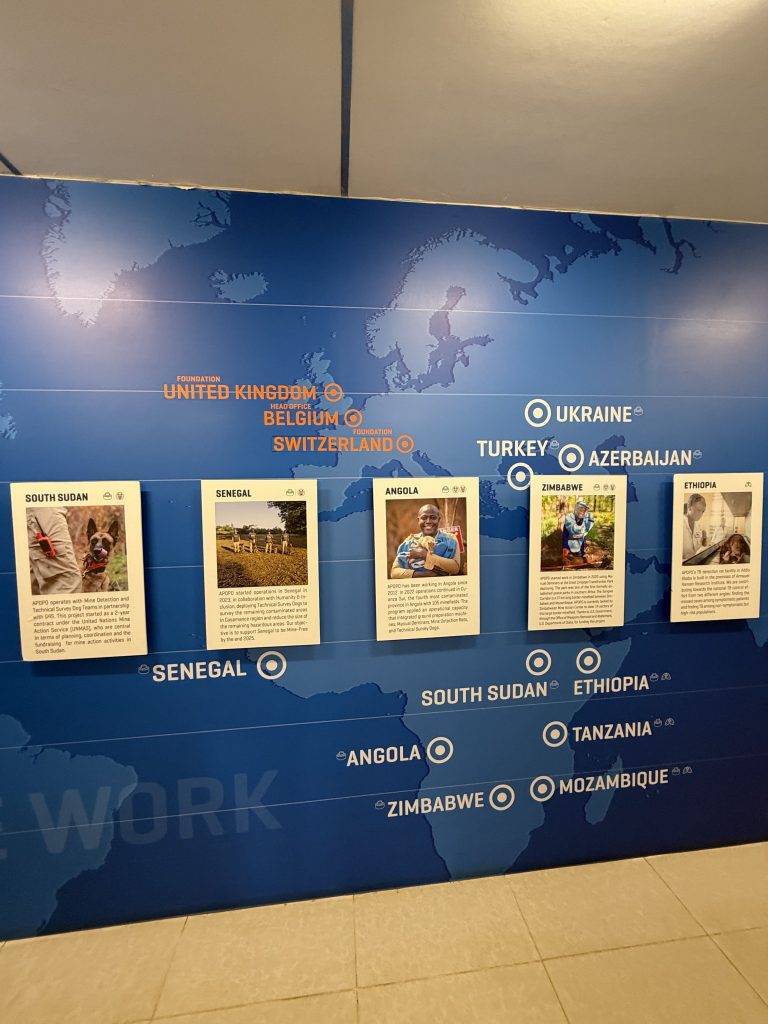

In addition to demining, APOPO rats are trained to detect tuberculosis in humans, showing how versatile these animals can be. Each rat undergoes months of careful training before being deployed, learning to recognize the scent of explosives or TB bacteria.
Today, APOPO operates as a global network, proving that innovation doesn’t always come from machines or high-tech solutions; sometimes, it comes on four tiny legs. The project’s success across multiple countries highlights the unique combination of science, training, and human compassion that makes the rats so effective.
The Rats
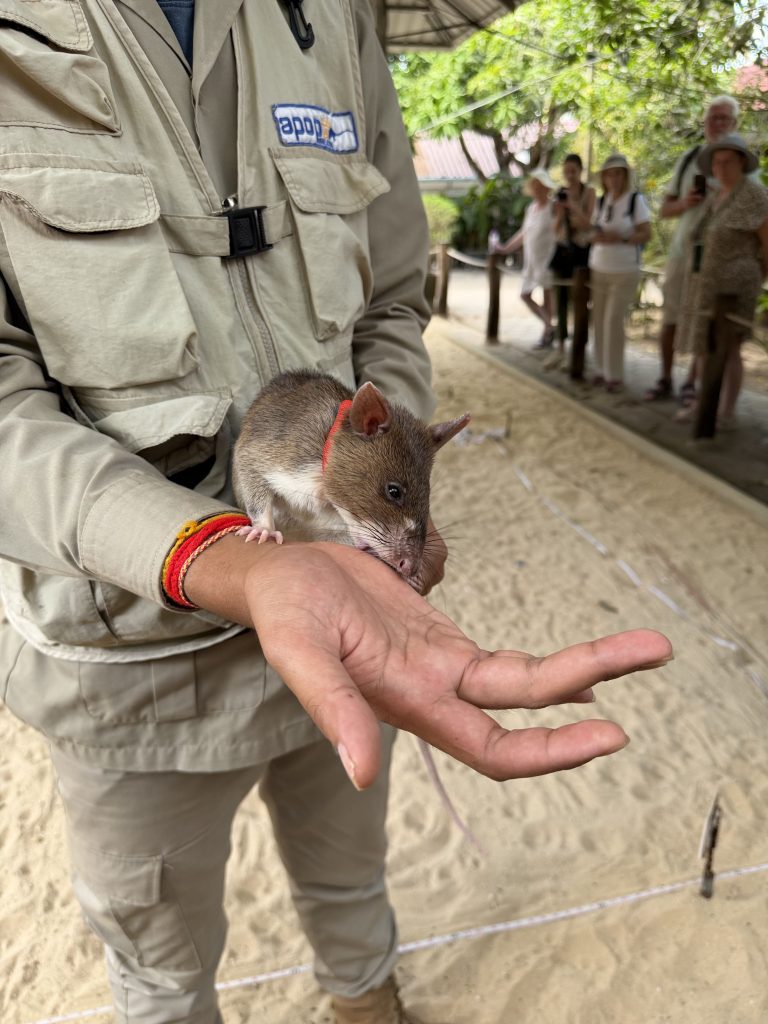
The rats of the APOPO program are the African giant pouched rats, affectionately known as HeroRATs. These aren’t ordinary city rats; they come from a species (Cricetomys gambianus) native to parts of East and Central Africa, prized for their excellent sense of smell, calm temperament, and light-weight bodies. Their physical build is key: they’re heavy enough to navigate training courses but light enough that they won’t trigger buried landmines, making them perfectly suited for this work.
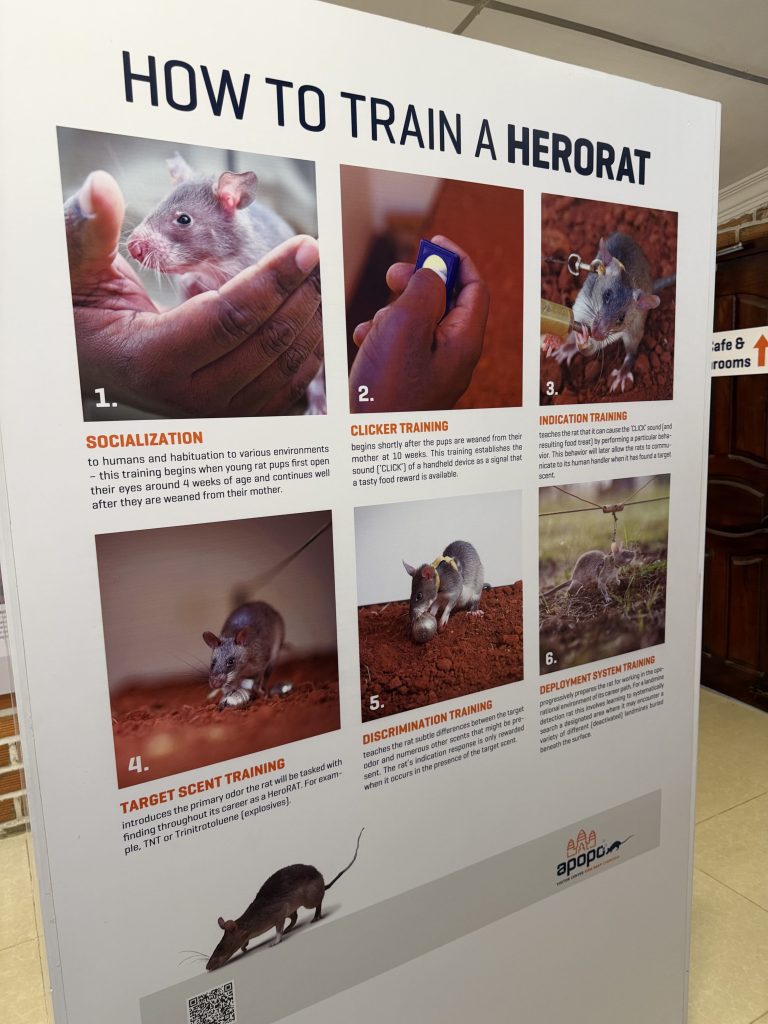
Training begins when the rats are around 8-12 weeks old. Over several months, they are gradually introduced to the scent of explosives. Using positive reinforcement, each correct identification earns a treat, often a piece of banana or peanuts, which keeps training fun and rewarding.
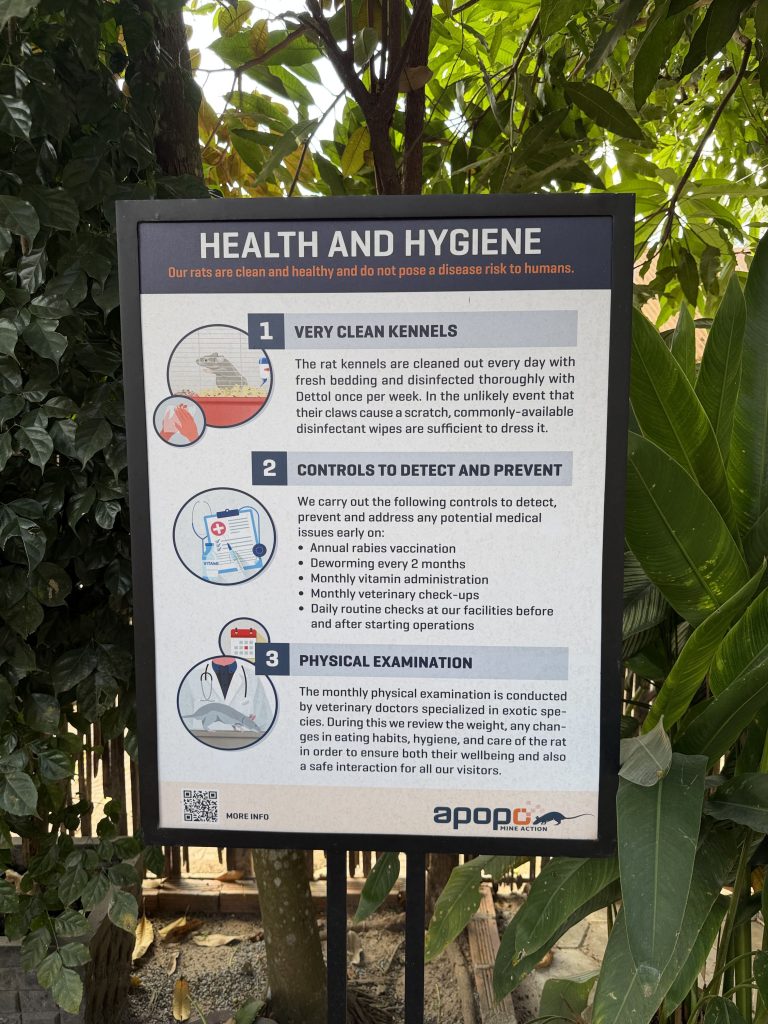
The daily routine includes structured training sessions, playtime in enrichment areas, rest, and social interaction. Their diet is carefully balanced with rat-appropriate food plus fresh fruits and vegetables. The trainers, who spend months building trust with each rat, monitor their behaviour and appetite closely to ensure both mental and physical well-being.
On average, a detection rat can work in the field for about 5-7 years. Once they reach retirement age or are no longer fit for active duty, they don’t just disappear; retired rats live out their later years at the APOPO center. There, they enjoy a more relaxed schedule, plenty of space to explore, and continued care from the staff who know them best.
The APOPO Center in Cambodia
The APOPO center in Cambodia, located in Siem Reap, a region still affected by landmines from decades of conflict. The area was heavily contaminated during the years of war and conflict, leaving rural communities at ongoing risk. Many families are unable to farm safely, children cannot play freely, and accidents continue to cause injuries or fatalities each year.
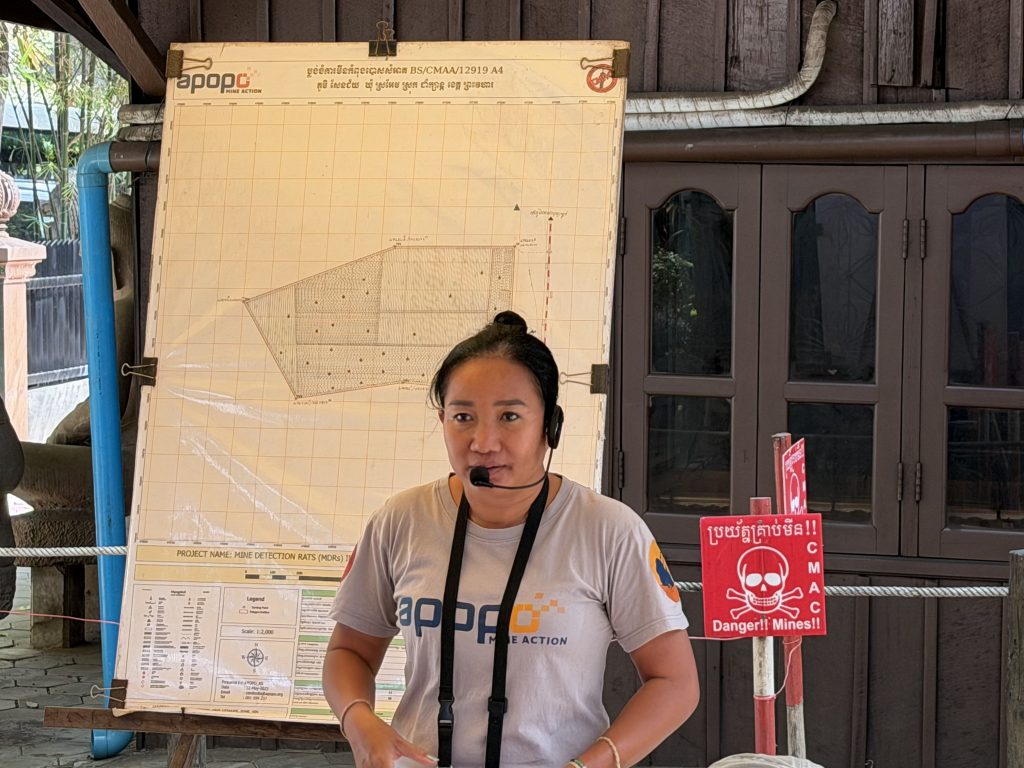
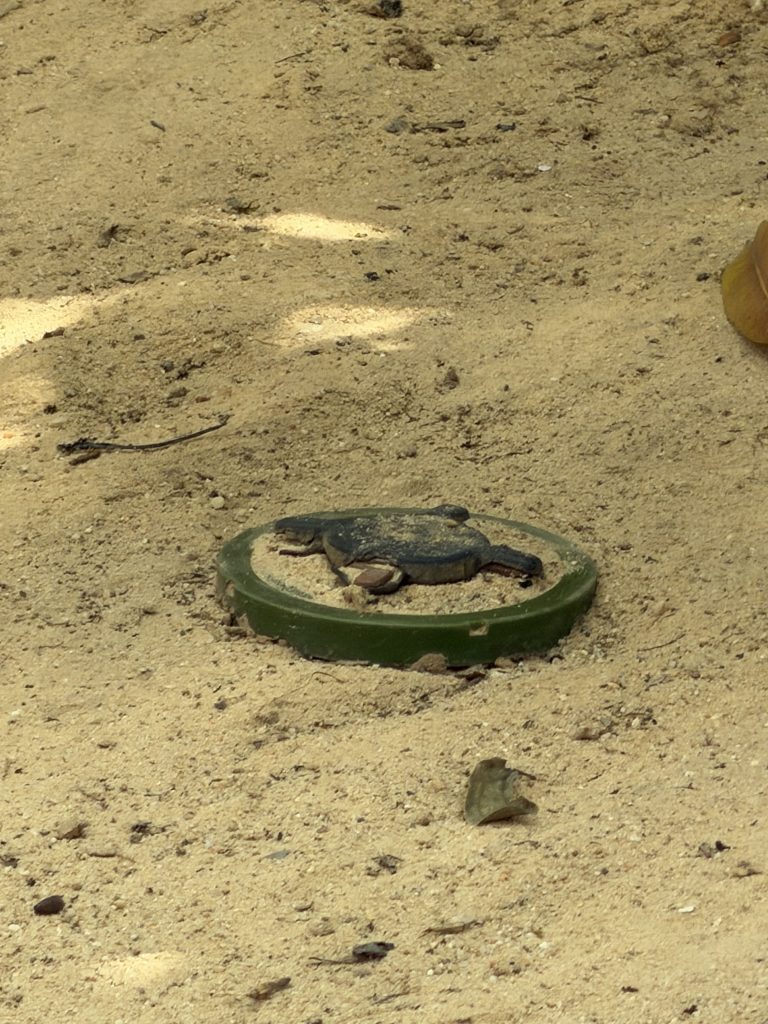
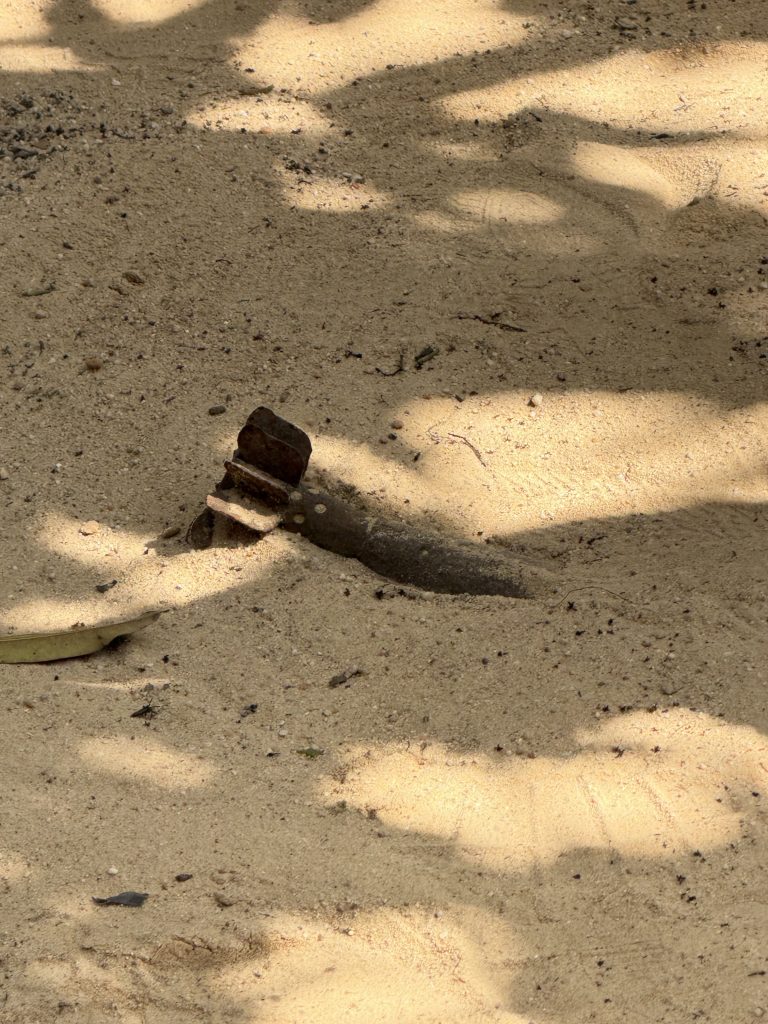
This is where APOPO’s work becomes crucial. By training the rats to detect buried explosives, the center helps clear land for farming, housing, and community use, giving families a chance to rebuild their lives. The program has released over 16 million square meters of land in Cambodia, removed hundreds of mines and unexploded ordnance.
Beyond clearing land, the center also assists victims. APOPO works with local partners to support survivors of landmine accidents, providing rehabilitation resources, safe access to farmland, and education about the remaining risks.
How to Visit the APOPO Center
If you’re in Siem Reap and want a break from temples with a meaningful twist, the APOPO Visitor Center is an easy detour.
It’s located in Trapeang Ses Village, Kouk Chauk Commune, along Koumai Road, about a 15-minute tuk-tuk ride from downtown Siem Reap.
The center is open daily from 8:30 am to 5:00 pm, with the last tour starting at 4:30 pm.
A guided tour costs USD $10 per person (children under 10 go free) and typically lasts about 45 minutes to an hour.
You can book in advance through the official APOPO Visitor Center booking page on their website or simply show up and reserve a slot. Booking in advance is recommended in peak seasons to avoid disappointment.
Once you’re there, you’ll start with an introduction to Cambodia’s history with the landmines and the science behind mine detection. Then you’ll see live demonstrations of the rats at work, watching them sniff out hidden targets and enjoy their well-earned treats.
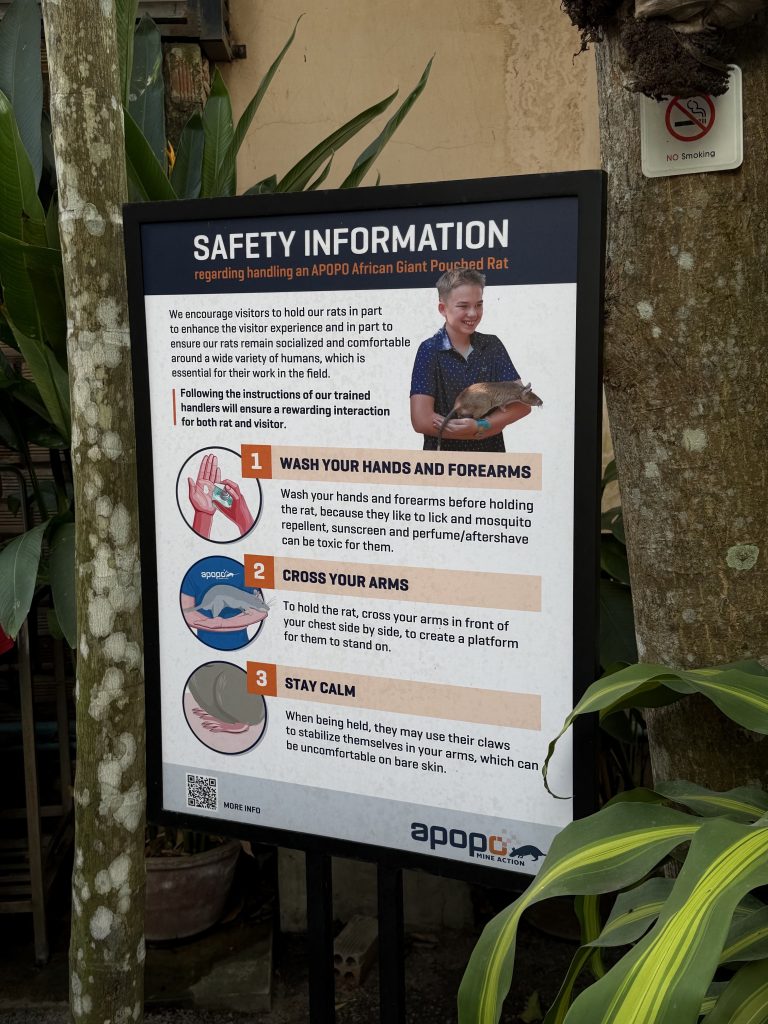
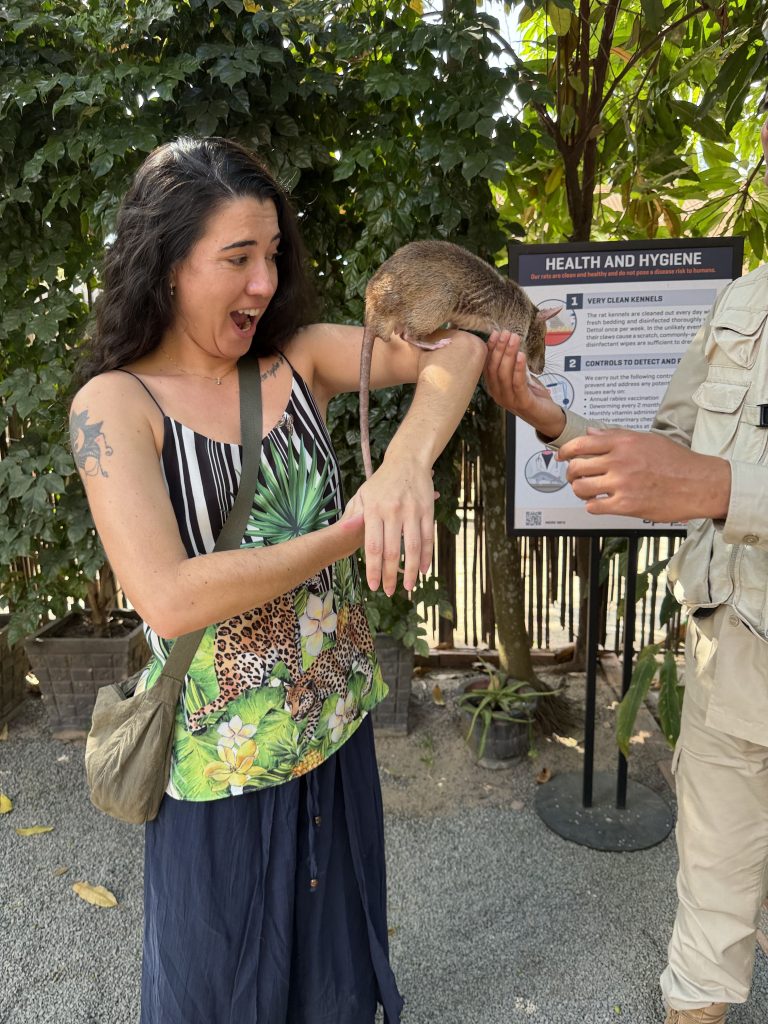
After that, you’ll get the chance to hold the rats, following all the safety procedures to ensure their well-being.
At the end of the tour, be sure to visit the gift shop, where you can find HeroRAT-themed merchandise and locally made souvenirs. Proceeds from the shop go directly toward supporting the project’s work and helping local communities impacted by mines, so your purchase becomes part of the positive impact of your visit.
Click to see our Cambodia Tours
About Post Author